
NASA | Why are we seeing so many sungrazing comets?
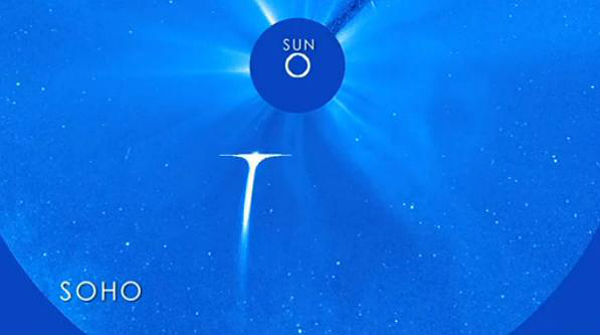
Featured image: On Dec. 15, 2011, NASA's Solar Dynamics Observatory captured footage of Comet Lovejoy approaching the sun. The images and data collected by NASA's solar observing fleet can help scientists learn more about the sun itself. (Credit: NASA/Goddard Scientific Visual Studio)
Before 1979, there were less than a dozen known sungrazing comets. As of December 2012, we know of 2,500. Why did this number increase? With solar observatories like SOHO, STEREO, and SDO, we have not only better means of viewing the sun, but also the comets that approach it. SOHO allows us to see smaller, fainter comets closer to the sun than we have ever been able to see before. Even though many of these comets do not survive their journey past the sun, they survive long enough to be observed, and be added to our record of sungrazing comets.

Join the search at: http://sungrazer.nrl.navy.mil
Source: NASAexplorer

Earlier reporting
Nothing on Watchers was published in the last 24 hours. These are older articles.
- Asteroid 2026 WA passed Earth at 126,400 km, about a third of the Moon's distance, at 07:59 UTC on November 17
- On October 22, 2017, a single flash of lightning stretched 515 miles from eastern Texas to near Kansas City, a distance that takes eight hours to drive, and nobody realized how far it had gone until scientists went back through the satellite data years later Epicenter
- CPC posts a slight risk of heavy rain from the Gulf Coast to the Northeast urban corridor November 25-29, and a moderate risk of West Coast wind and Sierra snow on November 25
- Florida's east coast faces a moderate flash flood risk Wednesday through Friday, with 4 to 8 inches of rain forecast and the St. Johns River near Cocoa already in major flood at 17.13 feet
