• Remarkable pink aurora outburst over Norway

    Over the past couple winters, big displays of pink and white auroras have coincided with spotless suns. The sight is often big enough to make observers wonder if there is a connection, SpaceWeather reports. The most recent remarkable outburst of pink auroras was…

  • Solar minimum surprisingly constant

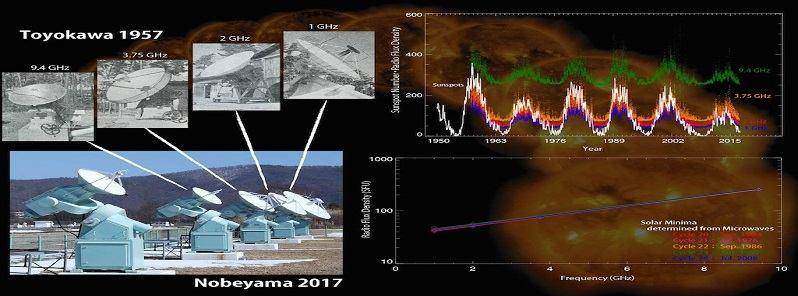
    Using more than half a century of observations, Japanese astronomers have discovered that the microwaves coming from the Sun at the minimums of the past five solar cycles have been the same each time, despite large differences in the maximums of the cycles. In…

  • Spotless Sun heralds Solar Minimum after CME producing Region 2567 departs

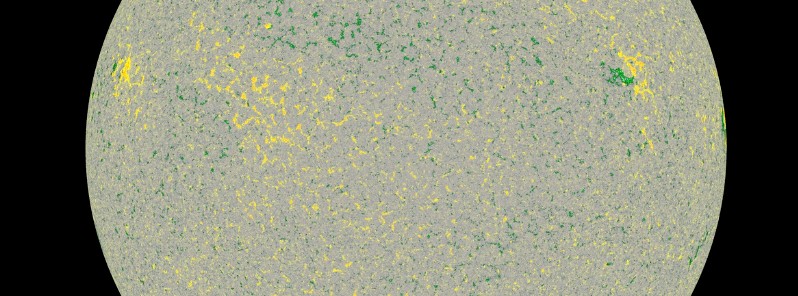
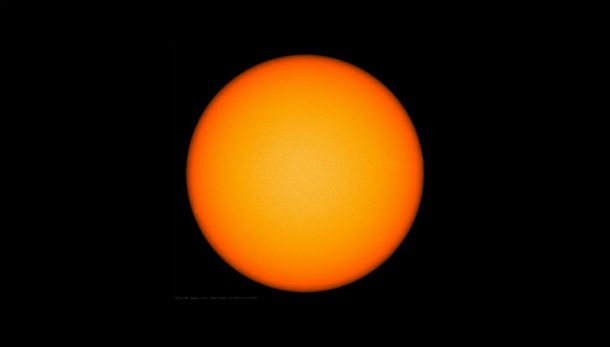
    After Active Region 2567, the source of 7 M-class and numerous C-class solar flares between July 21 and 24, rotated away from the visible disk, our Earth facing Sun is again spotless. This is the third 'spotless Sun' since June 3, and although it is a…

  • Cosmic ray intensification trend continues

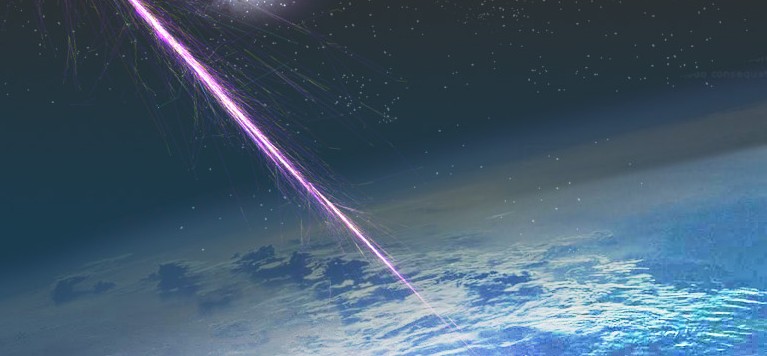
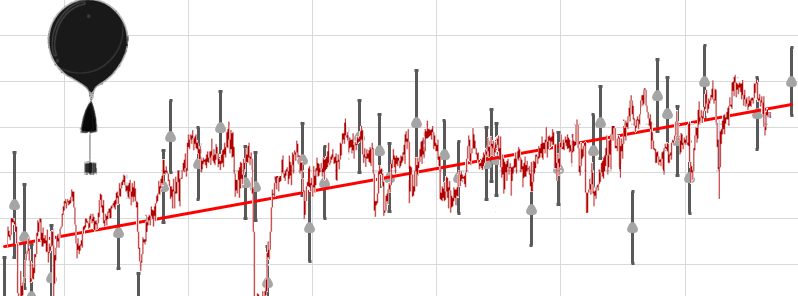
    An intensification trend of cosmic rays activity reported last month by SpaceWeather.com continues. The latest balloon flight over California on February 5 observed the highest value yet. The gathered data shows that cosmic rays in the mid-latitude stratosphere are…

  • Cosmic radiation intensifying as we enter another Solar Minimum

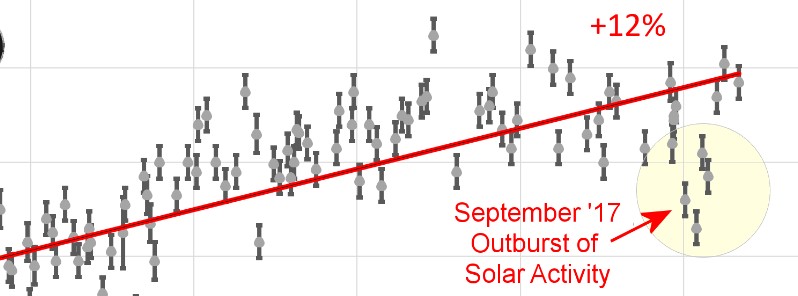
    An increased activity of cosmic rays has been observed around the Arctic Circle by the neutron monitors during the last year. The same trend was also noted in an independent measurement project carried out by the Spaceweather.com and the students of Earth to Sky…

  • Why Europe will soon be cold?

    Russian scientists regained solar activity over the past thousand years and made the forecast to the year 3200. What is the climate waiting for Russia and Europe in 15 – 20 years? Will be there weather abnormalities in the coming decades? Will some areas experience…

  • Earth-facing side of the sun without visible sunspots

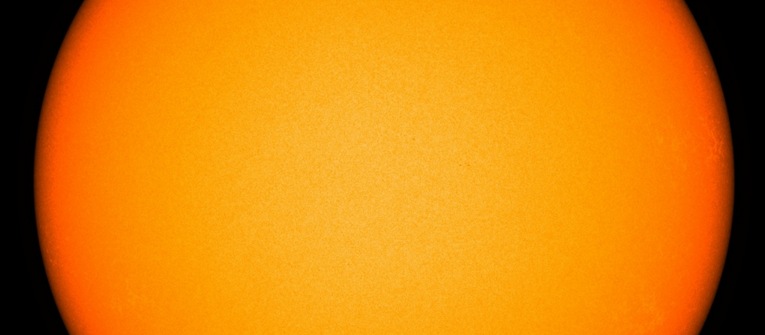
    Images taken by Solar Dynamics Observatory (SDO) on July 17, 2014 show no active sunspots on the visible solar disk. To be correct, tiny decaying AR 2113 is still visible, but its size remains so small that the plots and charts didn't registered it. SDO's

  • Ben Davidson: The Variable Sun and Its Effects on Earth – EU2014

    The message has been loud and clear for many years—a community of scientists insisting that human activity is warming our planet, taking humanity to the edge of a precipice. But now, as science begins to understand earth's place in the electric solar system, t