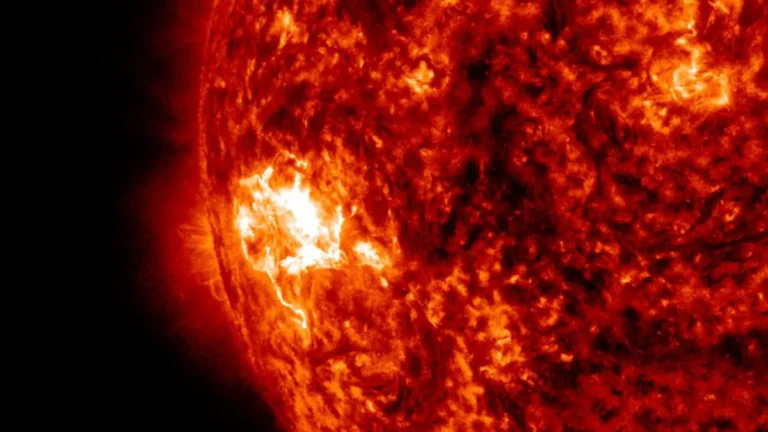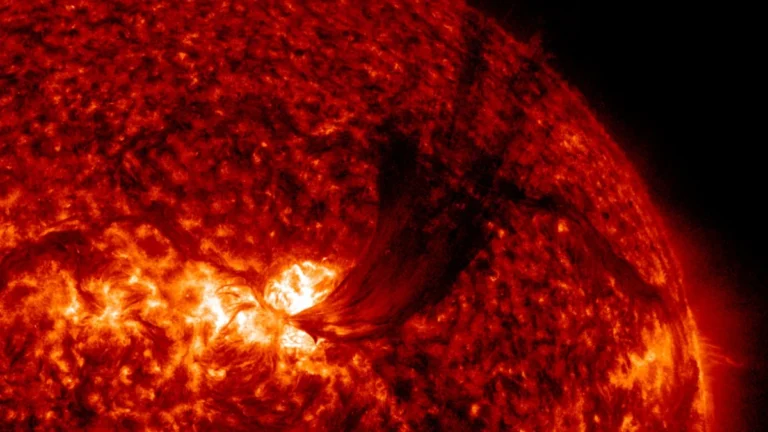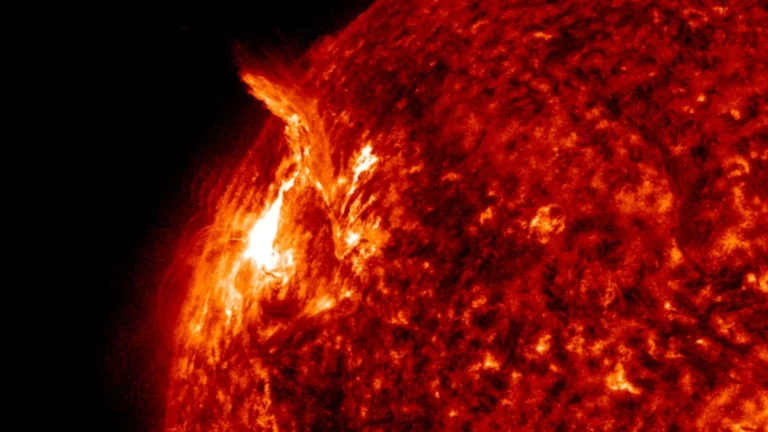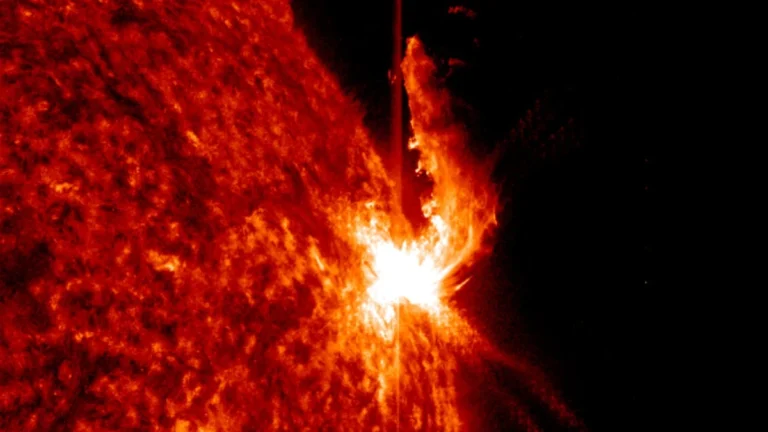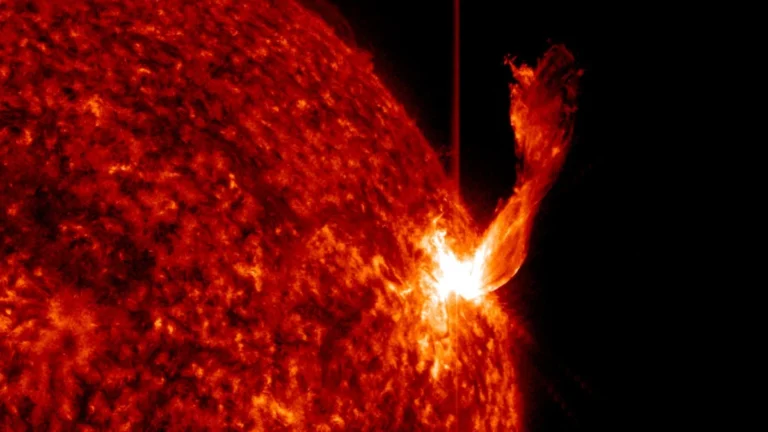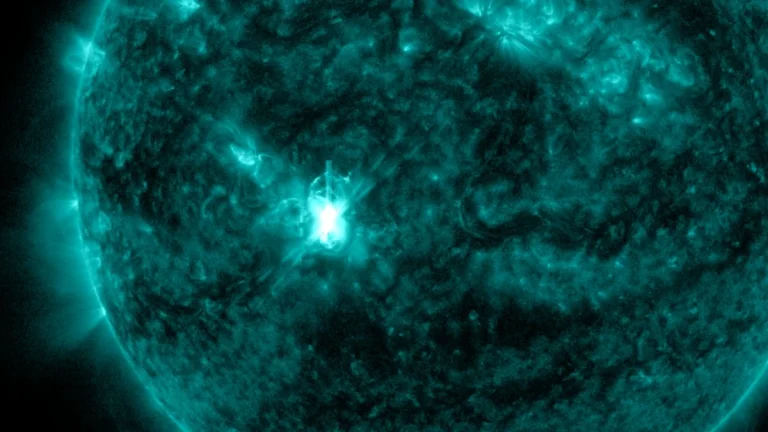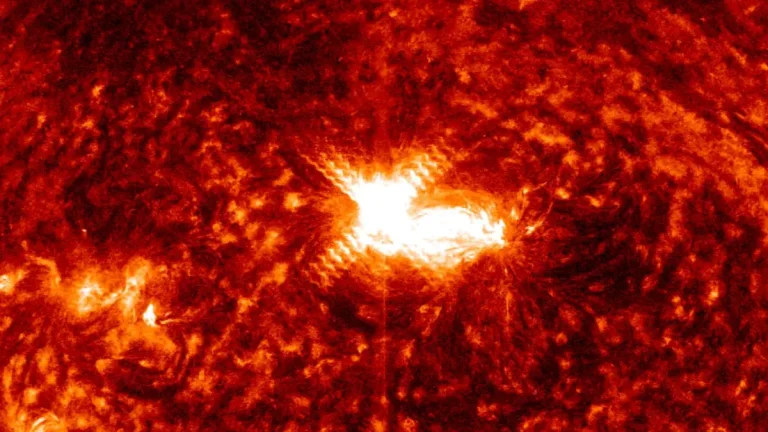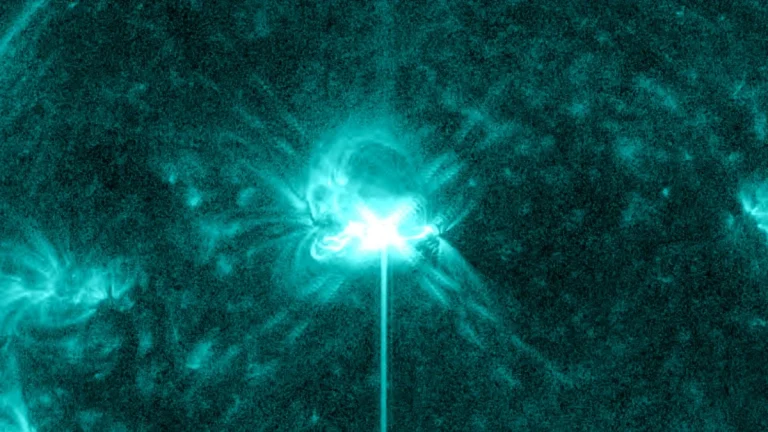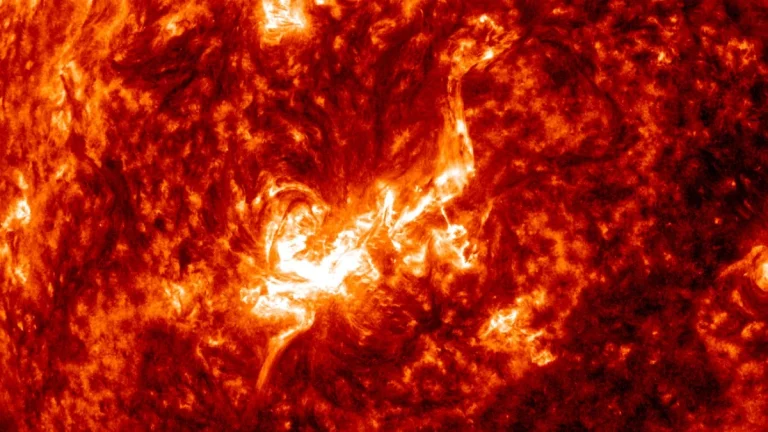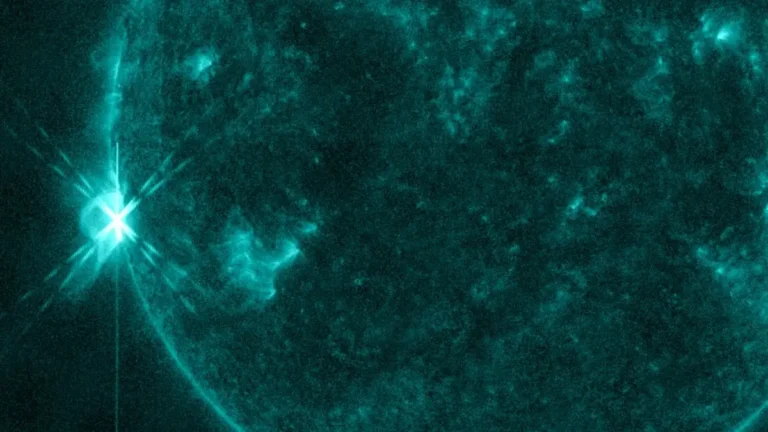
• M9.3 and M7.7 solar flares erupt from AR 4455, launching Earth-directed CMEs

    A strong solar flare measuring M9.3 at its peak erupted from Active Region 4455 at 01:36 UTC on June 3, 2026, producing an Earth-directed coronal mass ejection (CME). The event started at 01:22 UTC and ended at 01:43 UTC. At 07:00 UTC, another strong solar flare — M7.7 — erupted from the same region and produced another Earth-directed CME.

  • X2.5 solar flare erupts at 08:13 UTC, second X-class event of April 24

    An X2.5 solar flare erupted from Active Region 4419 at 08:13 UTC on April 24, 2026, marking the second X-class event within hours after an earlier X2.4 flare at 01:07 UTC. The event started at 08:01 UTC and ended at 08:18 UTC. The flare produced strong radio emissions and reached R3 (Strong) radio blackout levels on the sunlit side of Earth.

  • Major X2.4 solar flare erupts near Sun’s west limb

    A major X2.4 solar flare erupted from Active Region 4419 at 01:07 UTC on April 24, 2026. The event started at 00:51 UTC and ended at 01:13 UTC. A large coronal mass ejection was produced, but it’s not expected to be Earth-directed. This is the first X-class solar flare since X1.4 on March 30.

  • Impulsive X4.2 solar flare erupts from geoeffective Active Region 4366

    An impulsive X4.2 solar flare erupted from geoeffective Active Region 4366 at 12:13 UTC on February 4, 2026. The flare originated from a magnetically complex beta-gamma-delta region that produced dozens of M- and 5 other X-class flares since February 1. Its location near the central solar disk raises the possibility of Earth-directed coronal mass ejections (CMEs) this week.

  • Long-duration X1.9 solar flare erupts from Region 4341, Earth-directed CME produced

    A long-duration X1.9 solar flare erupted from Active Region 4341 at 18:09 UTC on January 18, 2026. The event began at 17:27 and ended at 18:51 UTC. Coronagraph imagery indicates that a full halo coronal mass ejection (CME) was produced during the eruption. Given the location of the source region on the solar disk, the CME is considered likely to be at least partially Earth-directed, pending further analysis of its speed and magnetic structure.

  • CME and coronal hole influences cause G1-G2 geomagnetic storming, M3.3 flare erupts beyond solar limb

    A long-duration M3.3 flare erupted from just beyond the east-southeast limb at 11:00 UTC on January 11, 2026, as CME and coronal hole influences continued to disturb the solar wind environment. The geomagnetic field reached G1 – Minor to G2 – Moderate storm levels on January 10–11 under combined CME and coronal hole high-speed stream effects. Elevated solar wind parameters and unsettled-to-active geomagnetic conditions are expected to persist through January 14.