Moderately strong M5.4 solar flare erupts from Region 3256
A moderately strong solar flare measuring M5.4 erupted from Active Region 3256 at 07:37 UTC on March 30, 2023. The event started at 07:24 and ended at 07:43 UTC.

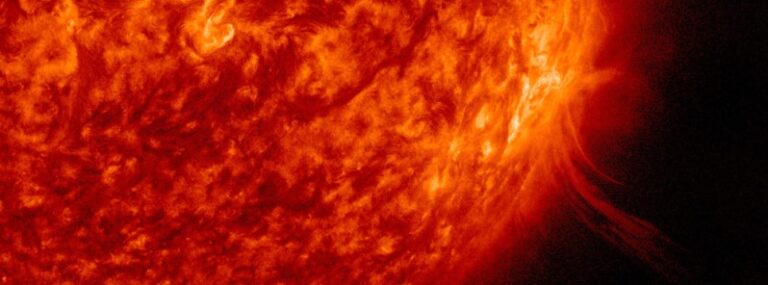
A moderately strong solar flare measuring M5.4 erupted from Active Region 3256 at 07:37 UTC on March 30, 2023. The event started at 07:24 and ended at 07:43 UTC.
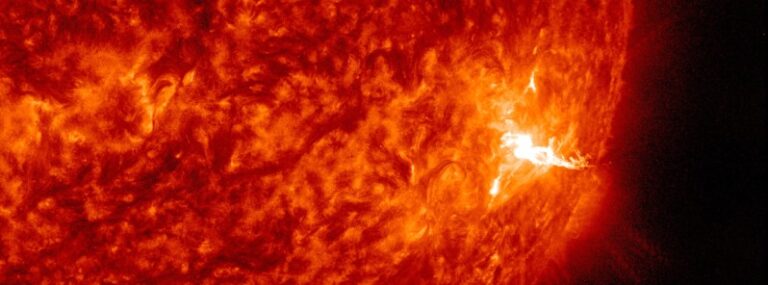
An impulsive solar flare measuring X1.2 at its peak erupted from AR 3256 at 02:33 UTC on March 29, 2023. The event started at 02:18 and ended at 02:40 UTC.

A combination of factors led to unexpectedly strong geomagnetic storm levels on Thursday, March 23, and Friday, March 24, 2023. The storm reached G3 – Strong levels at 14:49 UTC on March 23 and escalated to G4 – Severe at 04:04 UTC on March 24. The precise cause of this geomagnetic storm is still under investigation, but it is possible that coronal mass ejections (CMEs) from March 20 to 21 played a role.

Our planet is under the influence of a positive polarity coronal hole high speed stream (CH HSS) today, March 15, 2023, combined with an impact from the coronal mass ejection (CME) produced on March 10. G2 – Moderate geomagnetic storm threshold was reached at 05:59 UTC and the geomagnetic field is likely to reach G1 – Minor geomagnetic storming levels, with a chance for isolated G2 – Moderate periods on March 15 and 16 due to any flanking effects from CMEs produced on March 11 to 13.
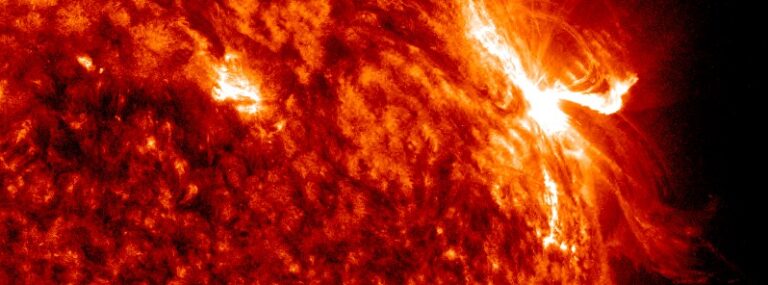
A major solar flare measuring X2.0 erupted from Active Region 3234 at 17:52 UTC on March 3, 2023.
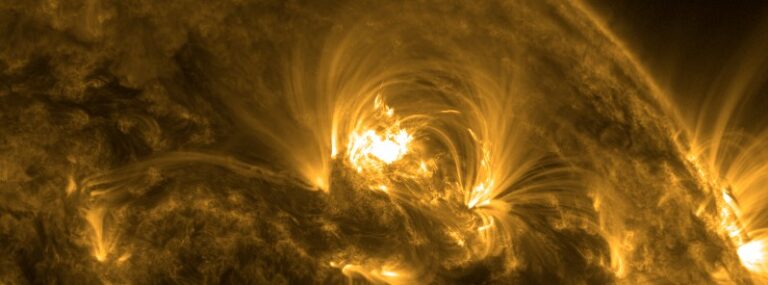
A moderately strong solar flare measuring M8.6 erupted from Active Region 3234 at 17:50 UTC on February 18, 2023. The event started at 17:35 and ended at 17:56 UTC.
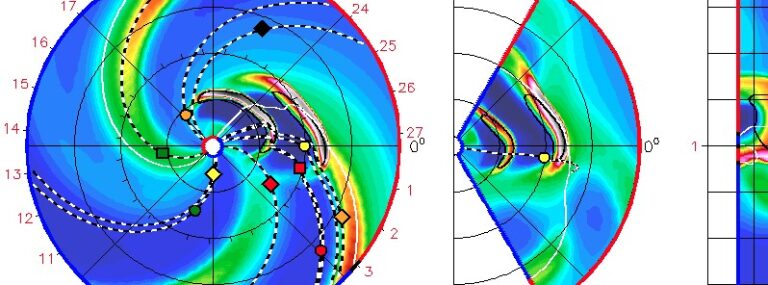
Coronal mass ejection (CME) produced by a long-duration M3.7 solar flare at 20:30 UTC on February 24, 2023, reached Earth at 19:25 UTC on February 26. A glancing blow impact from CME produced by M6.3 solar flare on February 25 is expected during the afternoon hours on February 27. The resulting geomagnetic storm activity is expected to be significant, with both CMEs interacting with a negative-polarity coronal hole high-speed stream, potentially producing G3 – Strong or higher levels of geomagnetic storming.
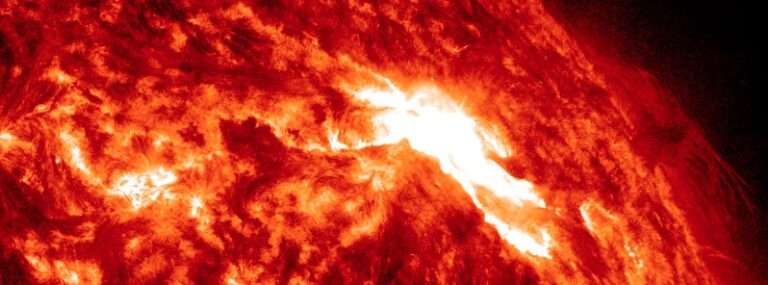
A long-duration solar flare measuring M6.3 erupted from Active Region 3229 at 19:44 UTC on February 25, 2023. The event started at 18:40 and ended at 20:27 UTC.
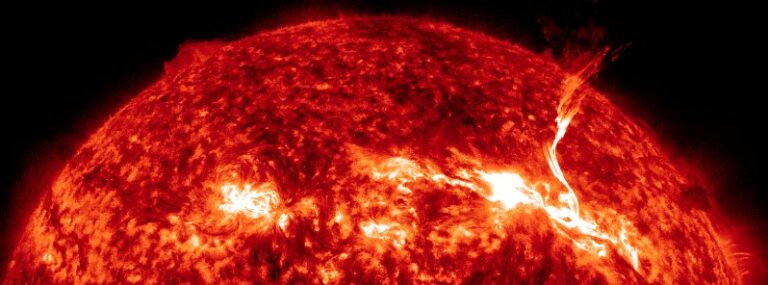
A long-duration M3.7 solar flare erupted from Active Region 3234 at 20:30 UTC on February 24, 2023, producing a large coronal mass ejection (CME). The event was associated with a filament eruption.
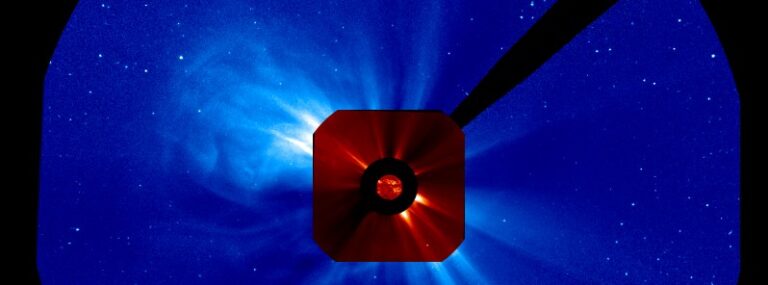
A long-duration solar flare measuring X2.2 at its peak erupted from AR 3229 (beta) at 20:16 UTC on February 17, 2023. The event started at 19:38 and ended at 20:50 UTC. A full halo Coronal Mass Ejection (CME) was produced and it appears there is an Earth-directed component. The estimated time of arrival is February 20.
