• Mars’ magnetic history examined in new study

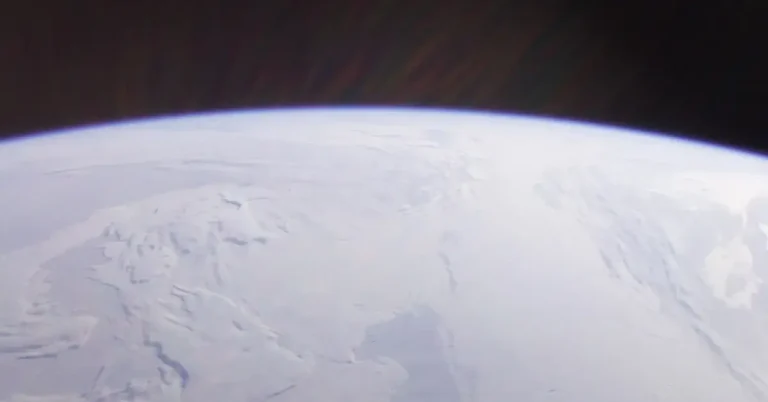
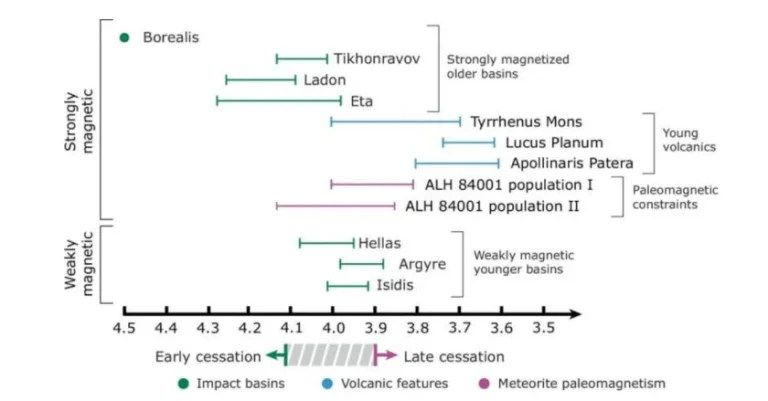
    New research published in Nature Communications suggests that Mars’ magnetic field, which may have helped retain the planet’s atmosphere and surface water, existed until approximately 3.9 billion years ago—lasting longer than prior estimates of 4.1 billion years. The updated timeline offers a clearer picture of Mars’ early environment, potentially shedding light on its habitability.

  • Ice Age research provides crucial insight into climate ‘tipping points’ caused by AMOC

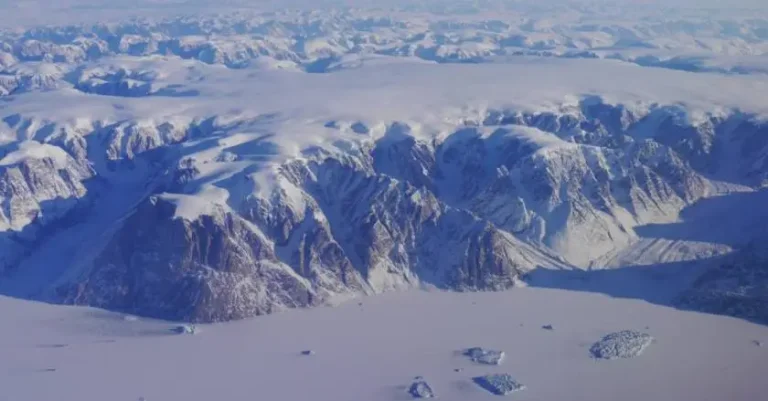
    Recent research on the Dansgaard-Oeschger event provides a better understanding of climate tipping points during the last Ice Age. The researchers used multiple ice cores collected across Greenland with data spanning up to 120 000 years, providing a new understanding of these abrupt events, how they unfold, and what that might mean for the future. It is really important to understand such tipping points in the climate, because they may result in catastrophic and irreversible change, the lead author of the study said.

  • Researchers develop new algorithms to enhance earthquake forecasting

    A study published in Seismological Research Letters on October 11, 2024, presents new algorithms to enhance earthquake forecasting, marking a significant advancement in understanding how seismic activity escalates before major earthquakes. These improvements in medium-term forecasting hold crucial implications for public preparedness and effective risk management, particularly in earthquake-prone regions.

  • Deciphering the mysteries of the Earth’s core-mantle boundary (CMB)

    Scientists from the SLAC National Accelerator Laboratory and the European Synchrotron Radiation Facility have uncovered crucial details about the Earth’s core-mantle boundary and the evolution of super-Earths. By using advanced high-energy X-ray diffraction, they found that variations in iron content in molten rock do not significantly impact its density.

  • Race to uncover fifth fundamental force

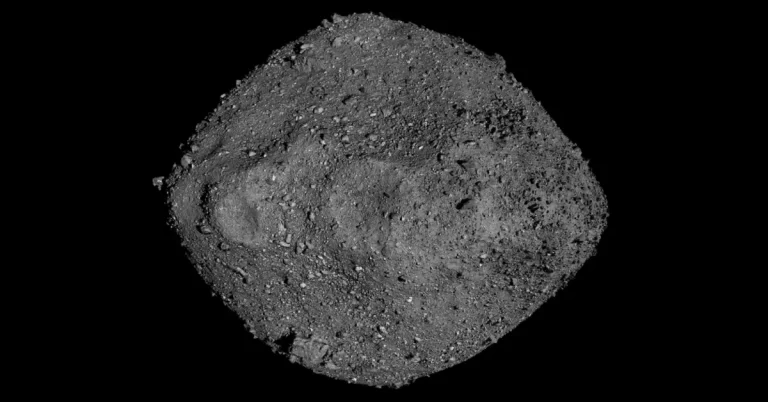
    Researchers based at the Paris Observatory led by Yu-Dai Tsai of the University of California and Luca Visinelli of the Tsung-Dao Lee Institute (TDLI), are using precise tracking data from near-Earth asteroids like Bennu to explore the possibility of a fifth fundamental force, which could reshape our understanding of gravity and the universe. This study began in 2022 with full findings expected to be published by 2025.

  • Unexpected size changes observed in Jupiter’s Great Red Spot

    Astronomers have discovered that Jupiter’s Great Red Spot (GRS), the largest storm in the solar system, is undergoing a surprising oscillation in shape. Using data from the Hubble Space Telescope collected over 90 days, researchers observed fluctuations in the storm’s size, shape, and speed.