• Extreme cold watches expand as Arctic outbreak spreads across central United States

    A large and prolonged outbreak of Arctic air is spreading across the United States, prompting extreme cold watches across much of the northern and central United States from Thursday, January 22, 2026, through Friday, January 24. This Arctic outbreak will bring one of the most dangerous cold spells in recent years, with the greatest threat lasting from Thursday night through early Saturday morning.
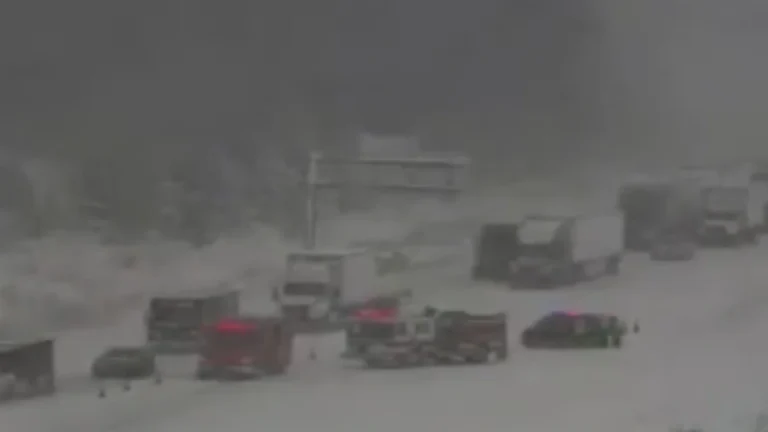
  • Multiple injured after 100-vehicle pileup near Hudsonville, Michigan

    Multiple injuries were reported after lake effect snow and whiteout conditions triggered a 100-vehicle pileup on the I-196 southeast of Grand Rapids on Monday, January 19, 2026. The crashes prompted the closure of all lanes of the highway throughout the day as crews cleared the road.

  • Winter storm warnings in effect across Great Lakes and Northeast U.S.

    Heavy snow and strong winds continue across the Great Lakes and Northeast U.S. on January 19, 2026, with winter storm warnings and advisories in effect across the region. Snow accumulations are forecast to reach 15–-35 cm (6–14 inches) in Michigan and up to 120 cm (4 feet) in parts of northern New York.

  • Nearly 40 million brace for severe weather from Great Lakes to Southern Plains through Easter weekend

    Nearly 40 million people from Texas to Michigan are under threat of severe weather as an amplifying trough begins affecting the central United States on Wednesday, April 16, 2025. The system is forecast to bring strong thunderstorms, heavy rainfall, and damaging winds, with the associated cold front expected to dominate weather conditions through Saturday, April 19, from the Southern Plains to the Great Lakes.

  • Severe storms claim 7 lives across Midwest, leave nearly 1.2 million people without power

    At least seven people were reported dead after a severe storm system swept from the Midwest through the mid-Atlantic and southern United States on March 30 and 31, 2025, bringing strong winds, heavy rain, significant ice accretion, and isolated tornadoes. Nearly 500 000 energy customers or about 1.2 million people were left without power by Monday morning, March 31.