• Weak CME impact and filament channel eruption on the Sun

    An interplanetary shock wave hit our planet's geomagnetic field on June 27, 2013 at approximately 14:20 UTC. Geomagnetic Sudden Impulse was registered at 14:40 UTC. The impact was relatively weak and has not caused a geomagnetic storming so far.
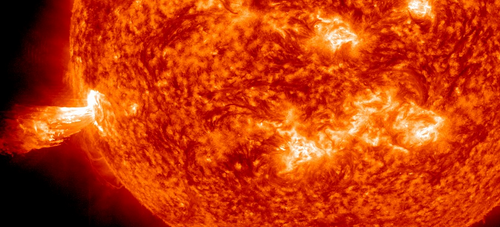
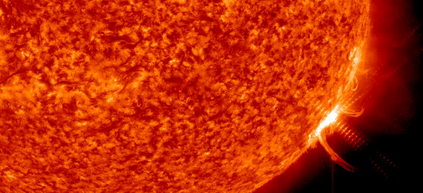
  • Moderate solar flare measuring M2.9 erupted from Region 1777

    A moderate solar flare registered as M2.9, at the peak time, erupted from Region 1777 on June 21, 2013. The event started at 02:30 and peaked at 03:14 UTC. A Type IV Radio Emission was associated with the event. Type IV emissions occur in association with

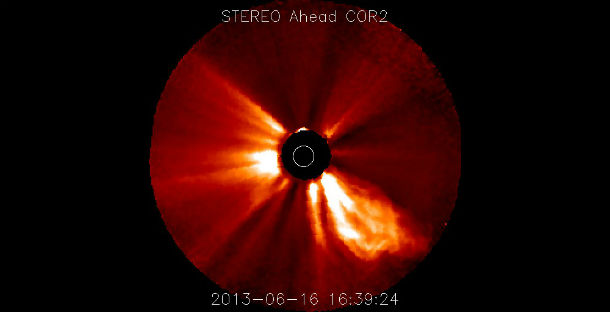
  • Moderate solar flare reaching M5.9 erupted from AR 1762

    Moderate M5.9 solar flare erupted from decaying Actve Region 1762 at 22:49 UTC on June 7, 2013. The event started at 22:11 UTC and ended at 23:04 UTC. This eruption hurled Coronal Mass Ejection (CME) into space, but considering the location of eruption, the plasma

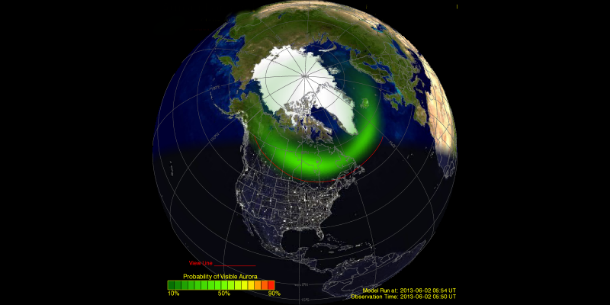
  • Geomagnetic storm still in progress (June 2, 2013)

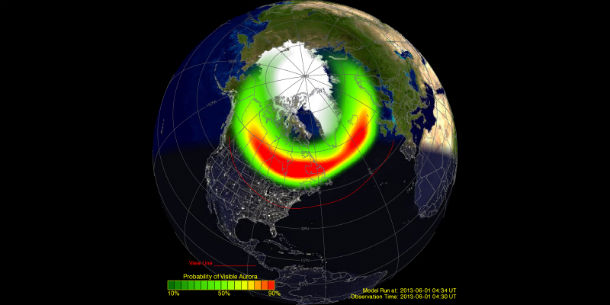
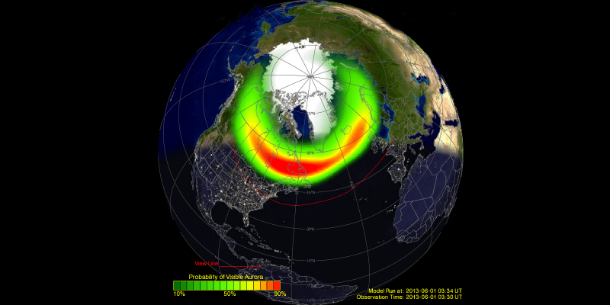
    The arrival of an interplanetary shock wave on May 31, 2013 caused geomagnetic storming that reached G2 (Moderate) geomagnetic storm levels on NOAA/SWPC storm scale during June 1, 2013. The solar wind speed remains elevated above 650 km/s. Currently, geomagnetic

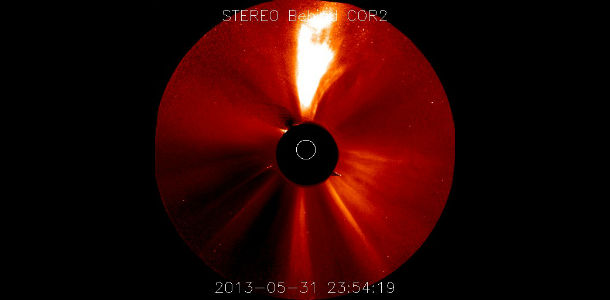
  • Moderate G2 geomagnetic storm in progress (June 1, 2013)

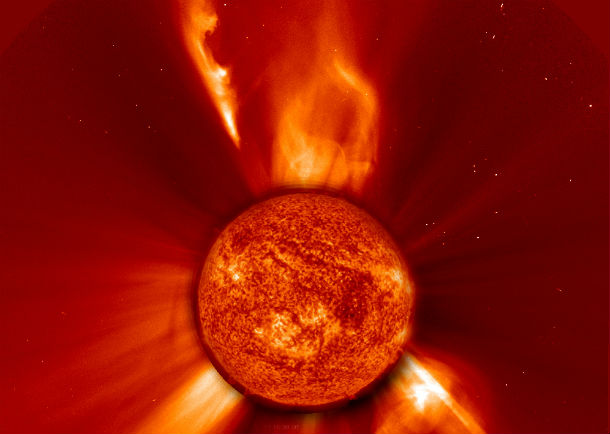
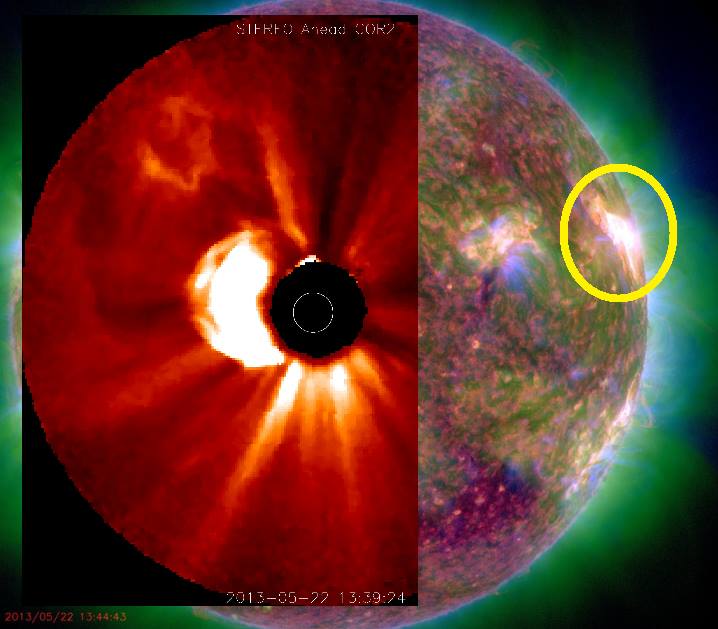
    G2 (Moderate) geomagnetic storming has been observed as Earth remains under the influence of a slow-moving Coronal Mass Ejection (CME). This event was not associated with a significant M1.0 solar flare from May 31, 2013 and is likely the result of a disappearing

  • M1.0 solar flare erupted from AR 1760

    Impressive M1.0 solar flare erupted at 20:00 UTC on May 31, 2013. Event started at 19:52 UTC and ended at 20:06 UTC. The source of eruption was Active Region 1760. This region is small but appears to have a large amount of shear in the central spot.

    M1.0 solar