
Study suggests Earth’s first continents formed through subduction 3.5 billion years ago
A new study suggests that Earth’s earliest continental crust may have formed through subduction-related processes more than 3.5 billion years ago. Researchers studying ancient rocks from Western Australia found evidence that magmas became progressively wetter and more oxidized during the Paleoarchean, supporting the idea that deep water recycling was already occurring inside the young Earth.
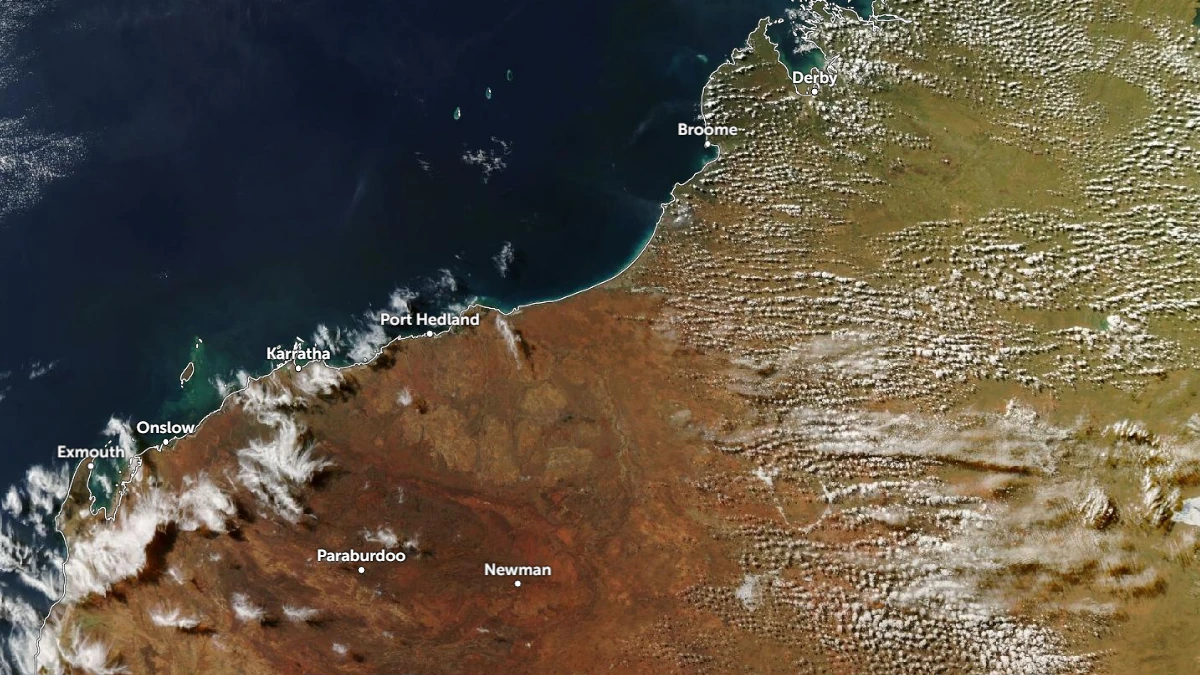
Satellite image of Western Australia on May 12, 2026. JMA/Himawari-9, Zoom Earth, The Watchers
The origin of Earth’s first continents remains one of the biggest unresolved questions in geology. Some models propose that early Earth already had forms of subduction similar to modern plate tectonics, while others describe a stagnant outer crust shaped mainly by mantle upwelling, crustal overturn, or vertical tectonic processes.
The research focused on Paleoarchean granitoids from the East Pilbara Terrane in Western Australia, one of the best-preserved Archean geological regions on Earth.
The rocks formed between 3.5 and 3.2 billion years ago and belong mainly to tonalite-trondhjemite-granodiorite suites, commonly called TTGs, which make up much of Earth’s ancient continental crust.
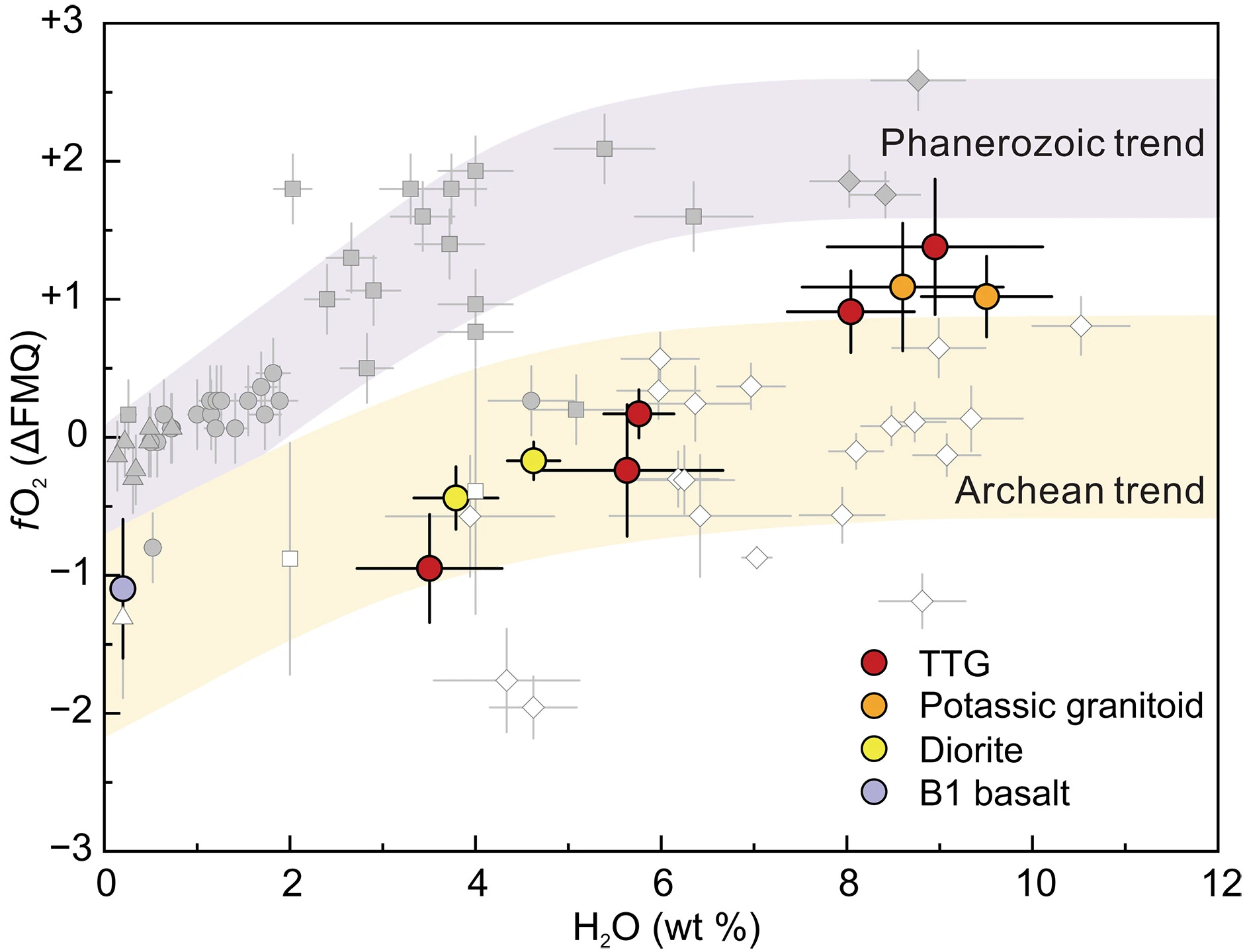
Researchers led by Di Zhou and Rongfeng Ge used a zircon oxybarometer-hygrometer to estimate the water content and oxidation state of the ancient magmas. The method combines zircon Ce4+/Ce3+ systematics with Ce-U-Ti oxybarometry using primary magmatic zircons preserved inside the granitoids.
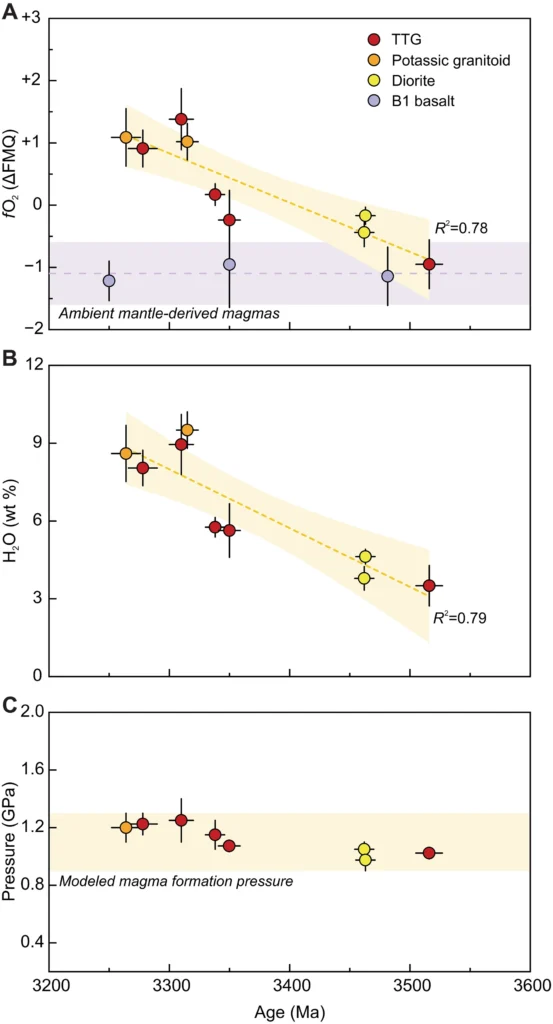
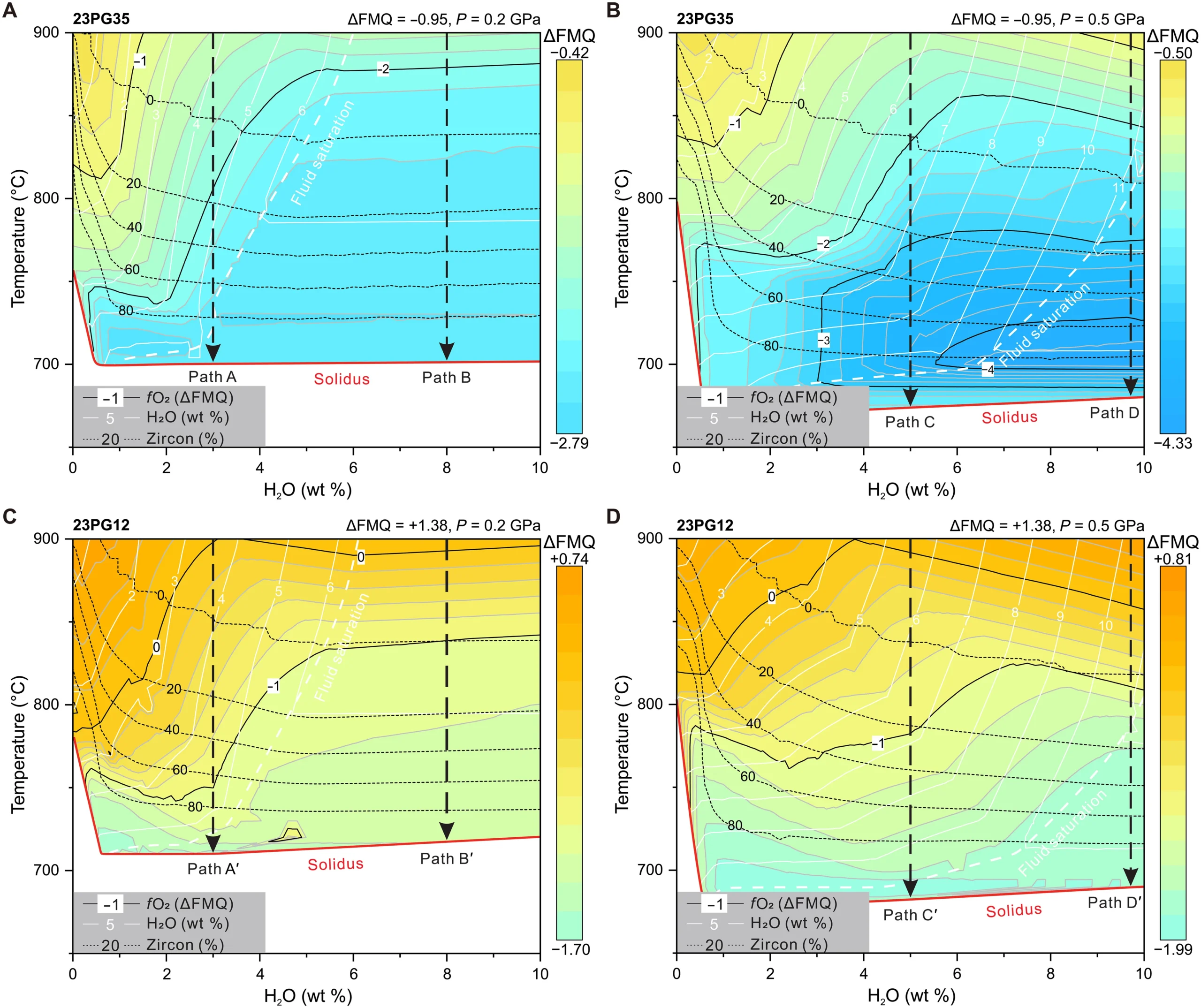
Their results showed a long-term increase in both water content and oxidation state over hundreds of millions of years. Magmatic oxygen fugacity increased from about FMQ −1.0 in the oldest tonalites to as high as FMQ +1.4 in rocks dated between 3.32 and 3.26 billion years ago. During the same period, reconstructed magmatic water content rose from roughly 3.5 wt % to as much as 9.5 wt %.
The younger granitoids also contain minerals such as magnetite, titanite, and epidote, which are commonly associated with wetter and more oxidized magmatic systems.
Compared with mantle-derived basalts from the Pilbara Craton, the granitoids became progressively more enriched in water and oxidation through time.
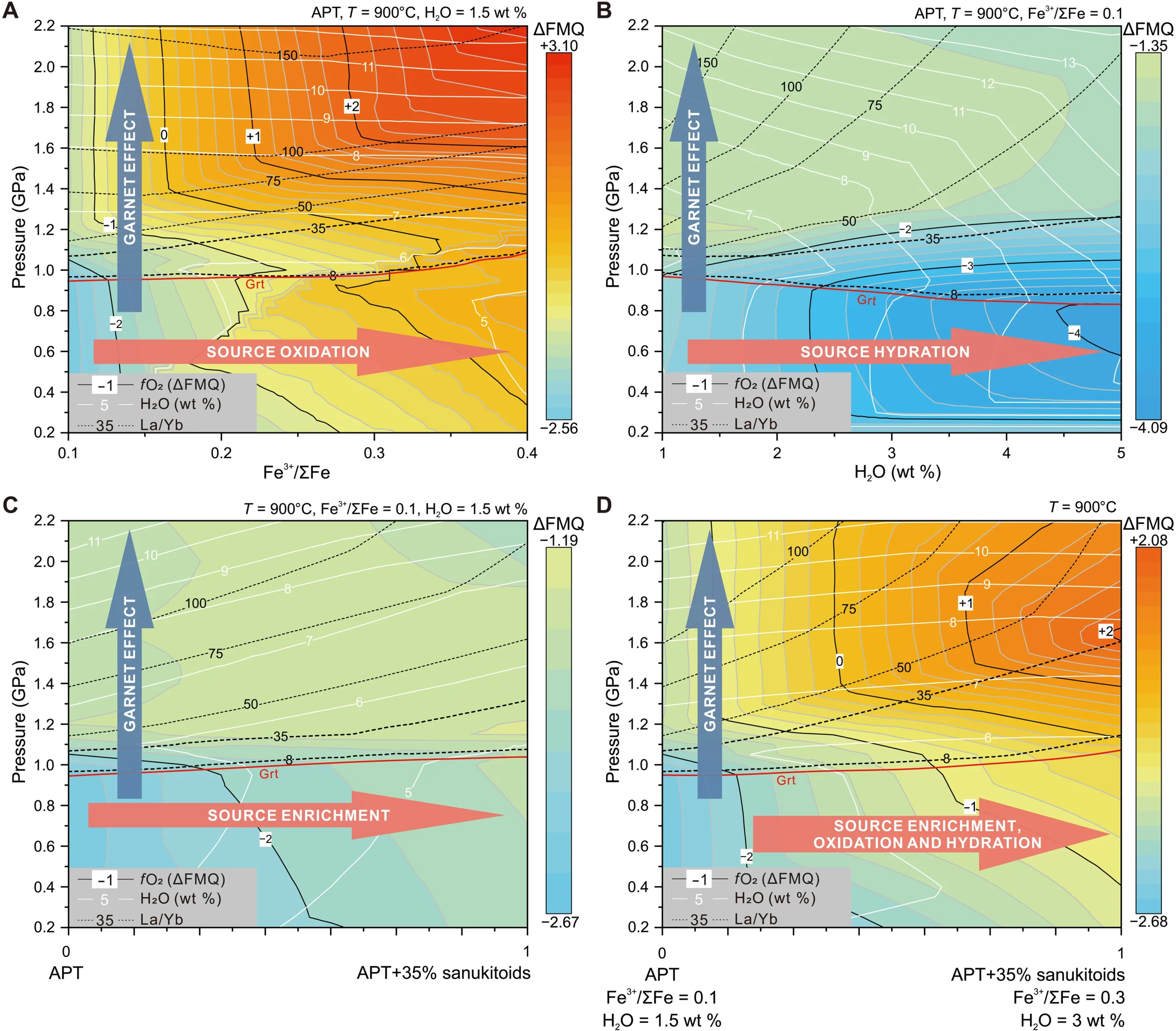
To investigate why those changes occurred, the researchers combined their zircon data with thermodynamic and geochemical modeling.
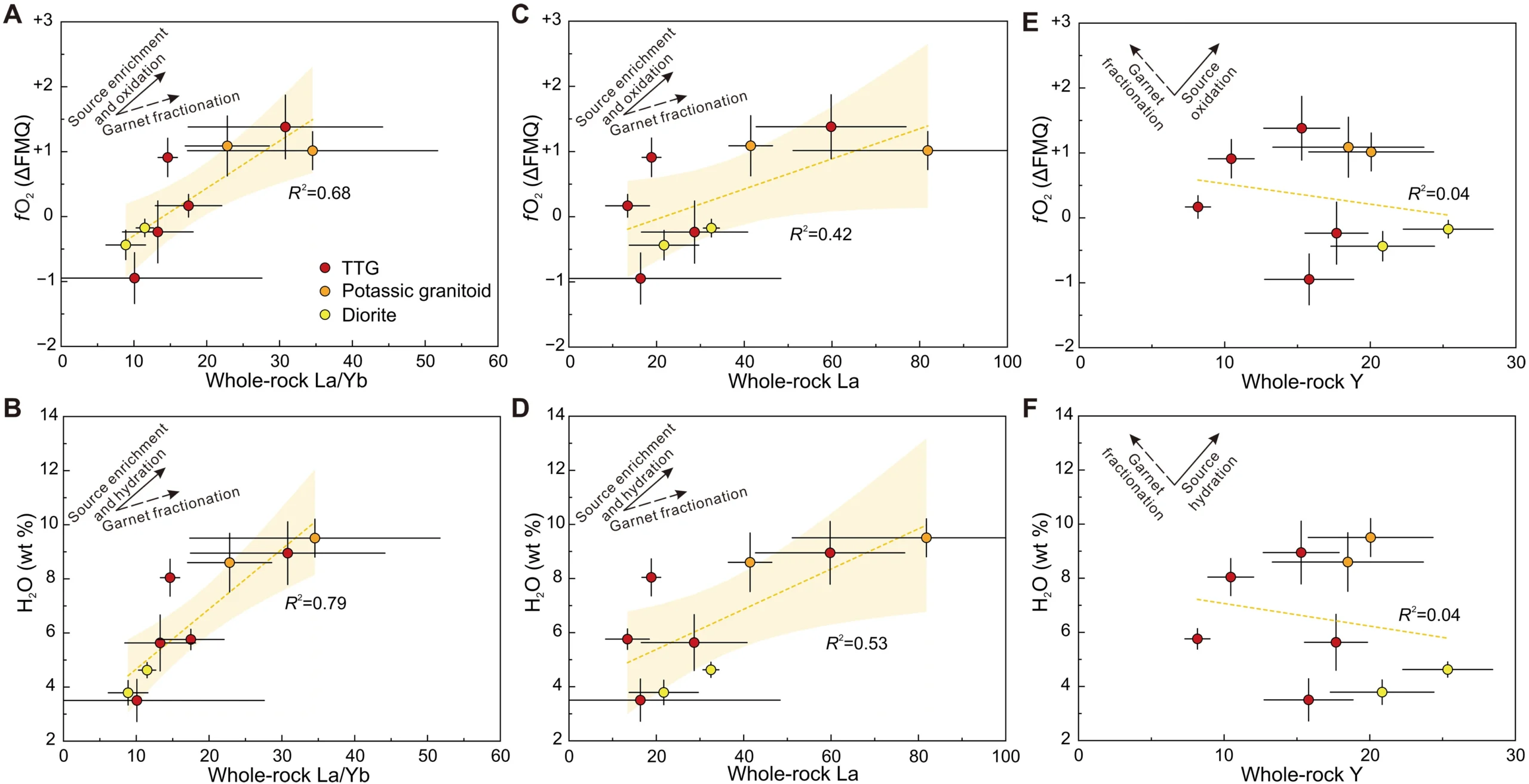
The models indicated that the granitoid magmas probably formed through water-fluxed melting of increasingly hydrated and oxidized mafic rocks at pressures between about 0.9 and 1.3 GPa.
According to the authors, such extensive deep crustal hydration is difficult to explain using dry stagnant-lid models alone.
The study argues that subduction-driven water recycling provides the most consistent explanation. In modern tectonic systems, subducting oceanic crust transports water and oxidized material into deeper parts of Earth’s lithosphere, changing magma chemistry in volcanic arcs and continental crust-forming environments.
Researchers propose that similar recycling processes may already have been operating during the Paleoarchean.
Continental crust plays a major role in regulating long-term geochemical cycles, atmospheric evolution, nutrient availability, and interactions between Earth’s interior and surface environments. Understanding when subduction-like processes first appeared, therefore, affects larger questions about planetary cooling, hydrosphere evolution, and the long-term habitability of Earth.
The study does not conclude that fully modern plate tectonics already existed 3.5 billion years ago. Instead, it argues that substantial water transport into deep crustal melting environments was already occurring during the Paleoarchean. The authors also note that several tectonic styles may have operated simultaneously on the early Earth and that Archean geodynamics may not directly match present-day plate tectonics.
References:
1 Di Zhou et al. Paleoarchean deep crustal hydration and oxidation induced by subduction-driven water recycling.Sci. Adv.12,eaec1040(2026). DOI:10.1126/sciadv.aec1040

I am an Assistant Editor and Severe Weather & Science Journalist at The Watchers, specializing in real-time severe weather coverage, geophysical event reporting, and research-driven scientific analysis. You can reach me at rishav(at)watchers(.)news.

Commenting rules and guidelines
We value the thoughts and opinions of our readers and welcome healthy discussions on our website. In order to maintain a respectful and positive community, we ask that all commenters follow these rules.