
Radar data reveal subsurface lava tube beneath Nyx Mons on Venus
Radar analysis of data collected by NASA’s Magellan spacecraft between 1990 and 1992 has identified an empty subsurface lava tube beneath the Nyx Mons region on Venus. The structure was detected using Synthetic Aperture Radar imaging techniques and reported on February 9, 2026, in a peer-reviewed study published in Nature Communications.
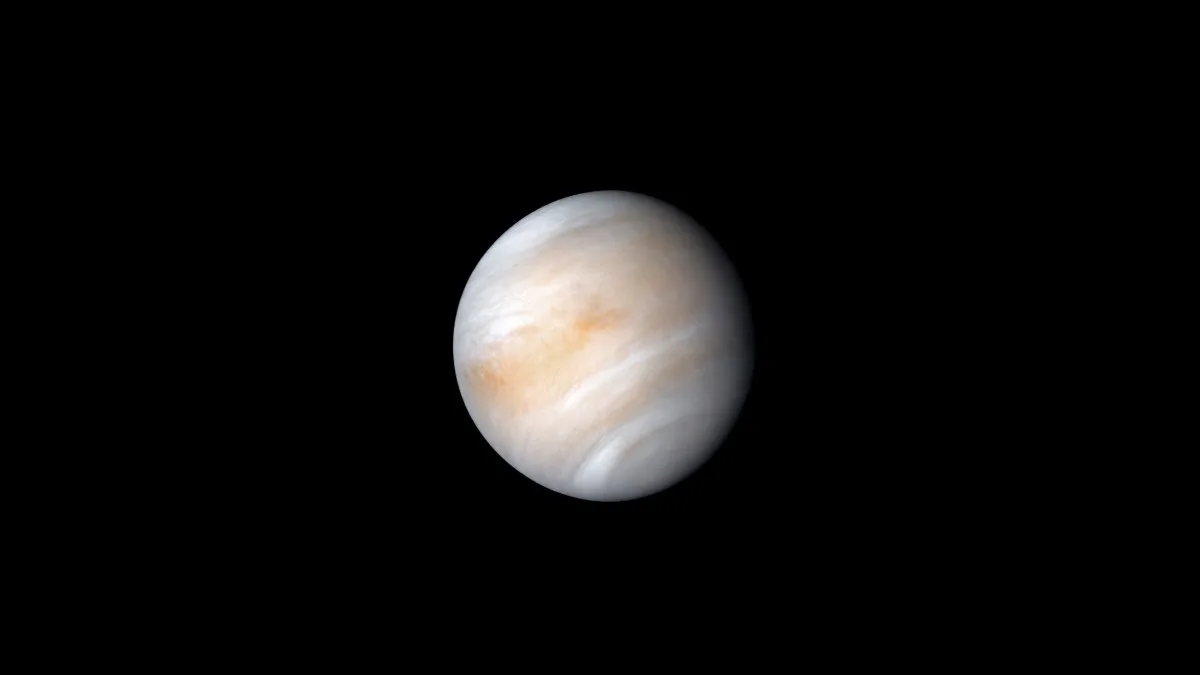
Venus by NASA's Mariner 10 spacecraft. Credit: NASA/JPL-Caltech
The existence of lava tubes on Venus has long remained hypothetical, supported by indirect surface features but lacking direct observational confirmation, because thick cloud cover prevents optical imaging of the surface. This has left the planet’s subsurface inaccessible to direct investigation and proposed underground conduits confined to inference rather than evidence.
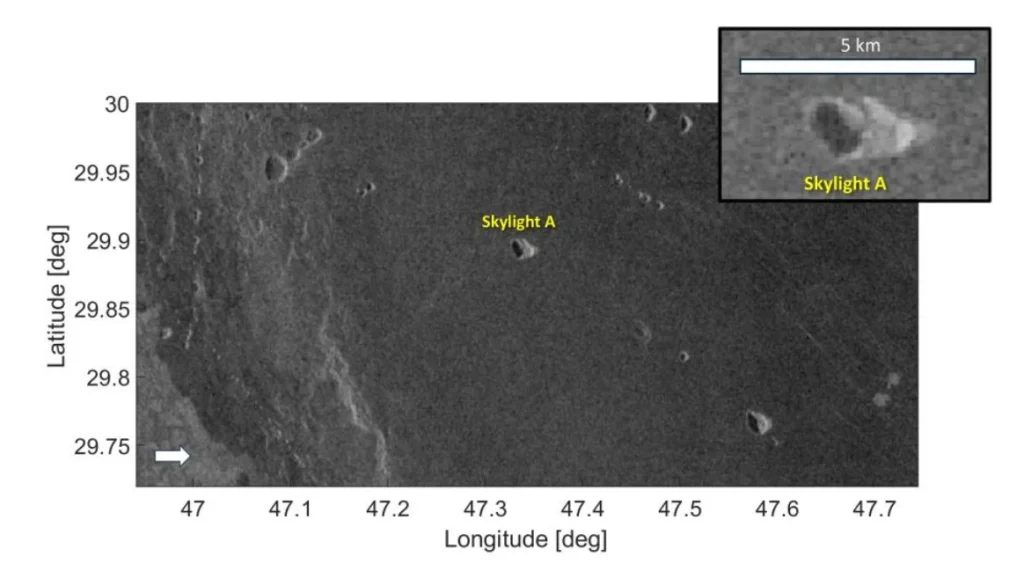
Analysis of radar data collected by NASA’s Magellan spacecraft in the early 1990s has now provided that missing evidence, revealing radar signatures consistent with an empty subsurface lava tube beneath a collapse pit in the Nyx Mons region. The detection represents the first observational confirmation of a lava tube on Venus.
The analysis was carried out using a radar imaging methodology designed to detect subsurface cavities in the vicinity of collapse pits, also known as skylights. Radar reflections observed within a localized surface collapse indicate the presence of a large underground volcanic conduit.
“Our knowledge of Venus is still limited, and until now, we have never had the opportunity to directly observe processes occurring beneath the surface of Earth’s twin planet,” said Lorenzo Bruzzone, the coordinator of the research, full professor of Telecommunications and head of the Remote Sensing Laboratory at the Department of Information Engineering and Computer Science of the University of Trento.
“The identification of a volcanic cavity is therefore of particular importance, as it allows us to validate theories that for many years have only hypothesized their existence. This discovery contributes to a deeper understanding of the processes that have shaped Venus’s evolution and opens new perspectives for the study of the planet.”
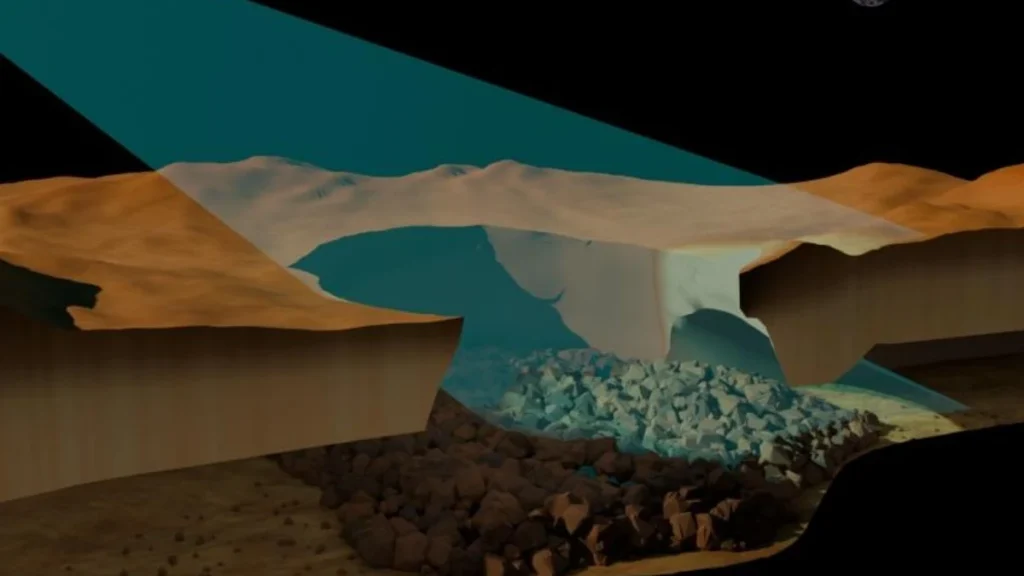
The identified conduit is located in the Nyx Mons area and is interpreted as a lava tube, or pyroduct. Measurements derived from radar backscatter geometry indicate a diameter of approximately 1 km (0.62 miles), a roof thickness of at least 150 m (490 feet), and an empty void height of no less than 375 m (1 230 feet). The radar signature confirms that the cavity extends at least 300 m (0.19 miles) into the subsurface from the skylight.
Lava tubes form when low-viscosity lava develops a solid crust while molten material continues to flow beneath the surface.
On Venus, physical conditions differ from those on Earth, including lower gravity and a dense atmosphere, which favor rapid crust formation and the development of thick, mechanically stable roofs. These conditions are consistent with the large dimensions inferred for the Venusian conduit.
Direct optical observation is not possible on Venus because its dense carbon dioxide atmosphere prevents visible-wavelength imaging of the surface, leaving radar remote sensing as the only viable method for investigating subsurface structures.
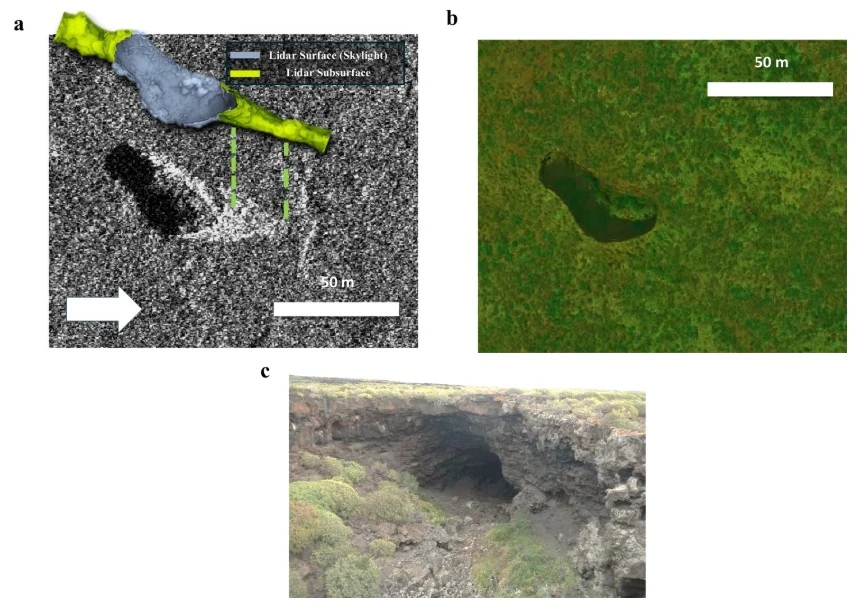
The Magellan radar system operated in S band at a frequency of 2.385 GHz and employed a side-looking acquisition geometry. Under suitable conditions, radar waves entering a skylight can interact with internal cavity walls and floors, producing diagnostic reflections that allow subsurface morphometry to be inferred from orbital observations.
Morphological analysis of the surrounding terrain and the presence of additional nearby collapse pits are consistent with the existence of a longer subsurface conduit beyond the portion directly detected by radar. While existing data do not allow confirmation of total conduit length, the observed surface features support continuity extending beyond the mapped section.
“The results of this study are very important for future missions to Venus, such as the European Space Agency’s Envision and NASA’s Veritas,” Bruzzone said.
“Both spacecraft will carry advanced radar systems capable of capturing higher-resolution images, allowing scientists to study small surface pits in greater detail. In addition, Envision will carry an orbital ground penetrating radar (Subsurface Radar Sounder) capable of probing Venus’s subsurface to depths of several hundred meters and potentially detecting conduits even in the absence of surface openings.
“Our discovery, therefore, represents only the beginning of a long and fascinating research activity.”
References:
1 Radar-based observation of a lava tube on Venus – Carrer, L., Diana, E. & Bruzzone, L. – Nature Communications – February 9, 2026 – DOI https://doi.org/10.1038/s41467-026-68643-6
2 Evidence of a Subsurface Lava Tube on Venus – University of Trento – February 9, 2026

I'm a dedicated researcher, journalist, and editor at The Watchers. With over 20 years of experience in the media industry, I specialize in hard science news, focusing on extreme weather, seismic and volcanic activity, space weather, and astronomy, including near-Earth objects and planetary defense strategies. You can reach me at teo /at/ watchers.news.

Commenting rules and guidelines
We value the thoughts and opinions of our readers and welcome healthy discussions on our website. In order to maintain a respectful and positive community, we ask that all commenters follow these rules.