
Finland’s biodiversity report shows worsening decline in boreal habitats
Finland, long seen as Europe’s wilderness heart, reports that its forests, wetlands, and coasts are deteriorating faster than they are recovering, raising questions about the effectiveness of decades of conservation policy.
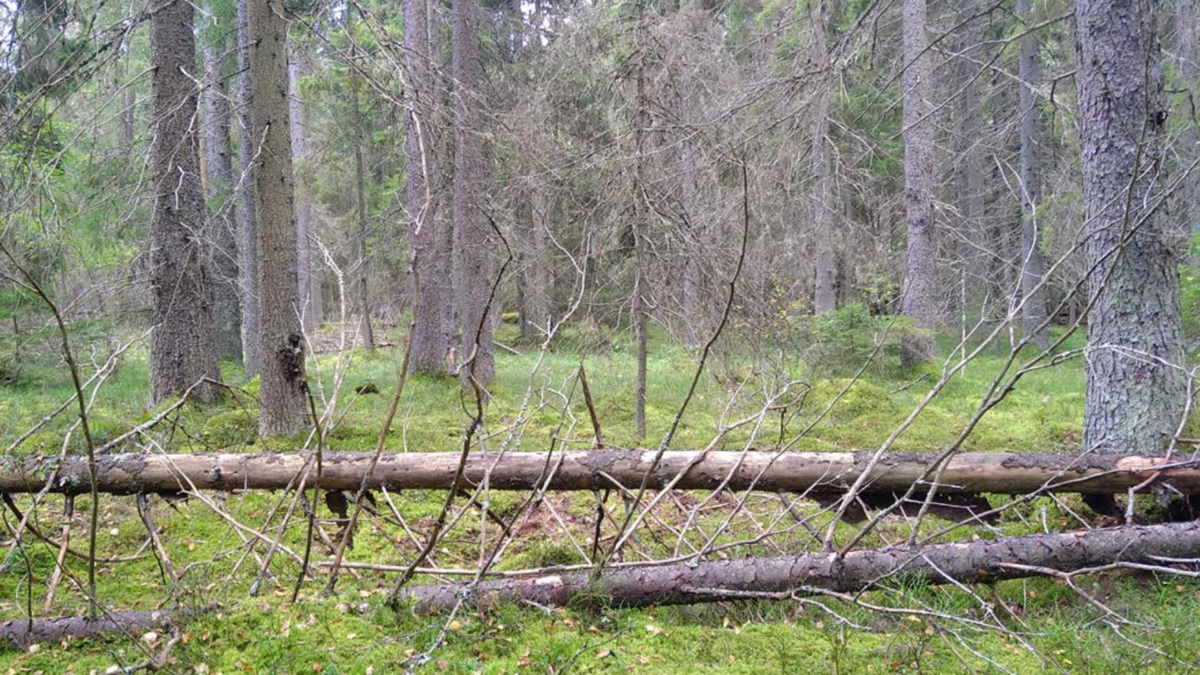
Mixed old growth forest with threatened orchid Goodyera reopens. Credit: Sebastian Kirppu/WWF Finland
At first glance, Finland appears to be one of Europe’s last great wildernesses. Forests cover about 75% of its land area, and the country’s thousands of lakes, peatlands, and archipelagos have long been seen as symbols of unspoiled nature.
But behind this image, assessments show a stark reality: most habitats are in decline. According to the Finnish Environment Institute (SYKE), more habitats and species are deteriorating faster than improving, despite more than 30 years of legal obligations under the EU Habitats and Birds Directives.
The 2019–2024 reporting cycle, submitted to the European Commission, confirms that the crisis is particularly severe in Finland’s boreal zone, the vast northern forest belt that defines the country’s ecology. Here, three out of four habitat types are in poor condition.
Only in the alpine zone of northern Lapland do habitats show more favorable trends, mainly because of reduced human pressures compared to southern and central regions.
Why decades of protection have not worked
The EU Habitats Directive (1992) and Birds Directive (1979) require member states to ensure that listed habitats and species reach “favorable conservation status.” Finland has implemented these obligations through national parks, Natura 2000 sites, and species protection laws.
Researchers point to several structural pressures why the country experiences persistent decline:
- Forestry intensity: Finland is one of the world’s most forested countries, but it is also one of its most heavily managed. Only a small fraction of forests are left in natural or near-natural states. Clearcutting, drainage of peatland forests, and monoculture plantations reduce habitat diversity.
- Agricultural land use: Drainage of wetlands for cultivation, intensive livestock farming, and nutrient runoff contribute to habitat loss and eutrophication.
- Climate change: Northern species such as the willow grouse and arctic-alpine plants are losing ground as warming alters ecosystems. Warmer conditions also allow southern species to expand northwards, creating new ecological competition.
- Fragmentation: Roads, urban expansion, and infrastructure development break up ecosystems, limiting species’ ability to move and adapt.
“Habitat condition can be improved by increasing protection, restoring damaged areas, and coordinating land use more comprehensively,” said Marita Arvela, senior environmental planner at SYKE, who coordinated the reporting.

Birds as early indicators of ecosystem stress
Birds are often used as indicators of biodiversity, and Finland’s monitoring reveals worrying trends. Populations of many species, especially wetland and shorebirds, are declining.
The reasons mirror those of broader biodiversity loss: habitat destruction, eutrophication of lakes and coastal waters, and hunting pressures.
“Bird populations can still recover if habitats are protected and restored,” said Aleksi Mikola, a researcher at SYKE. “Water and shorebird species, in particular, would benefit from wetland restoration, removal of invasive species, and improved hunting regulations.”
These findings align with broader European patterns. The EU’s State of Nature 2020 report noted that nearly half of all bird species in Europe are in decline. Finland’s case is therefore part of a continental biodiversity crisis.
Old-growth forests under threat
Forests remain the backbone of Finland’s biodiversity. They host species from woodpeckers to lichens and insects that depend on deadwood. Old-growth and primary forests, in particular, sustain unique ecological communities that cannot be replicated by plantations.
A 2025 report by WWF Finland warns that these forests are disappearing rapidly. Out of Finland’s 23 million ha of forest, only about 10% are strictly protected. In the biodiversity-rich south, that share drops to just 3% .
Much of the remaining old-growth lies outside protected areas and is vulnerable to logging. Without improved mapping and transparency, conservationists argue, large tracts may be lost before their value is even documented.
The loss of old-growth forests not only threatens biodiversity but also undermines climate mitigation. Boreal forests act as significant carbon sinks, and their degradation releases stored carbon back into the atmosphere.
The WWF report concludes that without expansion of protection, Finland risks losing much of its last primary forests within the coming decades.
Marine and coastal biodiversity under pressure
Finland’s Baltic Sea coast tells a similar story of decline. The Baltic Sea is one of the most polluted seas in the world, and Finnish marine ecosystems show clear signs of stress.
A 2025 study in Ambio reviewed marine biodiversity indicators and found that most are in poor status. About 5% of marine species are considered threatened, and roughly 25% of underwater biotopes are at risk. Very few areas meet the “good status” benchmark of the EU Marine Strategy Framework Directive.
Key drivers include eutrophication from nutrient runoff, physical disturbance of seabed habitats, fishing pressure, and climate-driven changes in salinity and temperature.
This creates cascading effects: algae blooms reduce oxygen levels, fish populations decline, and water birds lose food sources.
From protection to restoration
Recognizing that protection alone is not enough, the EU adopted the Nature Restoration Law in 2023, which requires member states to actively restore degraded habitats.
Finland is now drafting its national restoration plan. A key innovation is SYKE’s introduction of reference area sizes for each habitat type, benchmarks that define the minimum ecologically viable area needed for a favorable conservation status.
These reference values will guide restoration priorities and ensure that efforts are scientifically measurable.
“General actions are not always sufficient,” said Ulla-Maija Liukko, head of species assessment at SYKE. “Species-specific knowledge and long-term continuity in planning are essential.”
Why Finland’s case matters for Europe
Finland’s biodiversity crisis is not an isolated case but a microcosm of Europe’s wider ecological challenge.
- The EU set a target under its Biodiversity Strategy to protect 30% of land and sea by 2030, with one-third of that strictly protected. Finland’s current levels fall short.
- The boreal forest biome, stretching from Norway to Russia, is one of the world’s largest carbon sinks. Its degradation has global climate implications.
- Finland’s extensive data collection and long-term monitoring of birds, habitats, and species make it a test case for how well European conservation policy is working.
The message is clear; without large-scale restoration and stricter protection, even countries with vast natural areas cannot halt biodiversity loss.
Recovery as the next frontier
Finland’s latest EU biodiversity report illustrates a paradox. Legal frameworks and conservation areas have multiplied since the 1990s, yet most habitats continue to deteriorate.
The next decade will test whether the EU Nature Restoration Law can reverse these trends. For Finland, success will depend on integrating forestry, agriculture, and climate policy with ecological needs.
Achieving recovery will require not just legislation but long-term political commitment, social acceptance, and financial investment. Without this, Finland’s vast boreal forests and rich ecosystems may continue to erode, undermining both biodiversity and climate stability.
References:
1 Finland reports sharp decline in habitats and species – Helsinki Times – September 13, 2025
2 Primary and old-growth forests at risk in Finland and Sweden – WWF Finland – Accessed September 17, 2025

I’m a science journalist and researcher at The Watchers, contributing to the Epicenter edition, where I cover peer-reviewed scientific research and emerging discoveries across Earth and space sciences. With a background in astronomy and a passion for environmental science, I’ve worked in shark and coral conservation in Fiji, conducting reef and shark-behavior research, contributing to mangrove restoration, and earning PADI Open Water and Coral Reef Certifications. I bring a blend of scientific rigor and storytelling to illuminate the discoveries shaping our planet and beyond.

Commenting rules and guidelines
We value the thoughts and opinions of our readers and welcome healthy discussions on our website. In order to maintain a respectful and positive community, we ask that all commenters follow these rules.