
Earth’s continents forged in furnace-like heat, new study reveals how stability was born
Researchers at Penn State and Columbia University have found that Earth’s continents became stable through extreme heat exceeding 900 °C (1 650 °F) in the planet’s lower crust, according to a study published in Nature Geoscience on October 13, 2025.
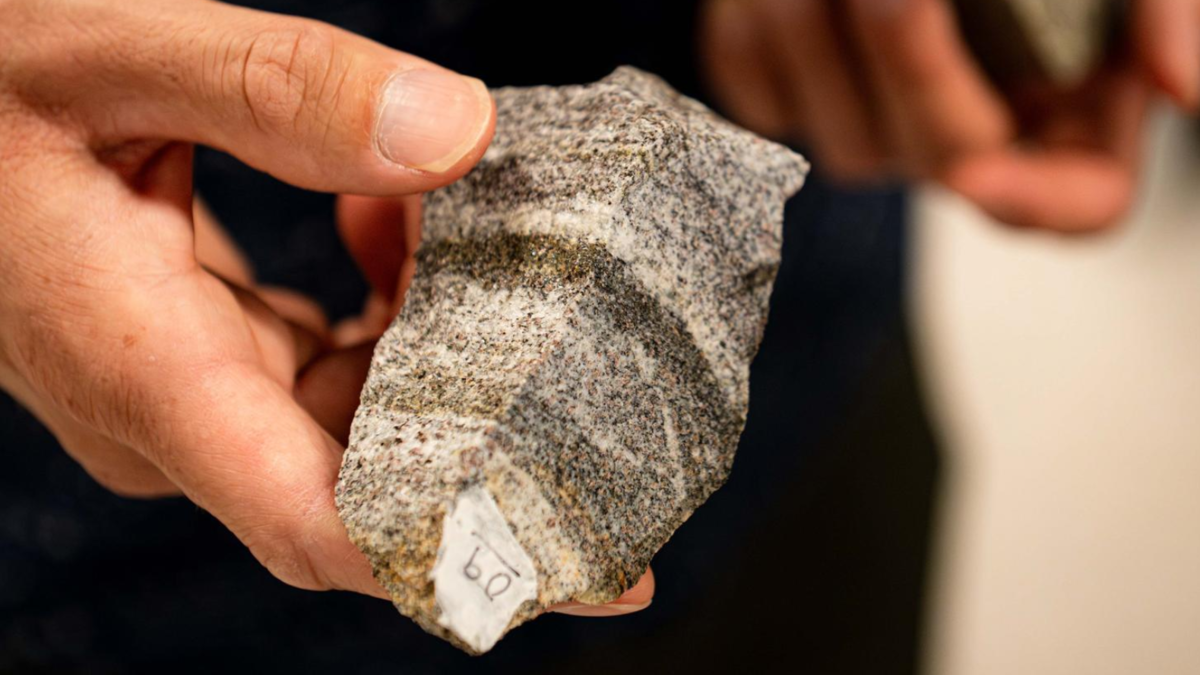
A new study of the chemical components of rocks led by researchers at Penn State and Columbia University provides the clearest evidence yet for how Earth's continents became and remained so stable — and the key ingredient is heat. Credit: Jaydyn Isiminger
Earth’s continents have lasted for billions of years, serving as the foundation for oceans, ecosystems, and civilizations. Yet scientists have never fully understood why they remained stable while other parts of the planet continued to churn and melt. A new study published in Nature Geoscience by researchers at Penn State and Columbia University finally provides the answer: the continents were hardened in a planetary forge.
The team found that stability required extreme temperatures exceeding 900°C (1 650°F) deep within the lower crust. The furnace-like heat allowed radioactive elements such as uranium, thorium, and potassium to migrate upward. As the heat-producing elements moved, they carried energy toward the surface, cooling the base of the crust and allowing it to solidify into a strong, rigid foundation.
Without this heat-driven redistribution, the early continents would have remained unstable and weak, collapsing back into the mantle. “Stable continents are a prerequisite for habitability,” said Andrew Smye, lead author of the study. “But for them to gain that stability, they first had to cool down by moving their internal heat toward the surface.”
The findings reveal a planetary process that connects the birth of stable crust to the distribution of critical minerals and even the potential for habitable worlds around other stars. Earth’s resilience was not inevitable but the product of extreme internal heating that transformed the planet’s crust from a molten system into a stable, life-bearing structure.
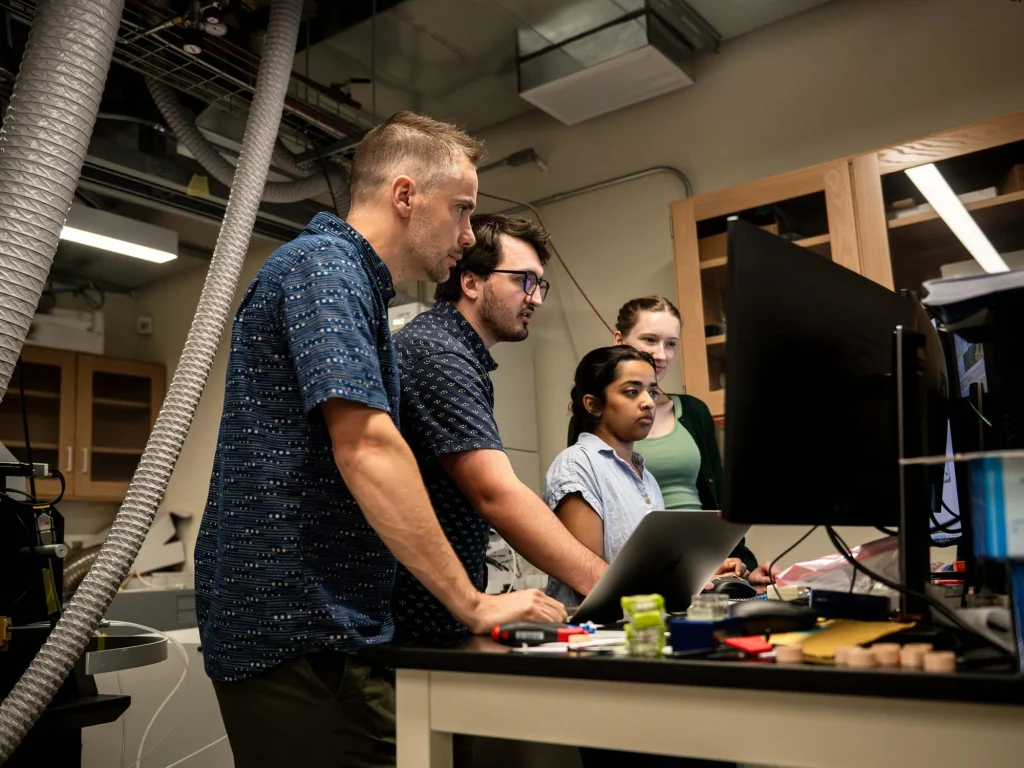
The hidden fire beneath the continents
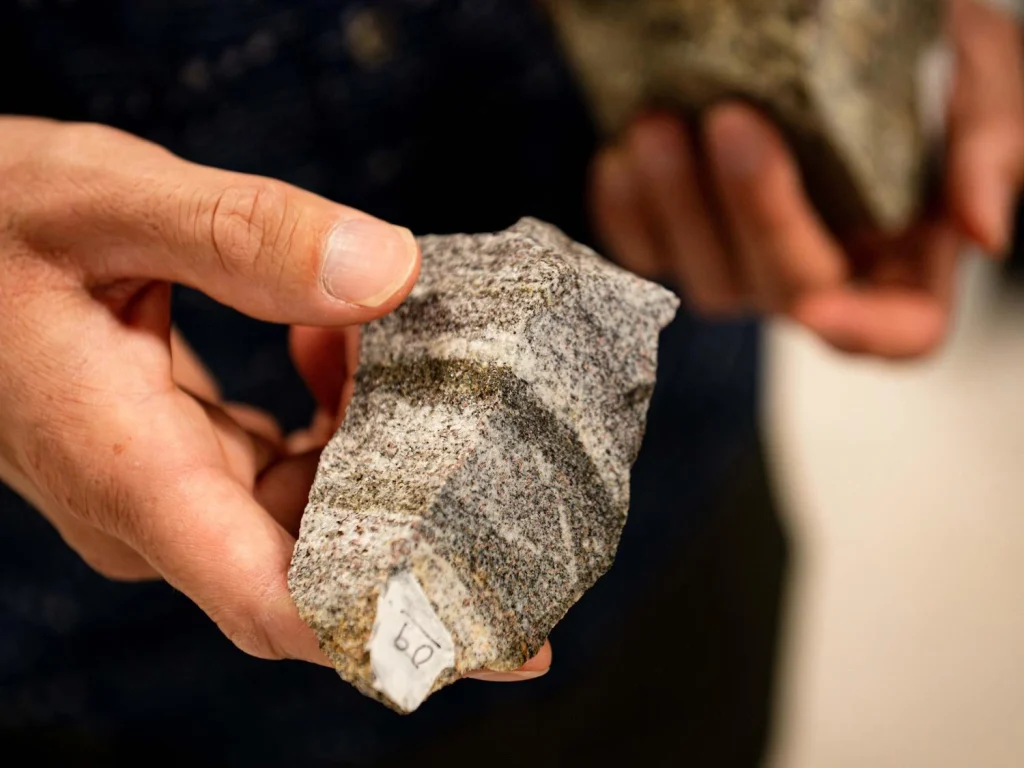
To trace how this stabilization occurred, the researchers analyzed hundreds of rock samples from ancient crust exposed in the Alps of Europe and the southwestern United States. The rocks, known as metasedimentary and metaigneous types, once formed several tens of kilometers beneath the surface. By examining their chemical composition, the team reconstructed how heat moved through the crust billions of years ago.
The results were striking. Rocks that experienced ultrahigh-temperature (UHT) metamorphism above 900°C (1 650°F) contained much less uranium and thorium than those heated to lower levels. The pattern appeared consistently across multiple continents, showing that the redistribution of these elements was a global process. Statistical tests confirmed the difference, proving that rocks once baked in Earth’s deep crust were systematically depleted in radioactive elements.
This redistribution acted as a thermal valve for the planet. As uranium and thorium migrated upward, the deep crust lost its main heat source. Cooling followed, and with it came mechanical strength. The result was the formation of a stable lower crust capable of supporting mountains, oceans, and continental interiors for billions of years.
Smye compared this transformation to metalworking. When metal is heated and hammered, it realigns its structure and becomes stronger. In the same way, tectonic forces at extreme temperatures forged the continents into durable forms. The continents we live on are, in effect, the hardened residue of a world once molten at its core.
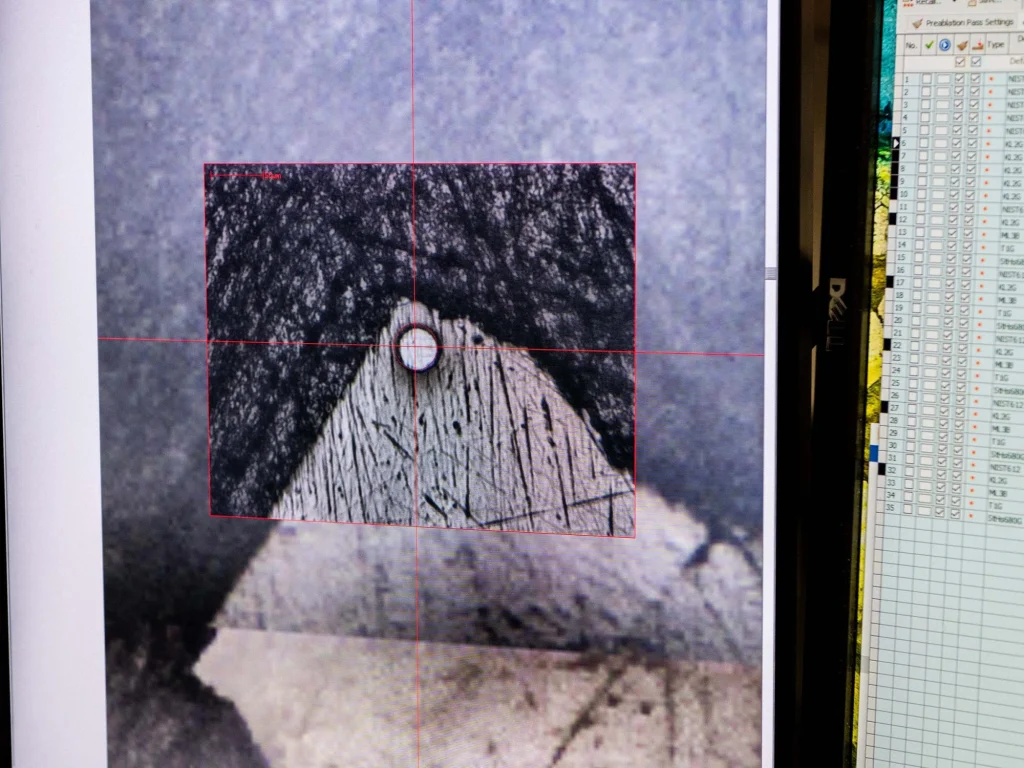
Uncovering the geochemical engine of stability
Before this study, scientists assumed that simple melting of crustal rocks was enough to form stable continents. Smye and co-author Peter Kelemen showed that melting alone was not sufficient. The crust had to become much hotter, by roughly 200°C (360°F) more than previously believed, before key minerals began to break down.
At these ultrahigh temperatures, accessory minerals such as monazite and zircon, which contain most of Earth’s uranium and thorium, started to dissolve. When this happened, just a few percent of molten material, about 3–4% by weight, was enough to carry radioactive elements upward through the crust. Once these melts cooled and solidified, they enriched the upper crust with heat-producing material while leaving the lower crust depleted and strong.
The lower crust, on average, contains 55–65% silica and consists mostly of metasedimentary and evolved igneous rocks. Although peraluminous metasedimentary rocks make up only about a quarter of this layer by volume, they generate more than half of the total crustal heat production. This uneven heat distribution created a natural division: a warmer, more buoyant upper crust and a denser, cooler base. The contrast between the two layers became the secret to continental longevity.
The researchers also found that ultrahigh-temperature metamorphism occurred under pressures of 0.6 to 1.2 gigapascals, equivalent to depths of 20–40 km (12–25 miles). In those buried zones, temperatures occasionally climbed as high as 1 200°C (2 190°F), allowing the crust to differentiate and strengthen from below. The process reshaped Earth’s early crust into the chemically layered structure that endures today.
From radioactive heat to mineral treasure
The same process that stabilized the continents also shaped the distribution of valuable minerals. As uranium and thorium migrated toward the surface, they carried with them other elements that prefer to travel with melts, including lithium, tin, tungsten, and rare-earth elements. Over time, these became concentrated in upper-crustal regions where they can now be mined.
Smye explained that understanding these early processes helps geologists identify where modern mineral deposits might exist. “If you destabilize the minerals that host uranium, thorium, and potassium,” he said, “you’re also releasing rare-earth elements. Knowing how that happened billions of years ago tells us where to look today.”
The researchers calculated the rate at which these elements were transported upward. Continental arcs, zones where plates collide and magmas rise, were found to be the most active sites of ultrahigh-temperature processing. These regions moved roughly 4.8 to 8 x 10⁻⁶ teragrams of uranium and 22 to 33 x 10-6 teragrams of thorium into the upper crust each year. Over two billion years, this slow migration built the chemical architecture that still defines the continents.
Even a small layer of melting, about 1–3 km (0.6–1.9 miles) thick, was enough to transfer the necessary material. This refinement occurred repeatedly through the supercontinent cycles, when vast landmasses such as Rodinia and Gondwana assembled and broke apart, each time reworking Earth’s crust in a global furnace. The process left behind the stable cratons that anchor modern continents.
A key to planetary habitability
Stable continents are essential to maintaining a planet’s habitability. They regulate the carbon cycle through weathering, anchor ocean basins, and sustain ecosystems over geological time. Without them, a planet’s surface would constantly recycle into its mantle, erasing any chance for long-term biological development.
The study suggests that this stability depends on whether a planet ever underwent ultrahigh-temperature metamorphism. Worlds that never experienced such internal heating may lack rigid crustal platforms altogether. This insight gives planetary scientists a new way to identify potentially habitable exoplanets by searching for signs of crustal differentiation and radiogenic layering similar to Earth’s.
In this sense, Earth’s earliest furnace not only forged the continents but also set the stage for life. The redistribution of heat-producing elements created a planet that could cool enough to sustain oceans and an atmosphere while remaining active enough to recycle essential nutrients. It was a delicate balance, achieved only through the intense transformation of its crust billions of years ago.
The work also demonstrates that extreme thermal processes can make planets more stable, not less. What appears destructive on short timescales becomes constructive on geological ones, turning chaos into structure and fire into the foundation for life.
The enduring lesson of a molten planet
The new findings unite geochemistry, tectonics, and planetary science into one cohesive model. They show that ultrahigh-temperature metamorphism was not an anomaly but a fundamental process in shaping the planet’s long-term stability.
During Earth’s early history, radiogenic heat was nearly double today’s levels, making such intense events more common. As radioactive decay slowed, these processes became rare, leaving behind the stable continental nuclei that now form about 60% of Earth’s land area.
Every modern continent carries a record of that fiery past, preserved in rocks that once melted, recrystallized, and strengthened under unimaginable heat. Smye summarized it simply: “We found a new recipe for making continents. They needed to get much hotter than anyone thought possible.”
The continents, forged in a planetary furnace, became the stage for oceans, mountains, and eventually life itself. Their endurance is a silent testimony to the power of heat, pressure, and time, the trio that built a habitable world.
References:
1 Ultra-hot origins of stable continents – Andrew J. Smye et al. – Nature Geoscience – October 13, 2025 – https://doi.org/10.1038/s41561-025-01820-2 – OPEN ACCESS
2 Earth’s continents stabilized due to furnace-like heat, study reveals – Penn State – October 13, 2025

I’m a science journalist and researcher at The Watchers, contributing to the Epicenter edition, where I cover peer-reviewed scientific research and emerging discoveries across Earth and space sciences. With a background in astronomy and a passion for environmental science, I’ve worked in shark and coral conservation in Fiji, conducting reef and shark-behavior research, contributing to mangrove restoration, and earning PADI Open Water and Coral Reef Certifications. I bring a blend of scientific rigor and storytelling to illuminate the discoveries shaping our planet and beyond.

Commenting rules and guidelines
We value the thoughts and opinions of our readers and welcome healthy discussions on our website. In order to maintain a respectful and positive community, we ask that all commenters follow these rules.