
China’s giant sinkholes shelter endangered Magnolia but leave isolated populations genetically vulnerable
Forests deep inside China’s giant karst sinkholes protect the endangered tree Magnolia aromatica from harsh surface conditions, but populations in those refuges have less genetic diversity and carry more harmful mutations than trees growing just outside. A 2026 study of 112 trees across 26 populations found that these sheltered habitats can help the species survive while restricting the genetic exchange needed for long-term adaptation.
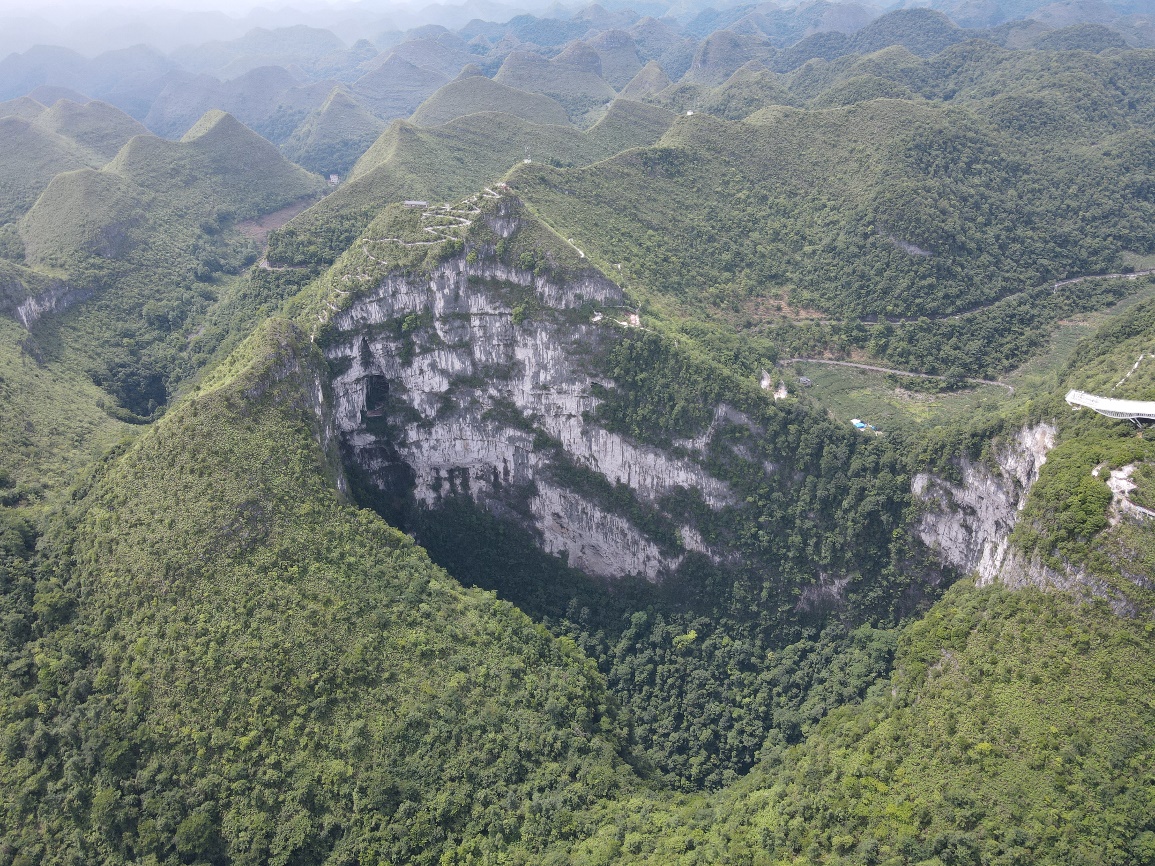
Dashiwei Tiankeng in Leye, Guangxi, southwestern China. The enclosed karst depression contains a shaded forest habitat below steep limestone walls. Credit: Tang Jianmin / Chinese Academy of Sciences
Giant karst sinkholes in southwestern China contain shaded forests where the endangered tree Magnolia aromatica can persist despite harsher conditions on the surrounding limestone terrain. Whether those protected habitats also conserve the genetic variation needed for long-term survival has been less clear. Zhu et al. (2026) examined that question by comparing populations growing inside tiankengs with those in the surrounding landscape.
The researchers found that the answer depends on geographic scale. Across major genetic lineages, populations associated with tiankeng landscapes retained intermediate levels of genomic diversity and harmful mutation burden. At the scale of individual sinkholes, however, interior populations had less genetic diversity and carried a greater burden of deleterious mutations than nearby exterior populations. The same enclosed setting that buffers environmental stress can also limit genetic exchange.
Tiankengs are exceptionally large, steep-sided depressions formed in karst terrain, where water dissolves carbonate rock and underground cavities can collapse. Their enclosed floors often retain cool, humid conditions that differ sharply from the exposed ground above. These settings can act as microrefugia, allowing organisms to survive in local pockets of suitable habitat when environmental conditions become less favorable in the surrounding region.
The study, published in Current Biology on July 14, 2026, was carried out by researchers from the South China Botanical Garden of the Chinese Academy of Sciences and the Guangxi Institute of Botany. They resequenced DNA from 112 individual trees representing 26 natural populations across Guangxi, Guizhou and Yunnan, including populations within and outside tiankengs. The analysis identified four major geographic genetic lineages, two associated with the Leye Tiankeng landscape.
To compare those populations, the team first assembled a near telomere-to-telomere reference genome for M. aromatica, providing a common sequence against which differences among individual trees could be assessed. The population analysis covered genomic diversity, evolutionary relationships, past gene exchange and the burden of potentially harmful genetic variants. The researchers also tested how seedlings responded to different light conditions and modeled possible future environmental and genetic risks.
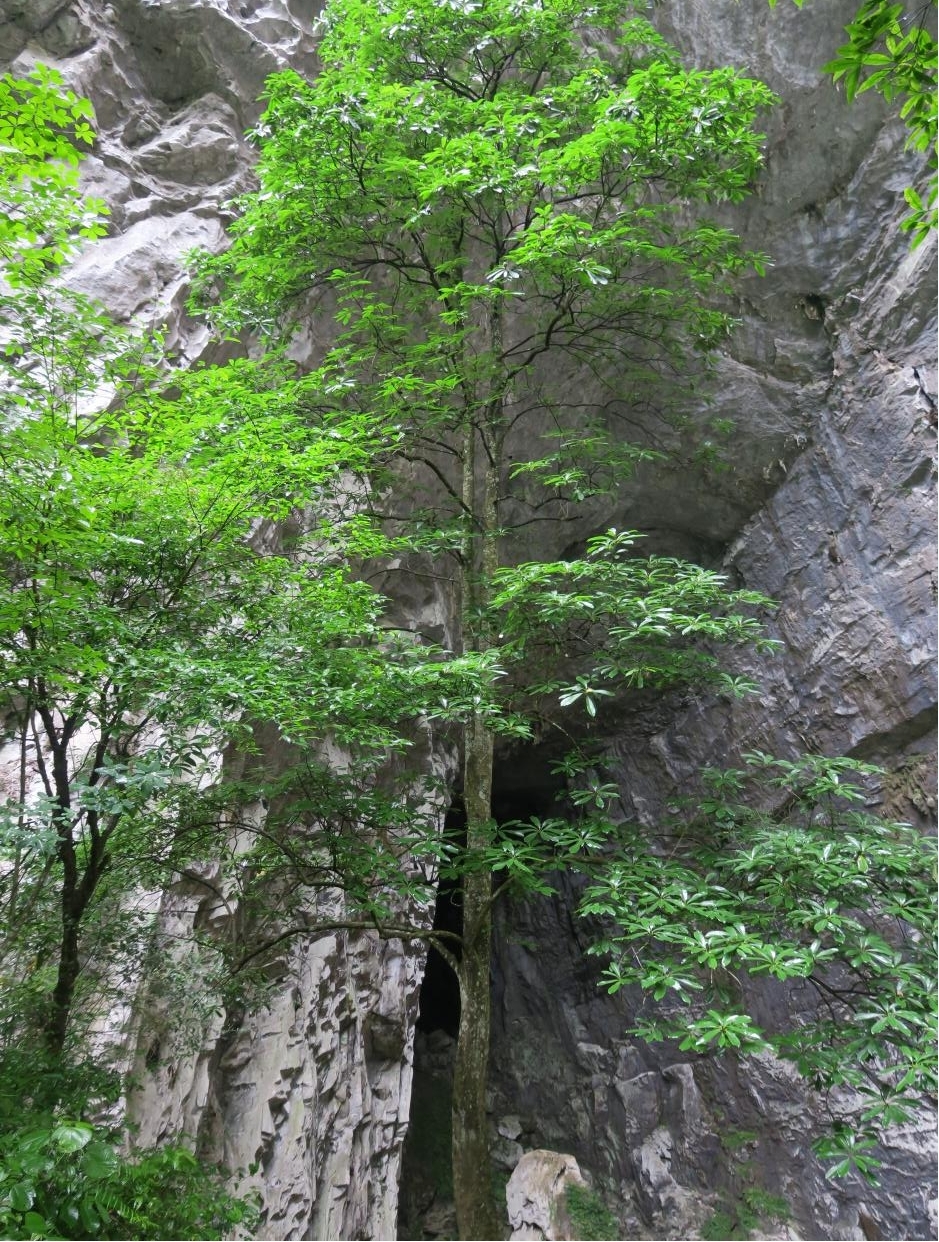
The four lineages did not develop in complete isolation. The researchers reconstructed a history of divergence accompanied by gene flow, although the movement of genes between populations was restricted by major dispersal barriers in the fragmented karst landscape. The relationship between tiankeng interiors and nearby exterior habitats was especially important because it allowed the team to examine genetic differences across relatively short distances.
At that finer scale, tiankeng-interior populations had significantly lower genetic diversity and higher deleterious mutation burden than neighboring populations outside the sinkholes. Their levels of inbreeding were comparable, so the researchers considered the pattern more consistent with sustained demographic isolation and strong genetic drift than with recent inbreeding alone. Genetic drift refers to random changes in the frequency of genetic variants, an effect that becomes stronger when populations are small.
The tiankeng environment also imposed a strong selective pressure through its low light levels. Genomic scans found selection signals in genes related to photosynthesis and carbon fixation. In controlled shading experiments, M. aromatica seedlings exposed to strong light suffered high mortality, while seedlings grown under 50% to 90% shade survived and grew well, with especially good performance under deep shade. The results support the researchers’ interpretation that adaptation to shaded habitats contributes to the species’ persistence inside tiankengs.
Ming Kang, a corresponding author of the study, said the sinkholes provide a buffered environment that can help the endangered trees persist but also separate populations and reduce the genetic variation available for future adaptation. This distinction matters because a stable local climate does not necessarily preserve connectivity with populations growing beyond the sinkhole walls.
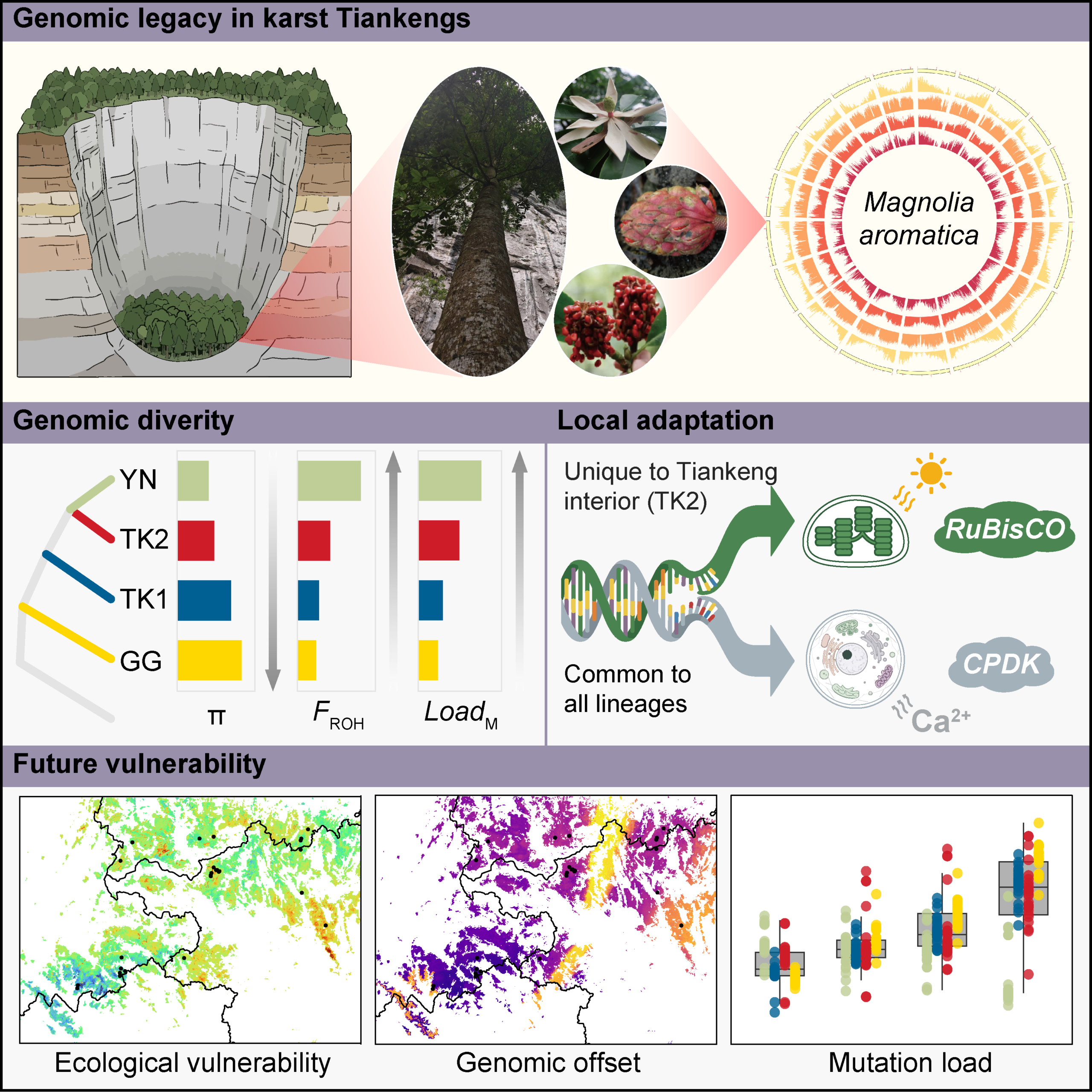
The researchers also assessed how future climate change could affect the species. They combined species-distribution models with genomic-offset estimates, which examine how present genetic characteristics might become mismatched with future conditions, and projections of harmful mutation burden. These analyses identified elevated potential risk near dispersal barriers and suggested that genetic erosion may compound climate-related vulnerability.
Under a high-emissions scenario, the research team’s projections indicated that roughly one-third of the species’ existing habitat could face severe climatic mismatch by the end of the century. Mutation burdens were also projected to increase in most populations. Those estimates describe possible future conditions under the modeled assumptions; they do not establish that those habitat changes or increases in harmful variants have already occurred.
The findings point to a conservation problem that cannot be addressed by protecting the sinkhole floor alone. The researchers recommend maintaining the sheltered interior habitats while also considering exterior populations, transition zones and possible dispersal corridors that could support genetic connectivity. For small populations that have remained isolated, continued genetic monitoring would help determine whether additional intervention is warranted.
Tiankeng forests have been studied in China for decades. UNESCO noted that the forest reported from a 192 m (630 feet) deep sinkhole in Guangxi in 2022 drew worldwide attention but was not the first such ecosystem known to researchers. That earlier discovery should not be confused with the 2026 M. aromatica genomic study, which examined a species already known to occur both inside and outside tiankengs.
The genetic results concern one endangered tree species and do not establish that every tiankeng population will follow the same evolutionary path. The future-risk maps also depend on modeled climate conditions and assumptions about how genetic variation affects adaptation. Further comparisons across other karst plants, along with long-term monitoring of interior and exterior populations, would be needed to determine how broadly the refuge-versus-isolation pattern applies.
References:
1 Zhu, X.-L., Tang, J.-M., Feng, C., Li, Y.-Y., Feng, S., He, G.-H., Wang, J., Wei, X., & Kang, M. (2026). Karst tiankengs preserve but constrain evolutionary potential in the endangered tree Magnolia aromatica. Current Biology, 36(15), 3863–3876.e7. DOI: 10.1016/j.cub.2026.06.051
2 Haven or Trap? Study Finds Sinkholes Protect Endangered Tree at Evolutionary Cost – Chinese Academy of Sciences – July 15, 2026
3 China’s “heavenly pits”, a dive into the unknown – UNESCO – July 4, 2023 (updated January 3, 2025)

I’m a science journalist and researcher at The Watchers, contributing to the Epicenter edition, where I cover peer-reviewed scientific research and emerging discoveries across Earth and space sciences. With a background in astronomy and a passion for environmental science, I’ve worked in shark and coral conservation in Fiji, conducting reef and shark-behavior research, contributing to mangrove restoration, and earning PADI Open Water and Coral Reef Certifications. I bring a blend of scientific rigor and storytelling to illuminate the discoveries shaping our planet and beyond.
