• Juice mission on track, world’s first lunar-Earth flyby successfully redirects spacecraft to Venus

    The European Space Agency’s JUICE mission successfully completed the world’s first lunar-Earth flyby on August 20, 2024, a vital maneuver that used the gravitational forces of the Moon and Earth to send the spacecraft toward Venus. This accomplishment is critical for saving fuel and modifying the spacecraft’s trajectory as it travels to Jupiter.

  • Russian RESURS-P1 satellite breaks in orbit, releasing over 180 pieces of trackable debris and forcing ISS astronauts to take shelter

    Russian decommissioned satellite Resurs-P1 broke up in orbit on June 26, 2024, releasing roughly 100 pieces of trackable debris. The number rose to 180 by the end of June 27 and is expected to keep rising, according to Leo Labs. Following the breakup, NASA instructed the 9 astronauts aboard the International Space Station (ISS) to take shelter in their respective spacecraft as a standard precautionary measure.

  • Piece of largest object ever jettisoned from ISS crashes into Florida home, U.S.

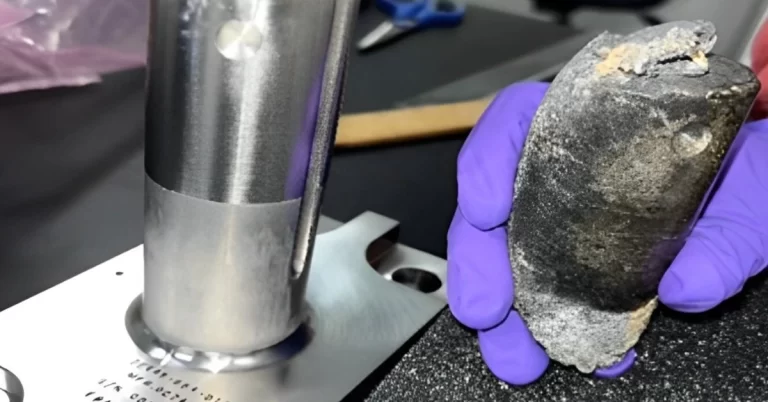
    In March 2021, NASA ground controllers deployed the International Space Station’s (ISS) robotic arm to discard a cargo pallet (EP-9) containing obsolete nickel hydride batteries, following upgrades to lithium-ion units. This operation set a record for the heaviest item jettisoned from the ISS. While the entire pallet was expected to disintegrate before reaching Earth’s surface, a fragment of this hardware survived atmospheric re-entry and struck a residence in Naples, Florida, in March 2024.

  • ESA’s SMOS and Swarm observe strongest geomagnetic storm since 2017

    The European Space Agency’s SMOS and Swarm satellites have, for the first time, successfully tracked a severe solar storm, following an X1.1 solar flare and a halo coronal mass ejection (CME) on March 23, 2024. The CME impacted Earth on March 24, producing a G4 – Severe geomagnetic storm — the strongest geomagnetic storm since September 2017.

  • Decade of Swarm satellite data unveils new insights into Earth’s magnetic field and core dynamics

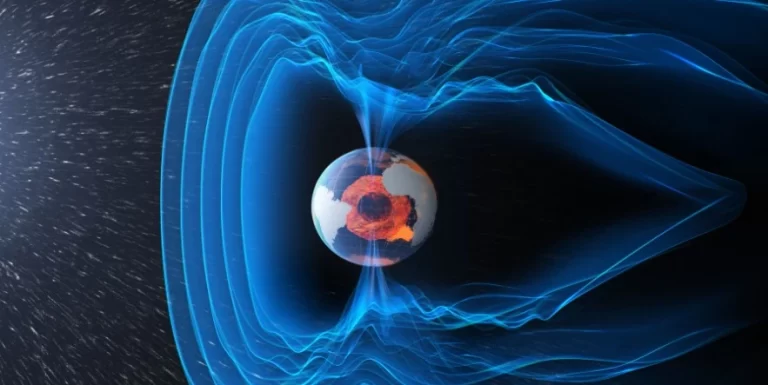
    Launched in 2013, the European Space Agency’s (ESA) Swarm mission, consisting of three satellites, has provided a decade of invaluable data on Earth’s magnetic field and core dynamics. This data has enabled significant advances in understanding the mechanisms behind the magnetic field’s slow changes, as detailed in a recent ESA-funded project report.

  • DART impact altered Dimorphos’ orbit and shape, proving asteroid deflection technique viable

    On September 26, 2022, NASA’s Double Asteroid Redirection Test (DART) mission made history by intentionally colliding with the asteroid Dimorphos, significantly altering both its orbital period and physical shape. This is the first time humanity has purposefully altered the motion of a celestial object, as well as the first full-scale demonstration of asteroid deflection technology.

  • Largest object ever jettisoned from ISS to make uncontrolled re-entry this week

    The International Space Station’s (ISS) largest-ever discarded object, a hefty equipment pallet weighing 2.9 tons, is anticipated to make an uncontrolled descent back to Earth between March 8 and 9, 2024. Launched into space for a critical ISS power system upgrade, this pallet, loaded with nine old station batteries, will not fully disintegrate upon reentry, with predictions indicating about half a ton of debris could survive the descent and impact the planet’s surface.