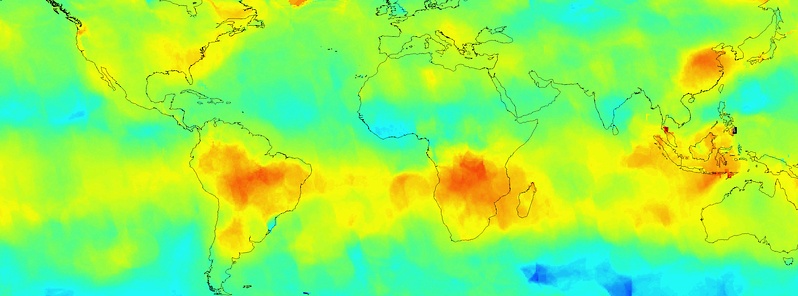
• First global maps from Orbiting Carbon Observatory (OCO-2)

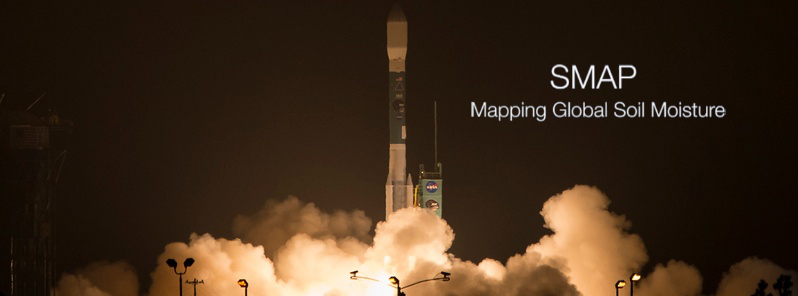
    The first global maps of atmospheric carbon dioxide from NASA's new Orbiting Carbon Observatory-2 (OCO-2) mission show elevated carbon dioxide concentrations across the Southern Hemisphere from springtime biomass burning and hint at potential surprises to come.A glo

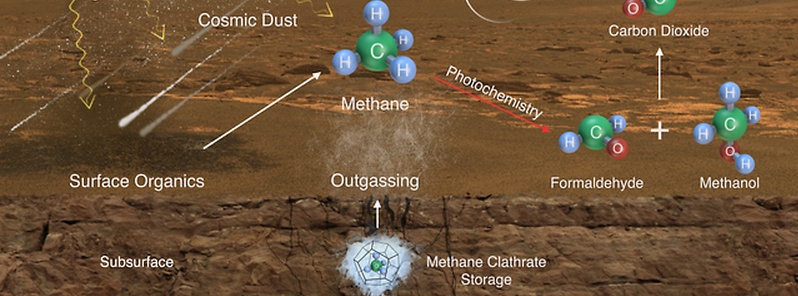
  • Curiosity rover finds active, ancient organic chemistry on Mars

    NASA's Mars Curiosity rover has measured a tenfold spike in methane, an organic chemical, in the atmosphere around it and detected other organic molecules in a rock-powder sample collected by the robotic laboratory’s drill."This temporary increase in meth

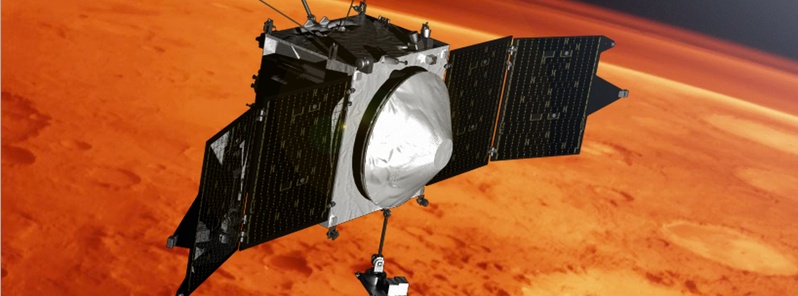
  • MAVEN identifies links in chain leading to atmospheric loss

    Early discoveries by NASA’s newest Mars orbiter are starting to reveal key features about the loss of the planet’s atmosphere to space over time. The findings are among the first returns from NASA’s Mars Atmosphere and Volatile Evolution (MAVEN) missio

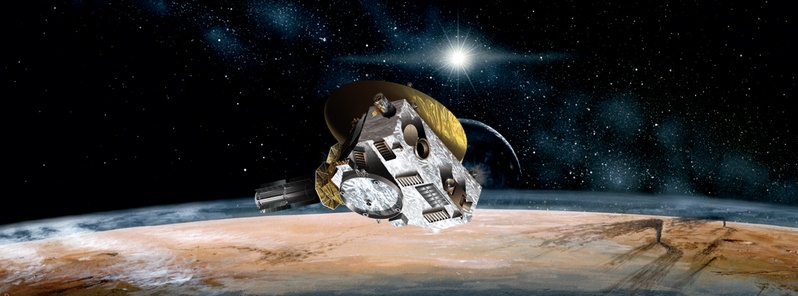
  • New Horizons wakes up for historic Pluto encounter

    New Horizons woke up from hibernation on December 6, 2014 after a 4.8 billion km voyage (3 billion miles) and almost nine years after launch. The spacecraft is now preparing for a six-month encounter with Pluto that begins in January 2015. This mission will complete

  • Van Allen probes spot an impenetrable barrier in space

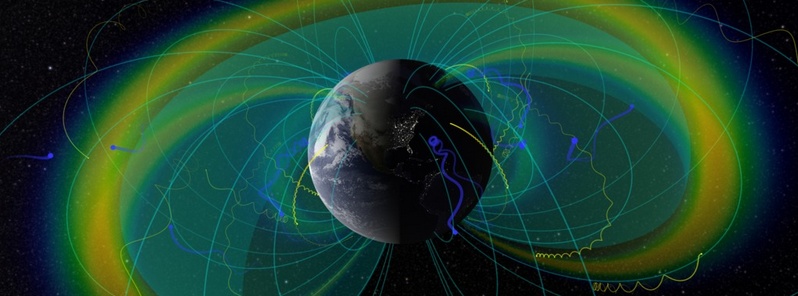
    Van Allen radiation belts have been found to contain a nearly impenetrable barrier that prevents the fastest, most energetic electrons from reaching Earth.The Van Allen belts are a collection of charged particles, gathered in place by Earth’s magnetic field. They

  • High-resolution geological map of asteroid Vesta published

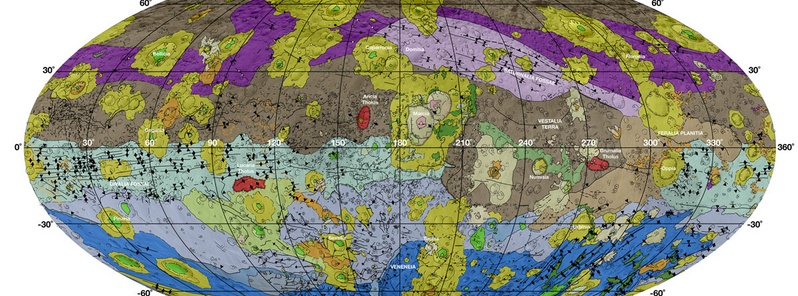
    Images from NASA's Dawn Mission have been used to create a series of high-resolution geological maps of the large asteroid Vesta, revealing the variety of surface features in unprecedented detail. These maps are included with a series of 11 scientific papers publish

  • Philae completes it primary mission before hibernation

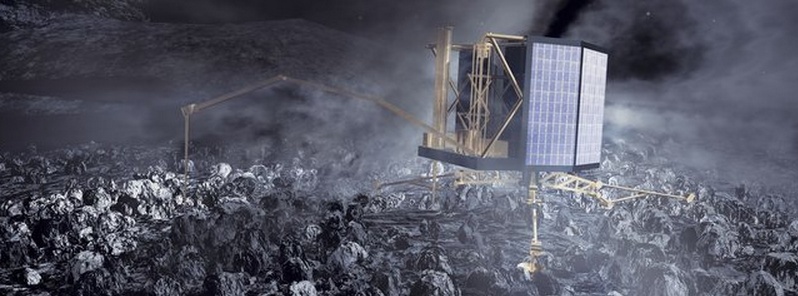
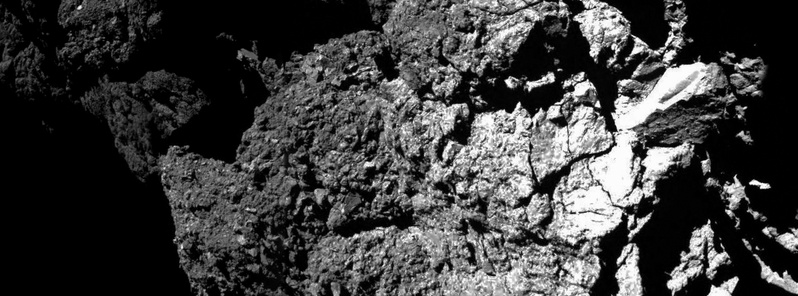
    Rosetta's lander Philae has completed its primary science mission after nearly 57 hours on Comet 67P/Churyumov–Gerasimenko, ESA proudly announced today. With its batteries now depleted and without enough sunlight available to recharge, Philae has fallen into

  • New solar monitoring instrument “EXIS” passes final review

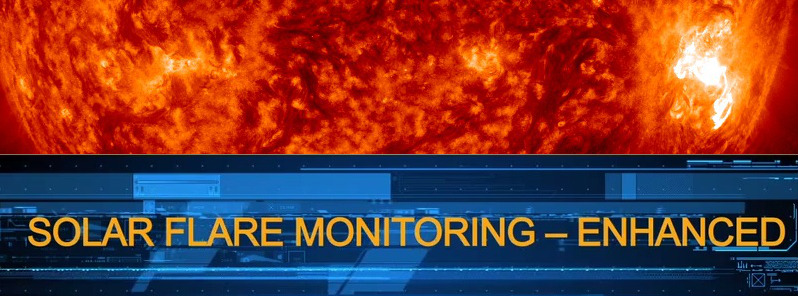
    EXIS, the new solar monitoring instrument that will fly aboard new NOAA's GOES-S satellite has completed its final review, NASA Goddard Space Flight Center said yesterday.The Extreme Ultraviolet and X-ray Irradiance Sensors (EXIS) Flight Model 2 instrument that will