• Exoplanets: detection, atmospheres and habitability

    In this 8th session of the internet-based live lectures between Universities and Institutes, Dr Heike Rauer gives an overview on the current status of exoplanet detections with focus on terrestrial planets in and near the habitable zone, detected by different

  • Venus Express reveals new facts about Venus’ ionosphere

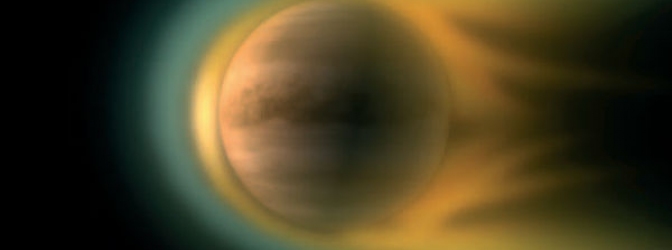
    On January 29, 2013, ESA revealed observations made by the spacecraft in August 2010, when it studied the effect of reduced solar wind on planet's ionosphere. Researchers found that planet’s ionosphere ballooned outward on the planet’s…

  • Sizes of planets and stars

    This few animations show the relative sizes of some planets and stars in our known Universe with VY Canis Majoris as the biggest known

  • A day in the life of Venus

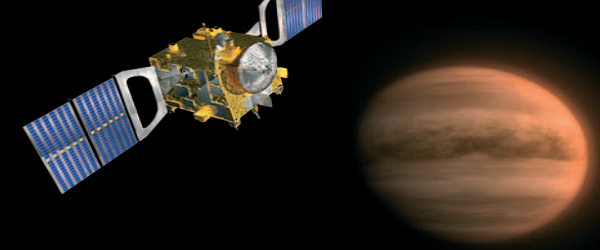
    ESA’s Venus Express spacecraft orbited at 66 000 km above the Venus south pole and captured bright and dark cloud bands wind around the poles of Venus, staring down into the south polar vortex. Venus Express has been orbiting the planet since 2006. It carries seven

  • How to get to Mars?

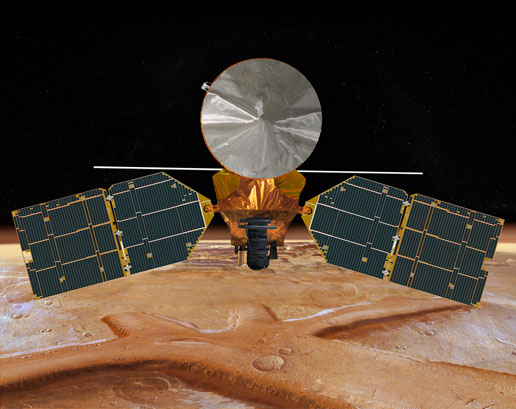
    Spirit, MER-A (Mars Exploration Rover – A), is a robotic rover on Mars, active from 2004 to 2010. It was one of two rovers of NASA’s ongoing Mars Exploration Rover Mission. It landed successfully on Mars at 04:35 Ground UTC on January 4, 2004, three weeks before its

  • Mars in a minute: How do rovers drive on Mars?

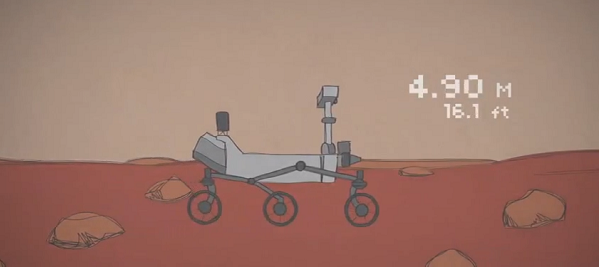
    The “keys” to NASA’s Mars rovers are in the capable hands of the official rover drivers. Learn how they operate the vehicles from millions of miles away in this 60-second video from NASA’s Jet Propulsion Laboratory.Source:

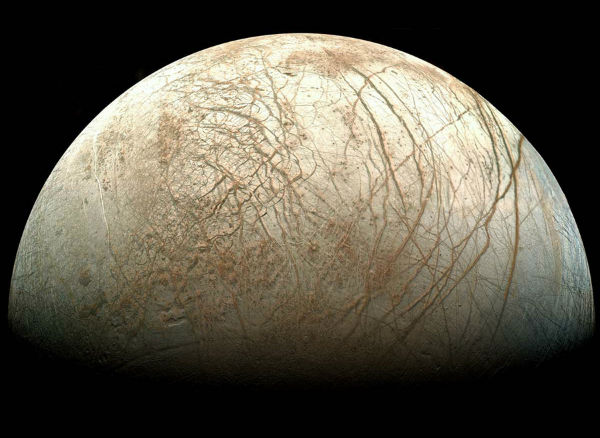
  • NASA plans to search for signs of life on Jupiter’s moon Europa

    Early in December NASA officials announced that they plan to launch a $1.5 billion rover to Mars in 2020. NASA investigates the possible habitability of Europa, Jupiter’s fourth-largest moon. One concept that may be gaining traction is a so-called “clipper” probe