• Venus, Mars and Uranus seen by SOHO’s coronograph

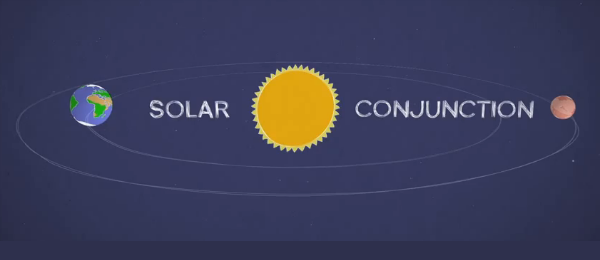
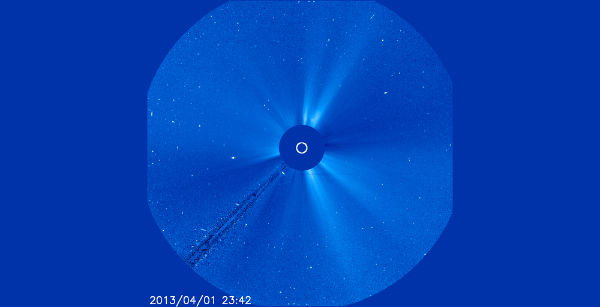
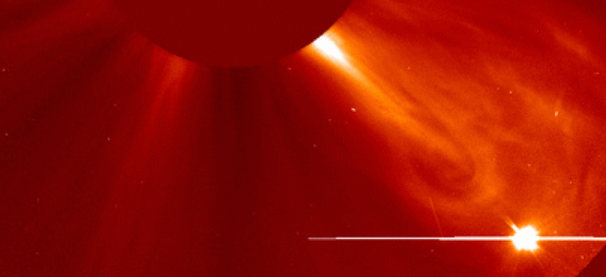
    NASA/ESA’s SOHO images are revealing a sight no one else gets to see: Venus, Mars and Uranus are all crowding into the same picture with the Sun. From our perspective on Earth, it is happening in the daylight sky very close to the glaring Sun. Using a disk to block
  • MAVEN gets magnetometers to study the Red planet's magnetic field

    Could Mars have supported life? Many scientists think that long ago it had a denser atmosphere, cloudy skies that supported liquid water flowing over the surface. They propose the red planet lost its atmosphere due to sputtering as it eroded by

  • Farside active region shoots bright CME toward Venus

    An active region in the Sun’s far-southern hemisphere erupted on March 23, 2013 around 13:00 UTC hurling bright Coronal Mass Ejection (CME) toward the Venus. A glancing impact is expected on March 25th. Venus has no global magnetic field to protect it from CME’s so the

  • New technology aims at improvising exoplanet discovery

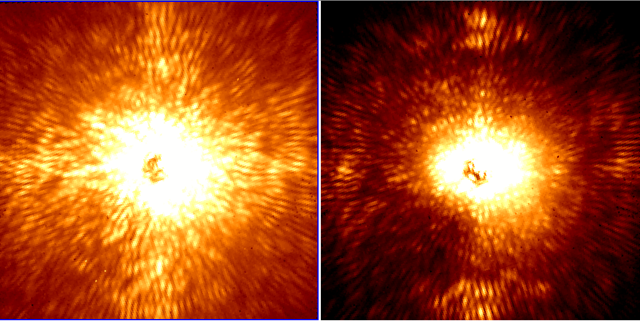
    A new advanced telescope imaging system is expected to improve detection of exoplanets obscured by exponentially bright stars. Unlike Kepler mission which uses the transit method to find out exoplanets transiting in front of their stars, this one actually blots out

  • A day in the life of a living Mars (animation)

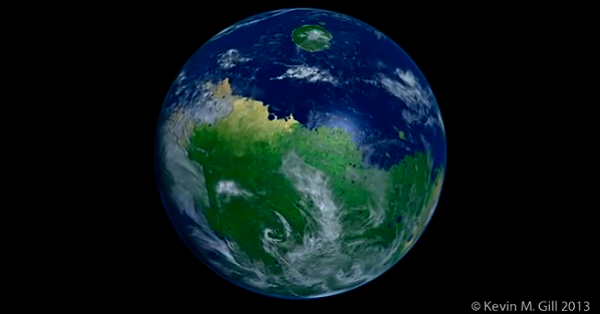
    Watch an interesting animation by Kevin McGill, showing a day on a living Mars.   Generated using data from the Mars Orbiter Laser Altimeter aboard the Mars Global Surveyor spacecraft and satellite imagery from the Blue Marble Next Generation project.

  • Rock sample analysis indicates ancient Mars could have supported life

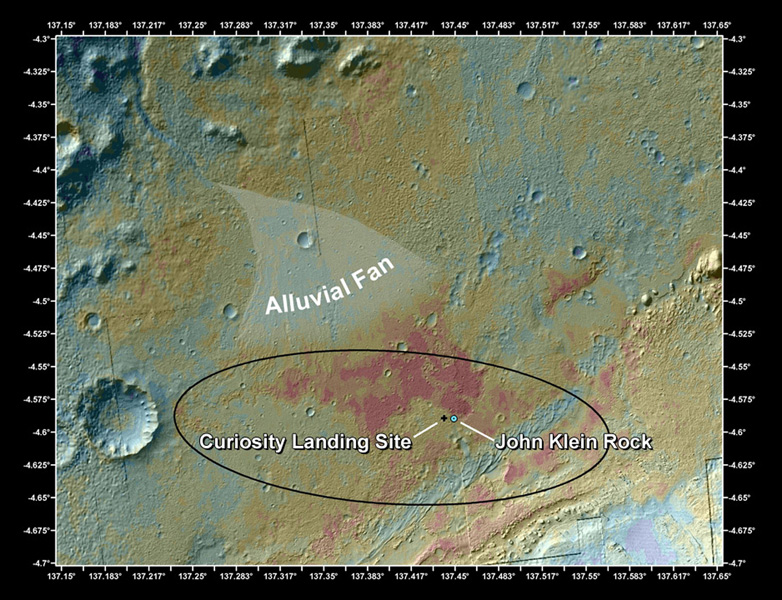
    Finally, NASA revealed results obtained from analysis of rock sample collected by Curiosity last month and reported ancient Mars could have had environment suitable for microbial life. Gray colored sample drilled out of a sedimentary rock contained some of the key

  • Stunning views of Venus through Saturn’s rings

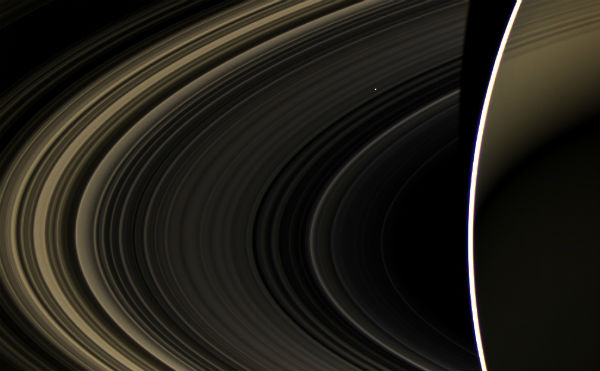
    The international Cassini spacecraft took amazing images of Venus shining through Saturn’s rings. Venus and Saturn are about 1,321,200,000 km (820,955,619 miles or 8.83 astronomical units) apart on average. Venus is brighter in Saturn’s skies than Earth is,

  • Curiosity becomes first rover ever to drill Martian rock

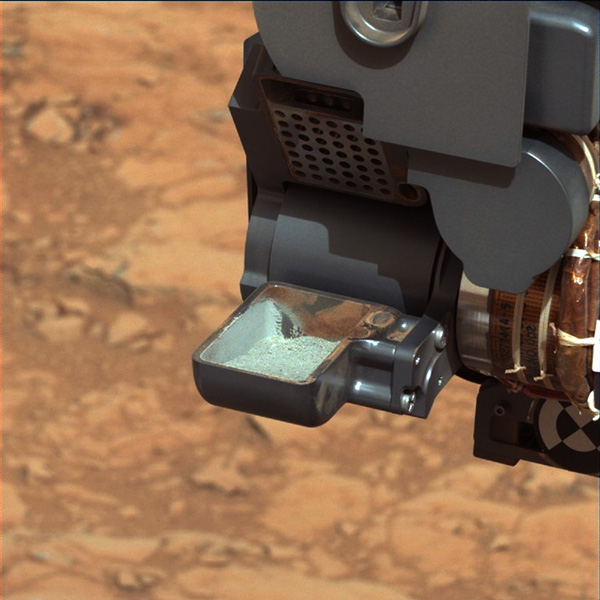
    Adding another milestone to its achievements, Curiosity has successfully drilled a Martian rock, thereby obtaining sample from its interior. Curiosity is the first rover ever to perform such drilling on a rock beyond Earth, NASA reported on February 20, 2013. Powdered

  • Mercury seen at sunset

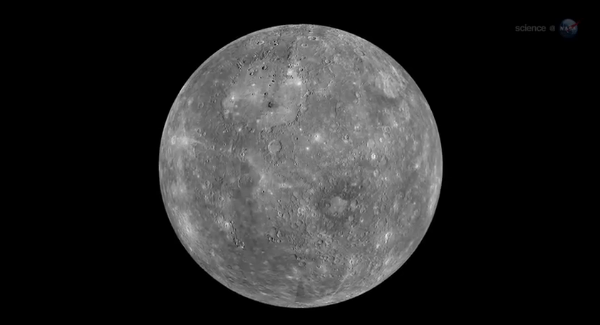
    The planet Mercury is about to make its best apparition of the year for backyard sky watchers. Look west at sunset for a piercing pink planet surrounded by twilight blue.Source: NASA Science