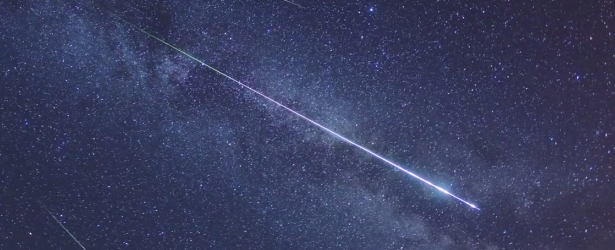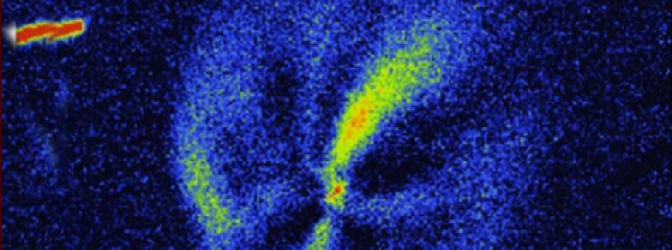
• New meteor shower and possible meteor storm on May 24th

    On the night of May 24 Earth will possibly pass through the dust trail left by Comet 209P/LINEAR in its past orbits. If this happens we might see a brief but intense burst of meteor activity. No one has ever seen it before and although nothing is certain at th

  • Night sky guide for May 2014

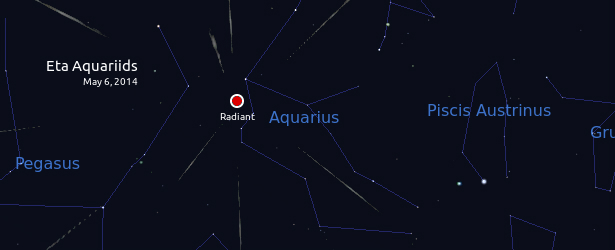
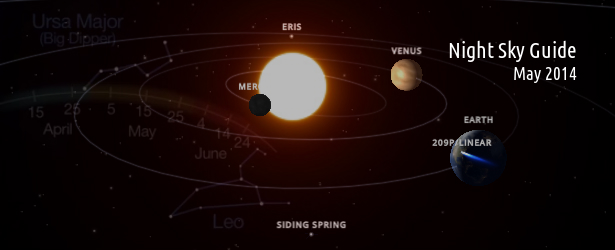
    May brings us the peak of above average Eta Aquariid meteor shower on the nights of May 5 and 6 but the highlight of this month is a possible intense meteor storm on May 23 and 24 as Earth passes through the dust trail left by Comet 209P/LINEAR in it

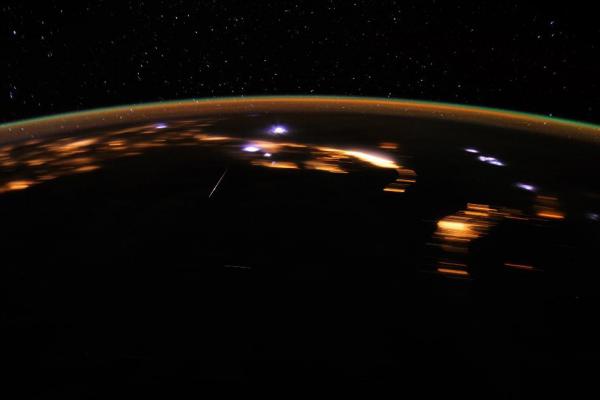
  • Lyrid meteor shower peaks on April 22

    Lyrid meteor shower, considered to be the oldest of meteor showers, is an average shower usually producing about 20 meteors per hour at its peak. This shower runs annually from April 16 – 25 and its peak this year is predicted to occur near 18:00 UTC on April

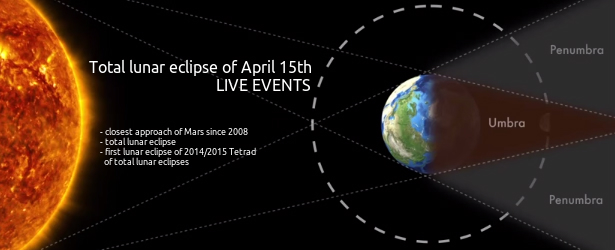
  • Watch total lunar eclipse of April 15th LIVE

    During the early hours of April 15, 2014 (UTC time) the full Moon will pass directly through Earth’s dark shadow, or umbra, setting an impressive total lunar eclipse. The Moon will gradually get darker and then take on a rusty or blood red color. It

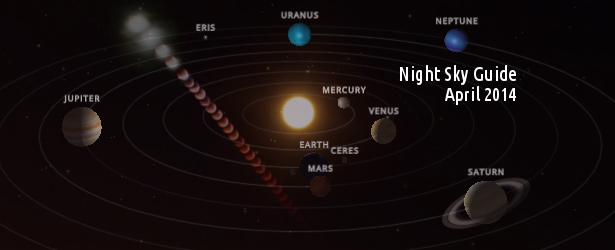
  • Night sky guide for April 2014

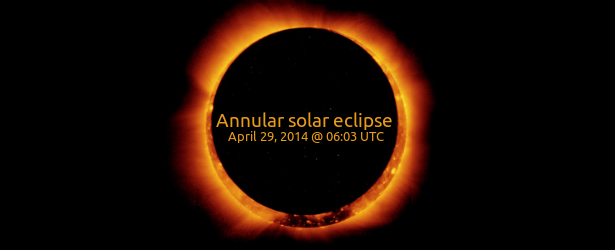
    April brings us several interesting events. It is a good month for eclipses and also the month when meteor activity picks up a bit as the Lyrids meteor shower become active. Earth and Mars will be at their minimum distance of 99 million km on April 14 but any

  • Night sky guide for March 2014

    Comet C/2012 X1 LINEAR will reach its brightest this month and will be well placed for observation on March 4. An extremely rare event will take place on the morning of March 20 when asteroid 163 Erigone passes in front of the bright star Regulus in the

  • Night sky guide for February 2014

    According to AMS, February offers the meteor observer in the northern hemisphere a couple of weak showers plus falling sporadic rates. February is also the start of the fireball season, when an abundance of fireballs seem to occur. This lasts well into April

  • Night sky guide for January 2014

    January 1 – New Moon – 11:14 UTC. The Moon will be directly between the Earth and the Sun and will be completely unilluminated.

    January 2, 3 – Quadrantids Meteor Shower peak nights. The Quadrantids have the potential to be