• Night sky guide for February 2018 – Partial Solar Eclipse

    After super blue blood Moon on January 31, we are heading toward our next celestial event on February 15 when a partial solar eclipse will be visible in parts of Chile, Argentina, and Antarctica. The best time of this month to observe faint objects such as galaxies…

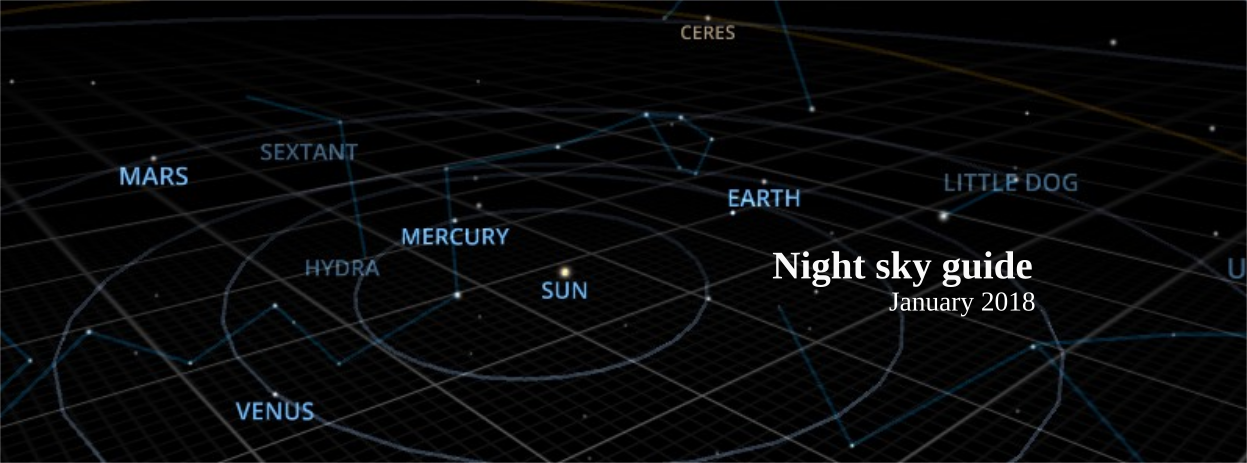
  • Night sky guide for December 2017

    The year ends with the first and last supermoon of the year, the first of 3 over the next 60 days, one royal meteor shower, and December solstice. Hopefully, this year made us all stronger, wiser and ready for what's to come in 2018 and beyond. December 1 -…

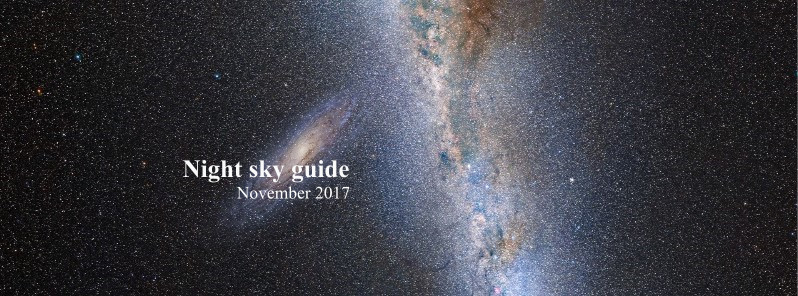
  • Night sky guide for November 2017

    November brings us peaks of 2 notable meteor showers, Northern Taurids (Class II) on November 11 and Leonids (Class I) on November 18. The Moon will be 24 days old during the peak of Taurids and 30 during Leonids, presenting minimal interference. We also have peaks…

  • Impressive reentry of Russian SL-4 rocket body over Dubai, UAE

    An atmospheric reentry of a Russian SL-4 rocket body created a spectacular show over the Middle Eastern countries late Monday, October 16, 2017, witnessed and recorded by numerous people. The event lasted more than 55 seconds and was visible from Iraq, Bahrain, UAE…

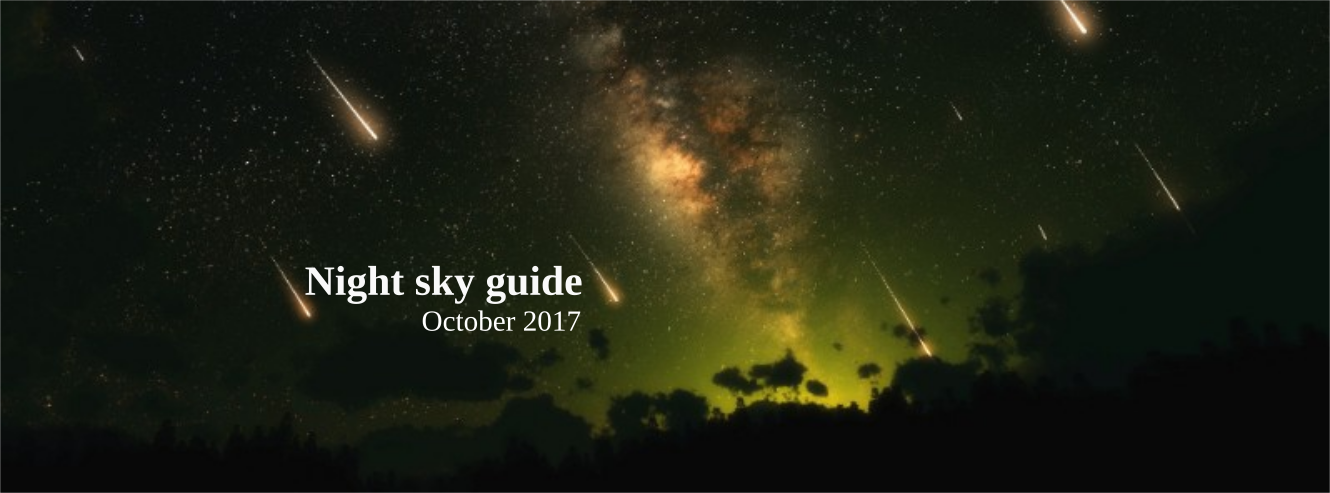
  • Night sky guide for October 2017

    October 2017 has two meteor showers, one minor – Draconids, on October 8, and one major – Orionids, on October 21 and 22. Draconids will be mostly blocked by the nearly full moon, but Orionids will present an interesting opportunity as the crescent Moon will set…

  • Night sky guide for September 2017

    There are no major (Class I) meteor shower peaks during this month. Instead, we have two minor ones (Class II), Aurigids on September 1 and September Epsilon Perseids on September 9, with an estimated number of meteors per hour of 6 and 5, respectively. We'll…

  • Large fireball recorded over Krugersdorp, South Africa

    A large fireball was observed and recorded over the South African city of Krugersdorp at 16:59 UTC (18:59 SAST) on August 22, 2017. The object had a bright blue-green color and lasted for more than 4 seconds. It was recorded by Jan Breytenbach over Krugersdorp but…

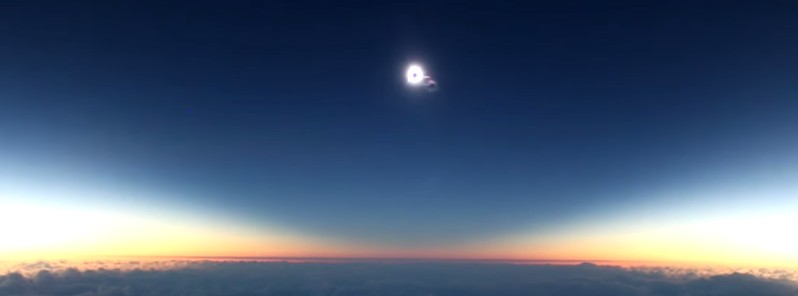
  • Total solar eclipse of August 21, 2017

    A total solar eclipse will take place on August 21, 2017, starting over the Pacific Ocean at 15:46 UTC (08:46 PDT) and moving inland over the continental United States. Although 14 US states will witness the total solar eclipse, regions seeing, at least, a partial…