• Night sky guide for December 2018

    December 2 – 69P/Taylor reaches its brightest. Comet 69P/Taylor is forecast to reach its brightest, at around mag 11.9. It will lie at a distance of 2.40 AU from the Sun, and at a distance of 1.53 AU from the Earth. December 3 – C/2018 L2 (ATLAS) at perihelion….

  • Night sky guide for November 2018

    November 4 – 64P/Swift-Gehrels at perihelion. Comet 64P/Swift-Gehrels will make its closest approach to the Sun, at a distance of 1.39 AU. November 5, 6 – Taurid meteor shower. This is a long-running minor meteor shower producing only about 5 – 10 meteors per…

  • Night sky guide for October 2018

    October 1 – M110 well placed for observation. M110, the brightest satellite galaxy of the Andromeda galaxy (M31) will be well placed for observation. It will reach its highest point in the sky at around midnight local time. At a declination of +41°41', it…

  • Night sky guide for September 2018

    The Moon will be located on the same side of the Earth as the Sun and will not be visible in the night sky on September 9. This is the best time of the month to observe faint objects such as galaxies and star clusters because there is no moonlight to interfere. The…

  • Partial solar eclipse of August 11, 2018

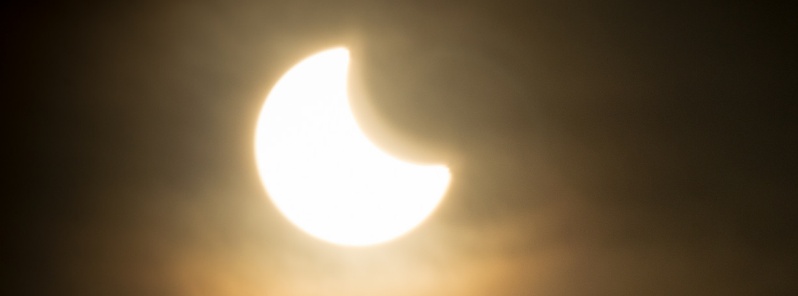
    A partial solar eclipse will take place from 06:40 to 12:38 UTC on August 11, 2018. While it will be visible in parts of northeast Canada, Greenland, extreme northern Europe, and northern and eastern Asia, the best place to see it will be northern Russia with 68%…

  • Total lunar eclipse of July 27, the longest of 21st century

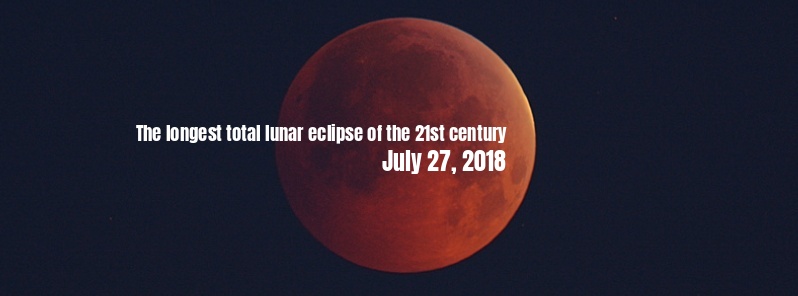
    A total lunar eclipse will take place on July 27, 2018, and be visible throughout most of Europe, Africa, western and central Asia, the Indian Ocean and Western Australia. This will be the longest total lunar eclipse of the 21st century, lasting 1 hour and 43…

  • Partial solar eclipse of July 13, 2018

    A partial solar eclipse will take place on Friday, July 13, 2018, but will only be visible in extreme southern Australia and Antarctica. This eclipse belongs to Saros 117 and is number 69 of 71 eclipses in the series. All eclipses in this series occur at the…