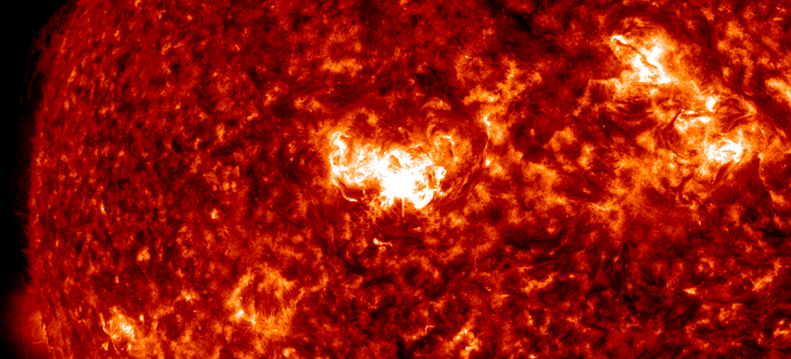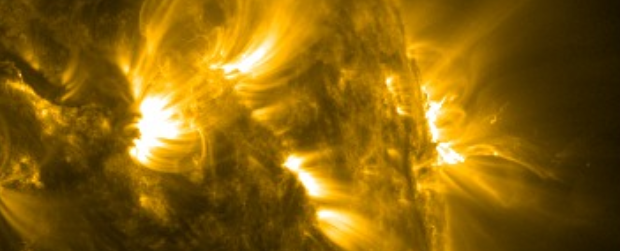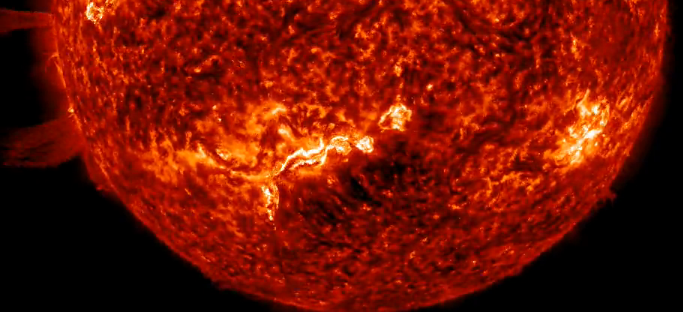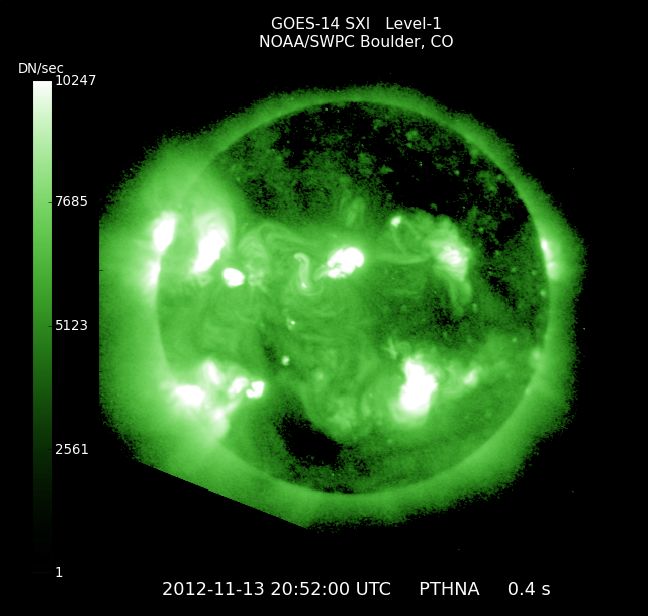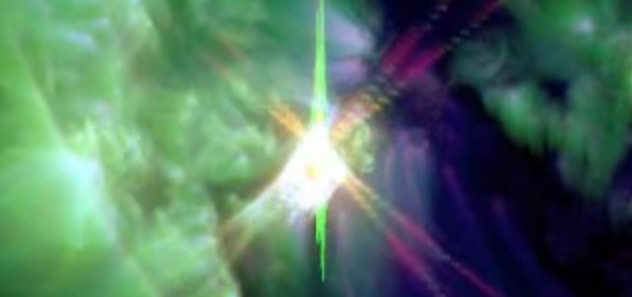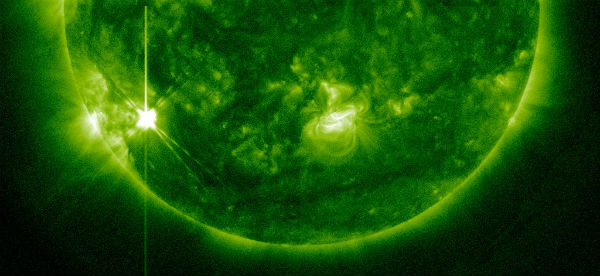
• Moderate solar flare measuring M2.8 peaked from Region 1613

    Moderate solar flare measuring M2.8, at it’s peak, erupted from Region 1613 at 20:54 UTC, November 13, 2012. A 10cm Radio Burst was associated with the event, this can be indicative of significant radio noise in association with a solar flare.This is the same

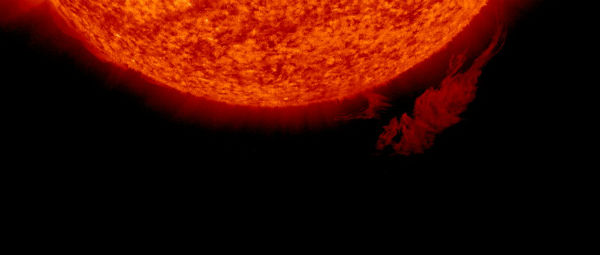
  • Solar filament eruption sent Earth-directed CME

    A Coronal Mass Ejection (CME) was observed on November 9, around 15:24 UTC. It was associated with  filament eruption around sunspot 1608 in the southeast quadrant of the disk. This region is facing  Earth and any  Coronal Mass Ejection (CME) may be geoeffective.

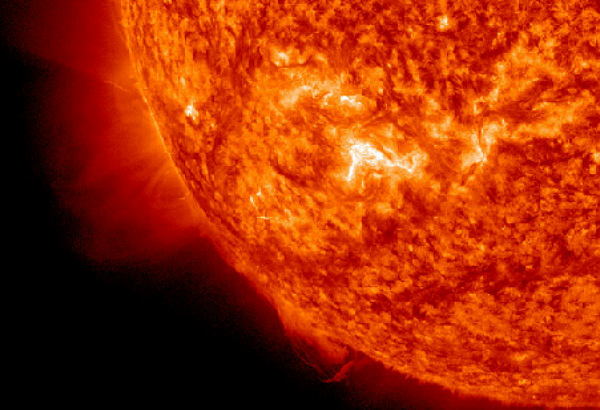
  • Sun hurled two bright CMEs into space, both non-Earthbound

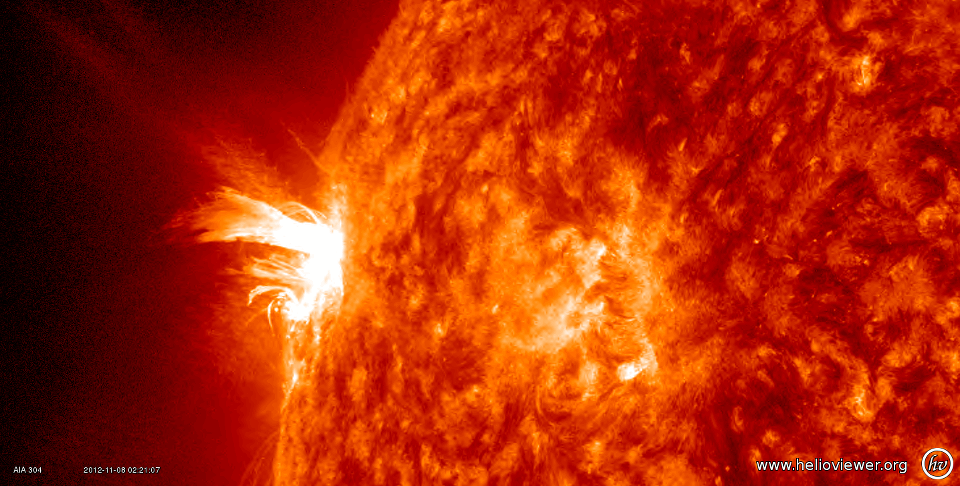
    New region 1611 rotated into view on the east limb and produced a moderate M1.7 flare at 02:23 UTC and a type II radio sweep shortly after, on November 8, 2012. Flare generated bright coronal mass ejection (CME) in eastward direction which means that it would not

  • STEREO satellites recorded 8 CME’s over two-day period

    The Sun produced a series of at least eight coronal mass ejections (CMEs) over a two-day period (November, 2-4, 2012). Some of them overlapped each other as the Sun burst some of them into space in a rapid-fire style. The series was taken by the STEREO Ahead spacecraft

  • Three CMEs observed on western limb, one could be geoeffective

    Magnetic filament eruption took place beyond the western limb, producing a halo or partial-halo CME on November 3. In fact, three CME clouds were ejected into space, with one appeared to have slight chance to become geoeffective. Minor solar wind stream from

  • Solar activity – September 1 – 30, 2012 (Video)

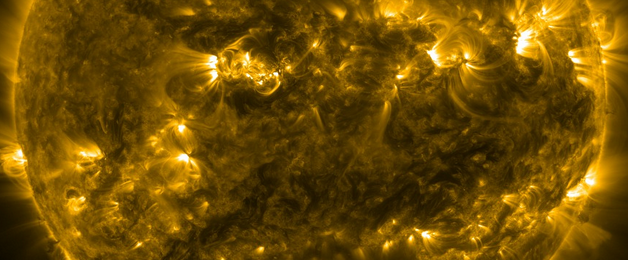
    The video by Solar Dynamics Observatory (SDO) combines three wavelengths with similar temperatures, highlighting different parts of the solar corona showing the Sun from September 1 through September 30, 2012. The start of the Fall Eclipse Season could be seen, when