• Impulsive solar flare measuring M1.2 erupted from AR 1654

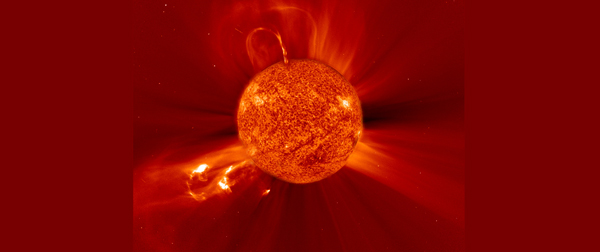
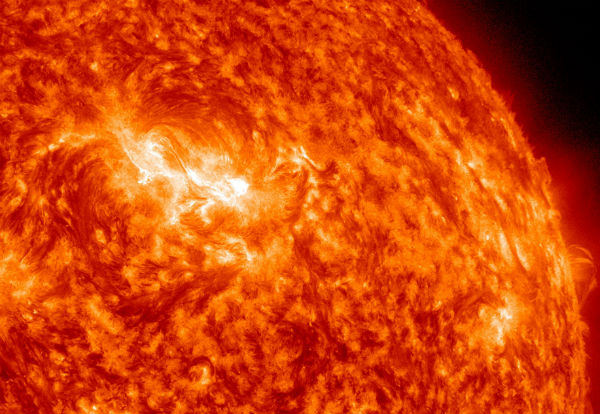
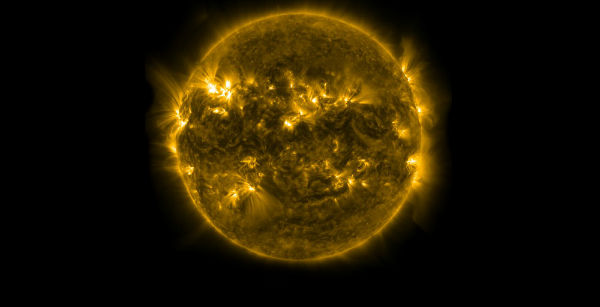
    A moderate but impulsive M-class solar flare measuring M1.2 erupted from big Active Region 1654 on January 11, 2013 at 09:11 UTC. A Coronal Mass Ejection (CME) is expected as ejecta has been observed exiting the blast area.  A Type II and Type IV Radio Emissions were

  • “It’s a Loopy Sun” by NASA/SDO

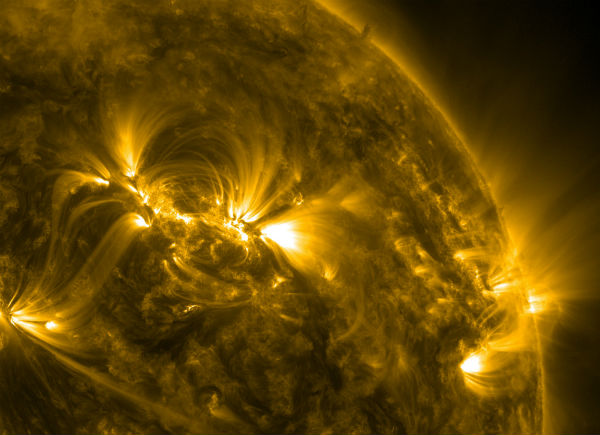
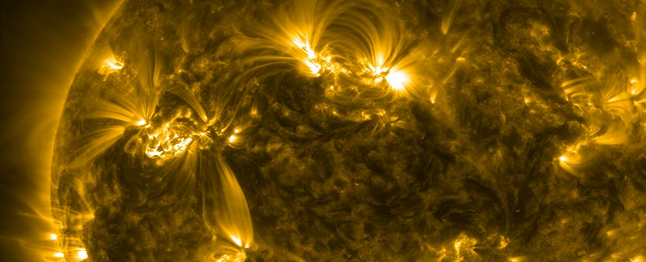
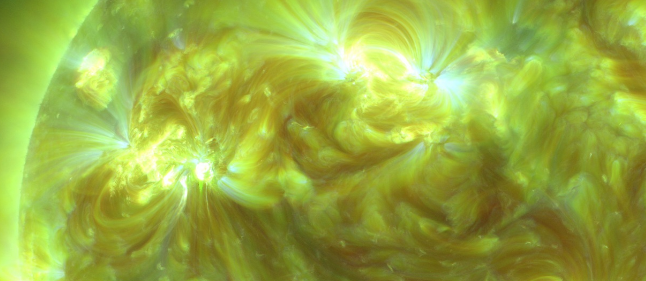
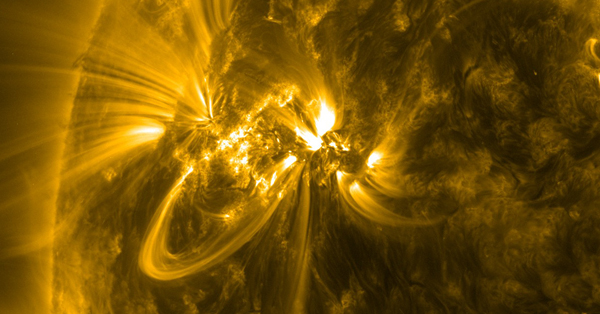
    NASA/SDO released a short video which covers January 5 through 7 and shows the 171 angstroms channel, which is especially good at showing coronal loops – the arcs extending off of the Sun where plasma moves along the magnetic field lines. The brightest spots

  • Video of New Year’s Eve solar blast

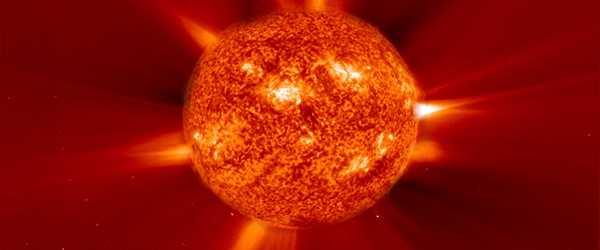
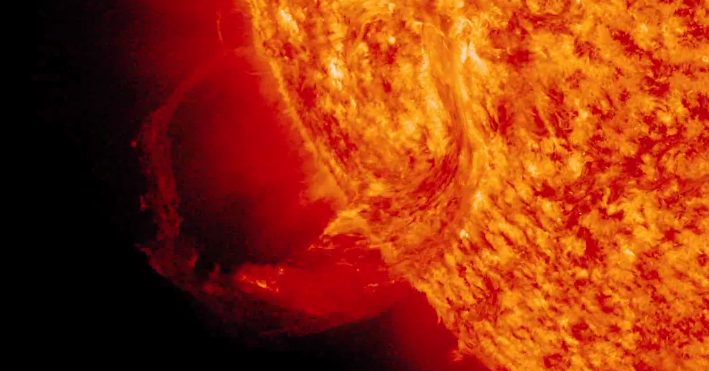
    An incredible swath of plasma erupted from the Sun on December 31st, 2012 over a four-hour period. NASA stated that a massive eruption on the surface of the Sun blasted out a wave of super-hot plasma so high that it could tower over 20 Earth. The length of the

  • Moderate solar flare reaching M1.7 erupted from Region 1650

    After a long period of quiet time the Sun has sent us a greetings card today. At 9:31 UTC on January 5, 2013 an M1.7 solar flare peaked from Region 1650. The event started at 9:26, peaked at 9:31 and ended at 9:34 UTC. As of early morning today Region 1650

  • Low solar activity despite growing Sunspot 1640

    Solar activity has been at low levels for the past 24 hours. The largest solar event  was a C1 flare erupting from Sunspot 1640, observed late on the January 3rd. Sunspot 1640 has developed a ‘beta-gamma-delta’ magnetic field that harbors energy

  • Sunspot 1620 generated M2.2 solar flare

    Sunspot 1620 produced M2.2 solar flare with peak at 21:36 UTC on November 28, 2012. Fast growing sunspot AR1620 has a beta-gamma-delta magnetic field that harbors energy for X-class solar flares. M-class activity is also possible from region AR 1618 which has now

  • Growing Sunspot 1620 produced moderate M1.1 solar flare

    Moderate solar flare reaching M1.1 peaked at 21:05 UTC on November 27, 2012. The event originated in Region 1620, and was followed by C7.1 flare two hours later (from the same region).This is second M-class event of the day. Region 1618 already produced M1.6 solar