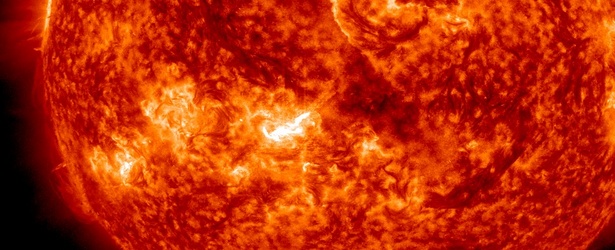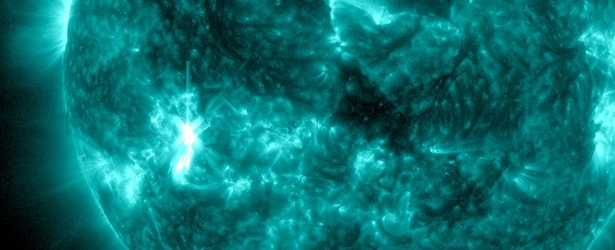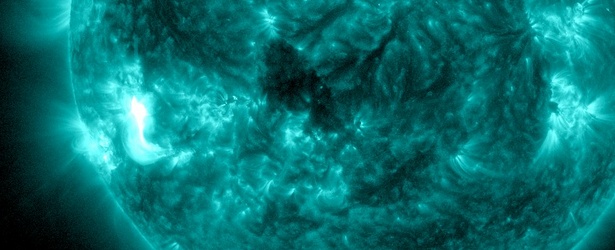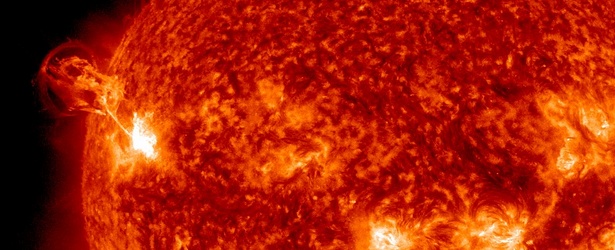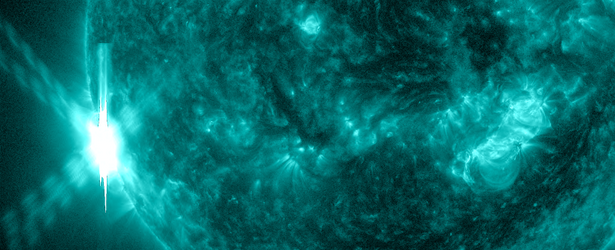
• Major solar flare reaching X2.2 erupted from southeastern limb

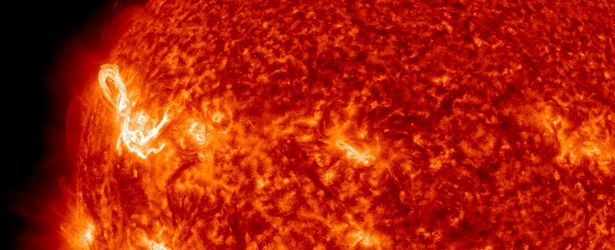
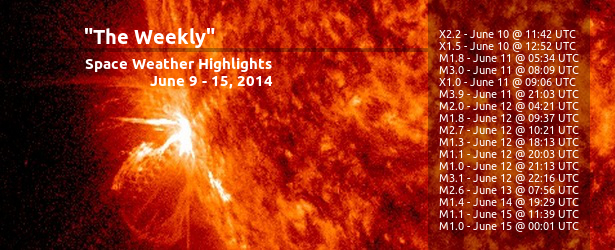
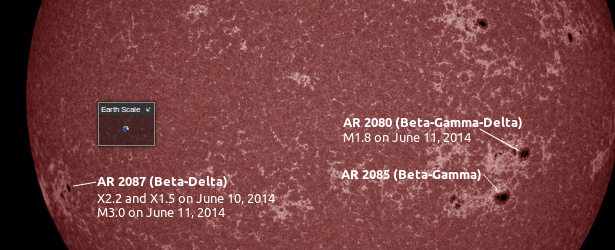
    An impulsive solar flare reaching X2.2 at its peak time erupted on June 10, 2014, generating R3 (Strong) radio blackout. The event started at 11:36, peaked at 11:42 and ended at 11:44 UTC. Source was Active Region 2087 located on the southeastern limb.A large Coron

  • Impulsive M1.4 solar flare erupted from Region 2080

    Impulsive solar flare measuring M1.4 at its peak time erupted on June 6, 2014 from Active Region 2080. The event started at 19:26, peaked at 19:31 and ended at 19:33 UTC.Active regions 2080 and 2082 both exhibited rapid growth in last 36 hours and are now rotating into

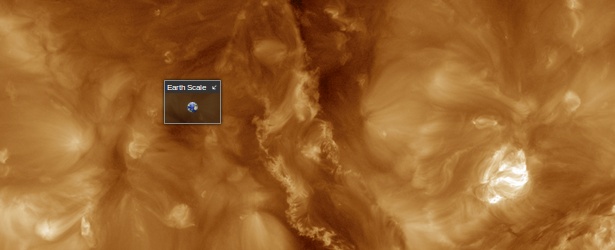
  • Huge solar filament collapses and causes Hyder flare

    A huge solar filament, located in the southeast quadrant and stretching across more than 500 000 km, collapsed around 14:30 UTC on June 4, 2014 and hit the solar surface causing a "Hyder flare" – a type of solar flare that occurs without the aid of sunspots.Co

  • Impulsive M1.3 solar flare erupted from Region 2077

    An impulsive solar flare measuring M1.3 at its peak time erupted on June 3, 2014. The event started at 03:58, peaked at 04:09 and ended at 04:17 UTC.The source was AR 2077 (S09E15, Cso/beta-gamma) which exhibited growth in its intermediate spots just south of the l

  • Moderately strong M1.3 solar flare erupted from AR 2065

    Moderately strong solar flare measuring M1.3 at its peak time erupted on May 24, 2014. The event started at 18:26, peaked at 18:35 and ended at 18:44 UTC. The source was Active Region 2065 (beta) located near the western limb.A 10cm Radio Burst event with peak flux

  • Coronal Hole directly facing Earth, filament eruption

    Aside from a nice filament eruption and a Coronal Hole directly facing Earth, thus allowing solar material to freely rush in our direction, solar activity has been at low levels during last 30 hours.It is expected to remain low with a chance for M-cl