• STEREO satellites recorded 8 CME’s over two-day period

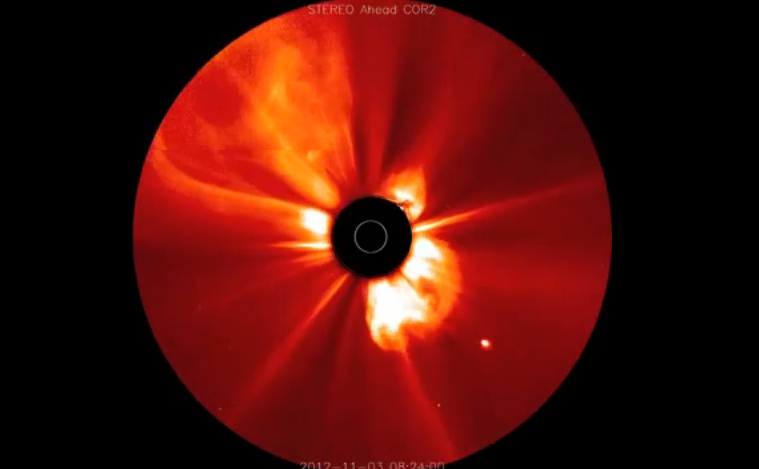
    The Sun produced a series of at least eight coronal mass ejections (CMEs) over a two-day period (November, 2-4, 2012). Some of them overlapped each other as the Sun burst some of them into space in a rapid-fire style. The series was taken by the STEREO Ahead spacecraft

  • Three CMEs observed on western limb, one could be geoeffective

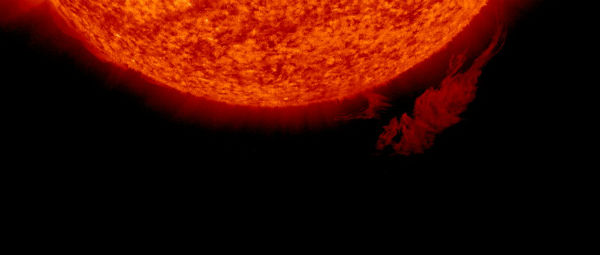
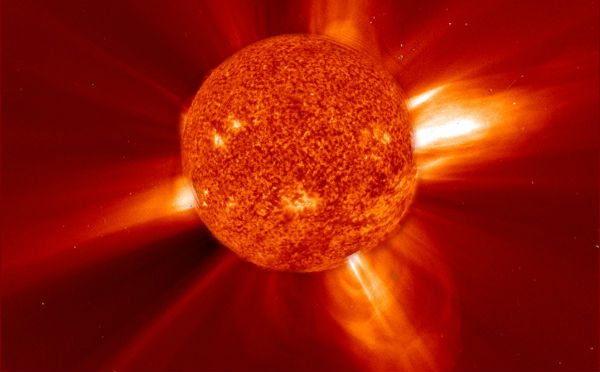
    Magnetic filament eruption took place beyond the western limb, producing a halo or partial-halo CME on November 3. In fact, three CME clouds were ejected into space, with one appeared to have slight chance to become geoeffective. Minor solar wind stream from

  • Weak CME impact caused unsettled geomagnetic field levels

    A weak CME shock was observed in the solar wind by the ACE and SOHO/CELIAS instruments on October 31st afternoon around 14:45 UTC. The solar wind speed jumped up from 280 km/s up to 370 km/s and also the solar wind density increased. Initial solar wind velocity had

  • The explosion that shattered solar theory

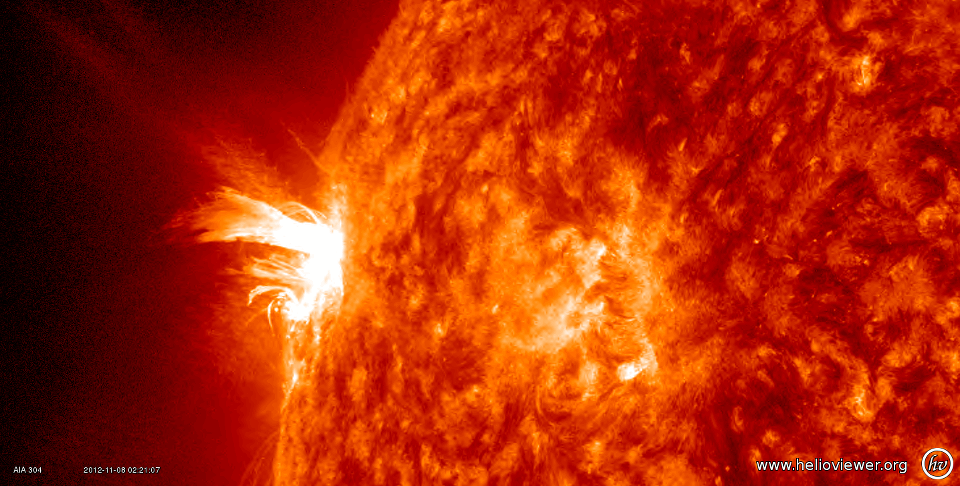
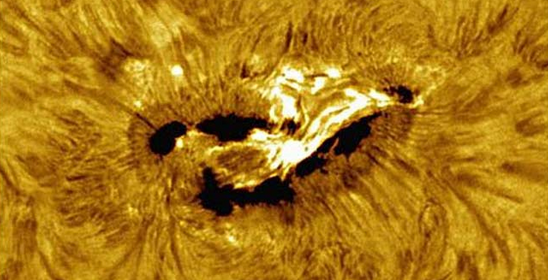
    In January 2005, some remarkable things happened on the Sun, and the implications are still reverberating through the scientific community. Between January 15th and 19th four powerful solar flares erupted from “sunspot 720”, shown in the picture above. Then on January

  • Solar activity – September 1 – 30, 2012 (Video)

    The video by Solar Dynamics Observatory (SDO) combines three wavelengths with similar temperatures, highlighting different parts of the solar corona showing the Sun from September 1 through September 30, 2012. The start of the Fall Eclipse Season could be seen, when

  • Solar activity at low levels with possible Earth-directed CME…

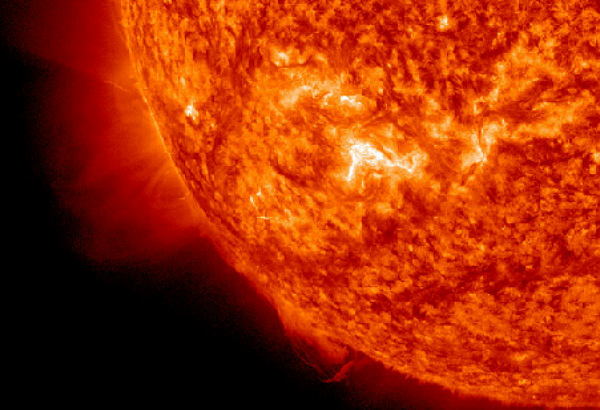
    Solar activity was at low levels for the past 24 hours and X-Ray flux plot shown merely C-class threshold. However, a prominence eruption was observed north of Region 1600.A bright CME was observed in STEREO Ahead COR 2 imagery at 18:24 UTC on October 27. Latest

  • Sunspot 1598 generated impulsive X1.8 solar flare

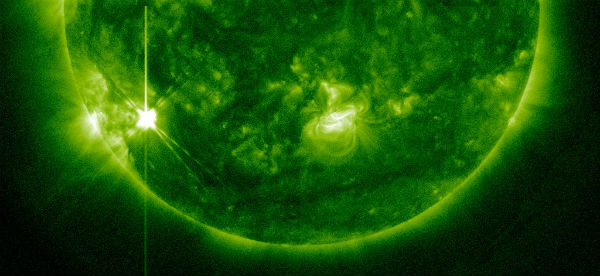
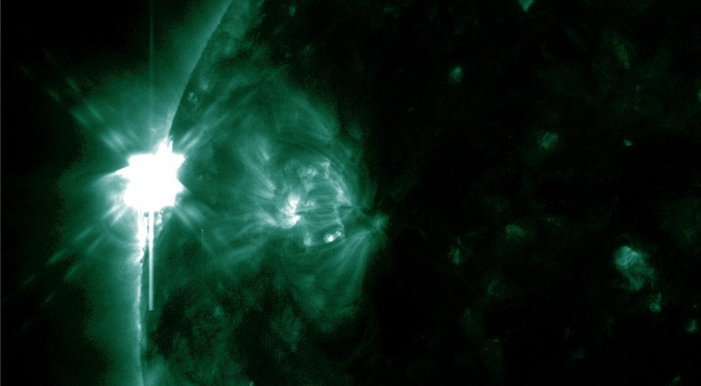
    X1.8 solar flare peaked at 03:17 UTC on October 23, 2012 around Active Region 1598, which is still several days away from directly facing Earth from center disk. NOAA/SWPC forecasters estimated 20% chance for another X-class event.Space Weather Message Code:

  • Moderate solar flare reaching M5.06 took place at 18:51 UTC

    A moderate solar flare reaching M5.06 took place at 18:51 UTC on October 22, 2012. The responsible Region was again 1598. The event started at 18:38, peaked at 18:51 and ended at 19:01 UTC.Space Weather Message Code: SUMXM5Serial Number: 99Issue Time: 2012 Oct 22