• G2 geomagnetic storm (Kp=6) again in progress

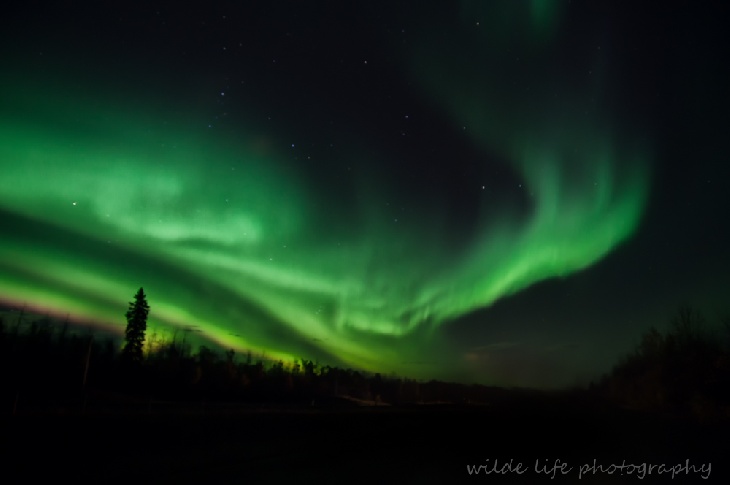
    Earth remains under the influence of an October 5th coronal mass ejection (CME).  Currently, G2 (Moderate) geomagnetic storm level (Kp=6) is in progress. At G2 level high-latitude power systems may experience voltage alarms, long-duration storms may cause
  • October 5 CME hits Earth – Geomagnetic storm in progress

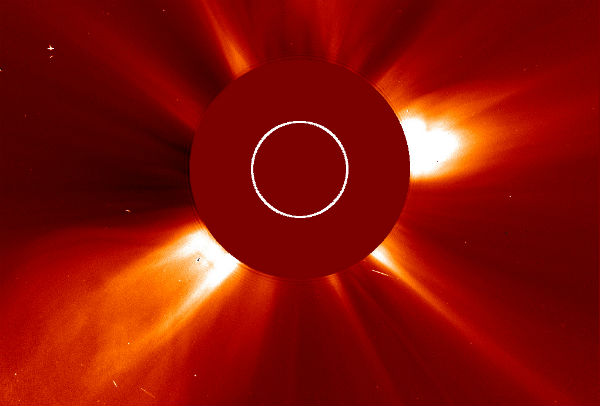
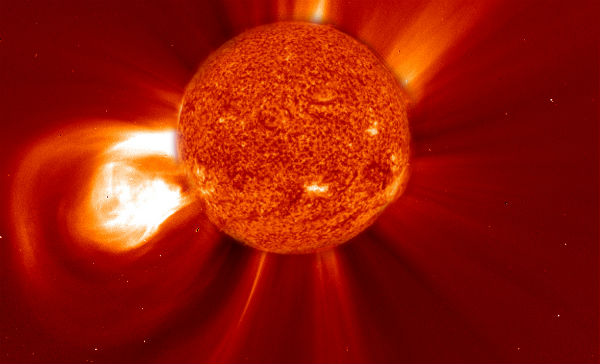
    The ACE Spacecraft detected a sudden solar wind increase to over 400 km/s at 04:30 UTC. A weak coronal mass ejection (CME) hit Earth’s magnetic field on Oct. 8th at approximately 05:00 UTC. 15 minutes after A Geomagnetic Sudden Impulse (21 nT) was registered.Low

  • CME from September 28 eruption heading toward Earth

    Sunspot 1577 generated a long duration C3.7 solar flare which hurled a coronal mass ejection (CME) almost directly toward Earth on September 28. Proton levels reached the S1 Minor Radiation Storm level soon after the event. The proton event linked to the C3.7 flare

  • Long duration C3.7 solar flare erupted with Earth directed CME

    A long duration C3 class solar flare erupted from Active Region 11577 peaking at 23:55 UTC September 27, 2012. The flare has produced a Coronal Mass Ejection (CME) which is expected to impact the Earth’s magnetic field sometime late September 29, 2012. Proton levels

  • Solar prominence observed at eastern limb

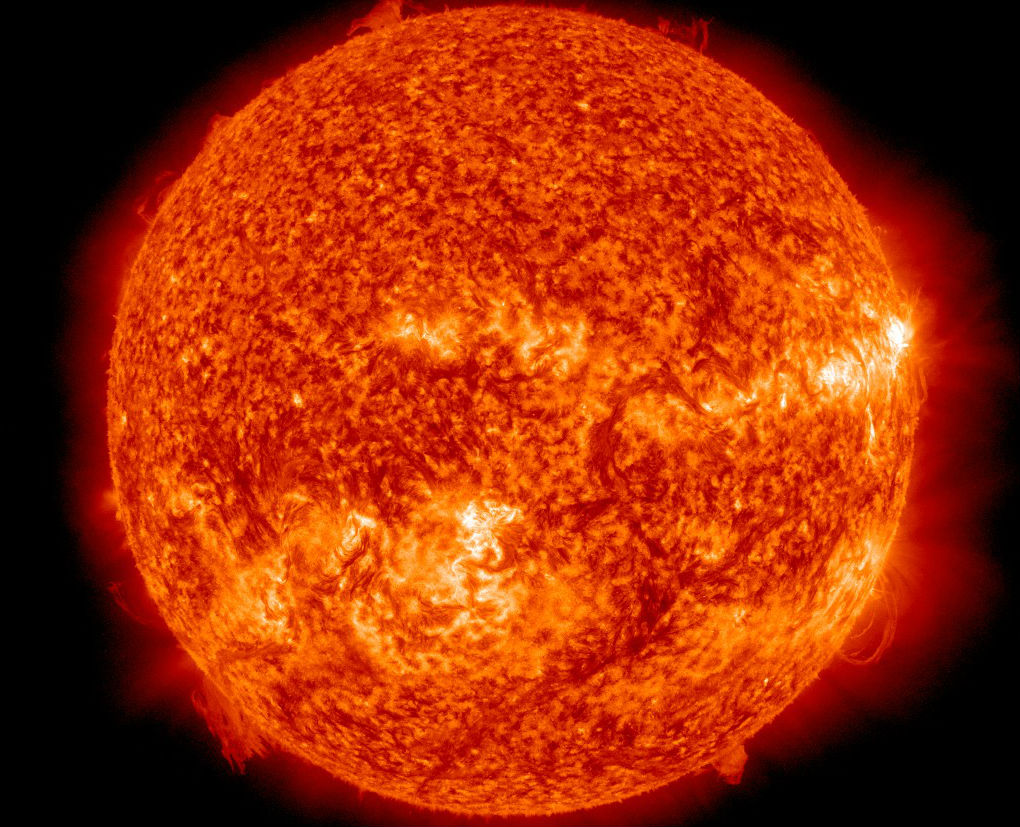
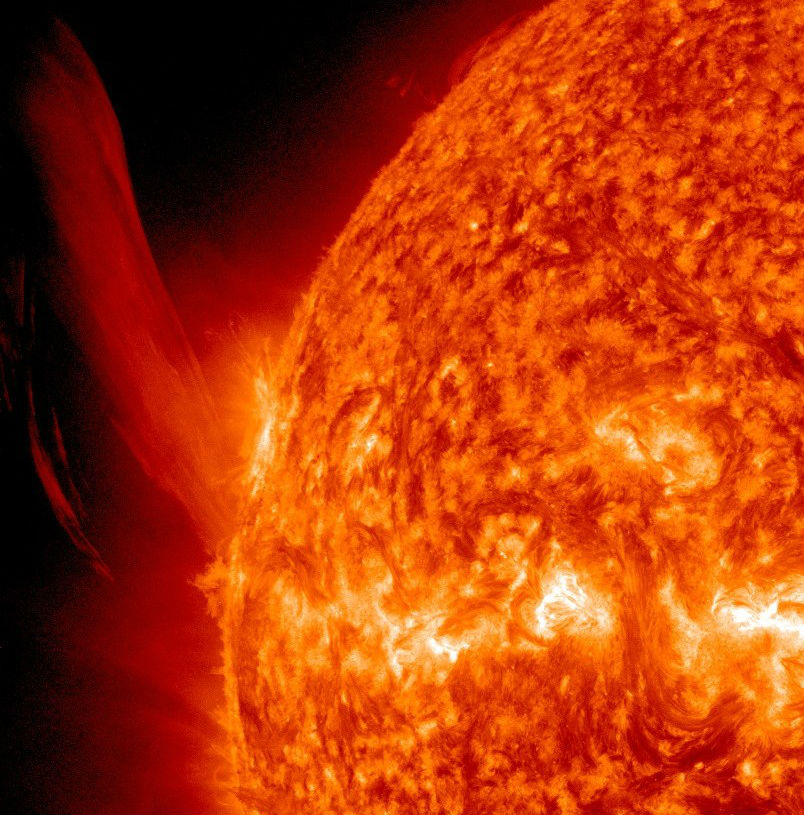
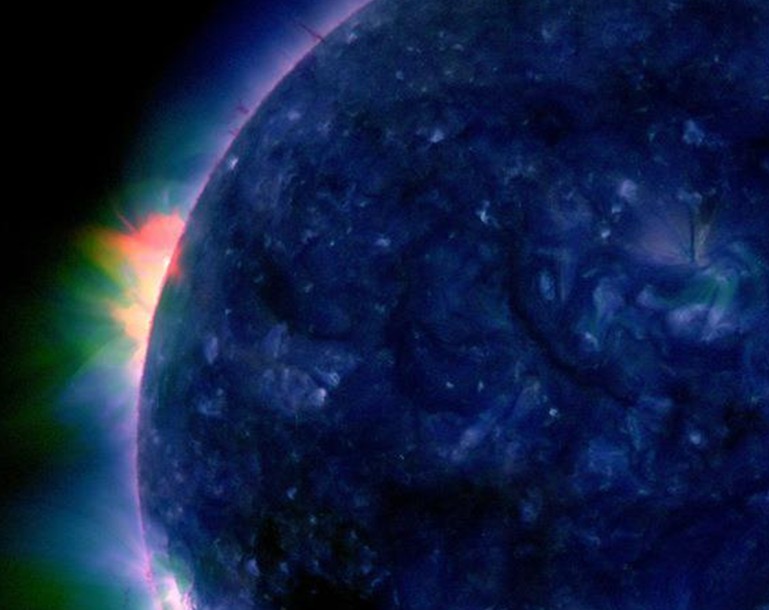
    Solar activity was at low levels. The largest event during last 48 hours was a long duration C1 solar flare with a large prominence erupted on September 23 around 15:56 UTC from an area behind the eastern limb. It produces CME cloud with no threat to Earth.Some

  • Several strong solar flares and CME’s seen at farside

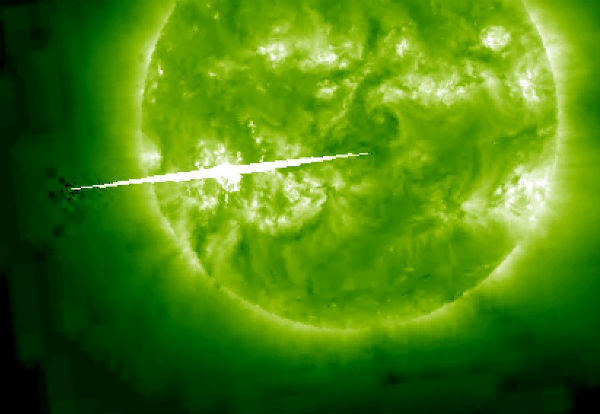
    At least three large CME clouds were observed during last 24 hours but all of them were at far side so there is no danger for Earth, they are heading away from our planet. Old Sunspot 1564 was probably source of the flares. STEREO Behind COR2 recorded bright flash with

  • Just how cold is Mars?

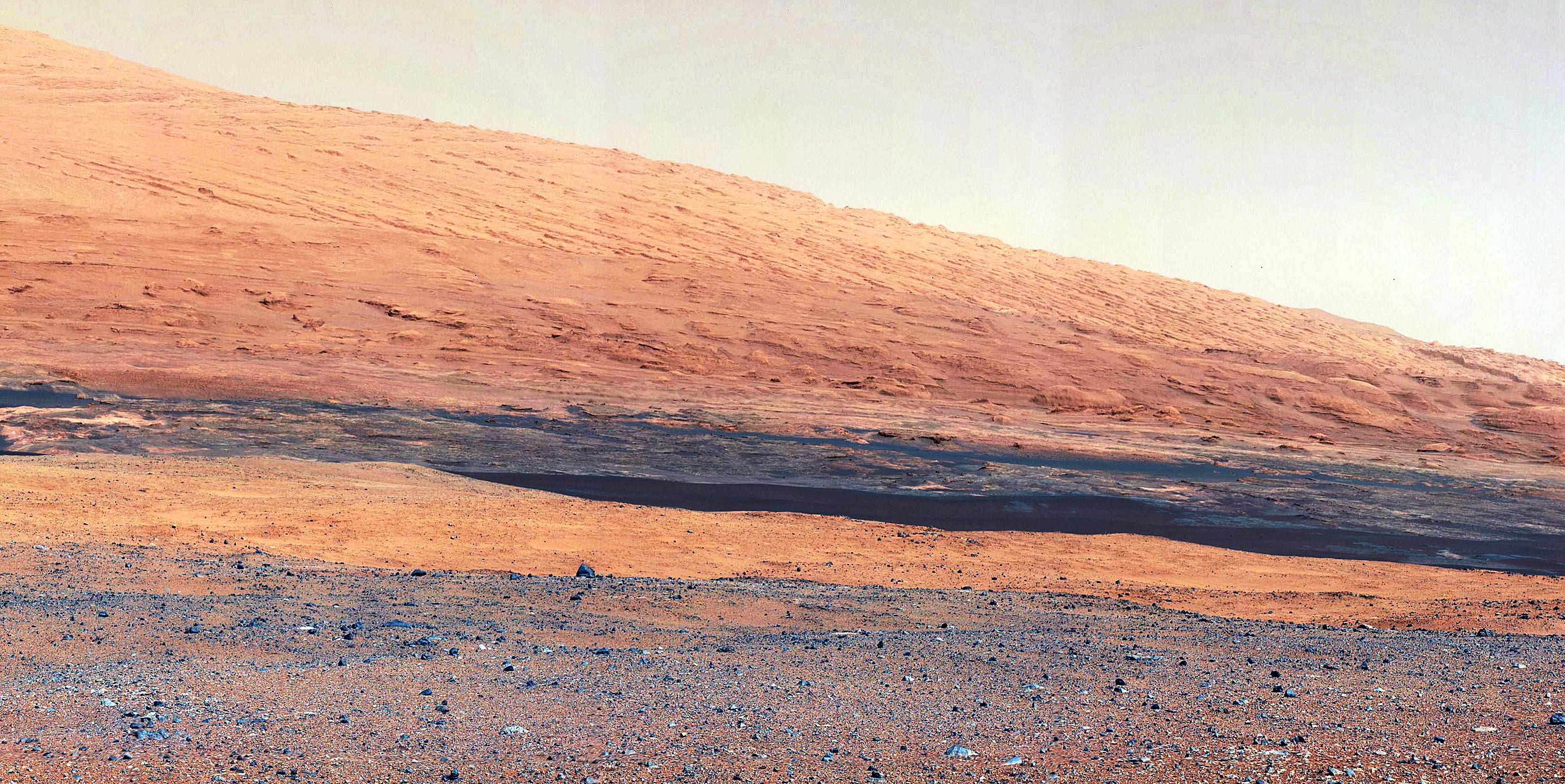
    Temperature on mars is cooler than what it might appear in those high-resolution pictures sent by curiosity. Weather station data aboard Mars Science Laboratory reveals that desert-like terrain of Gale crater which resembles barren lands of American southwest, is