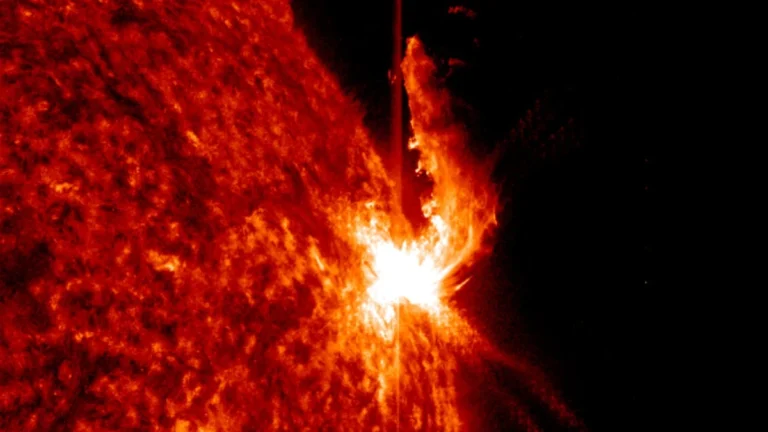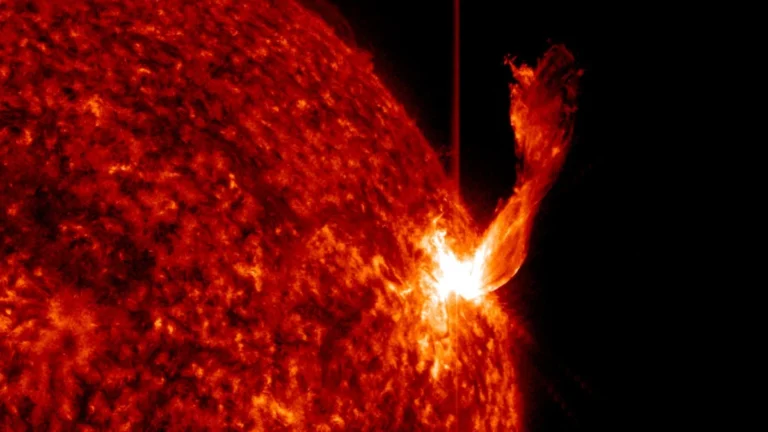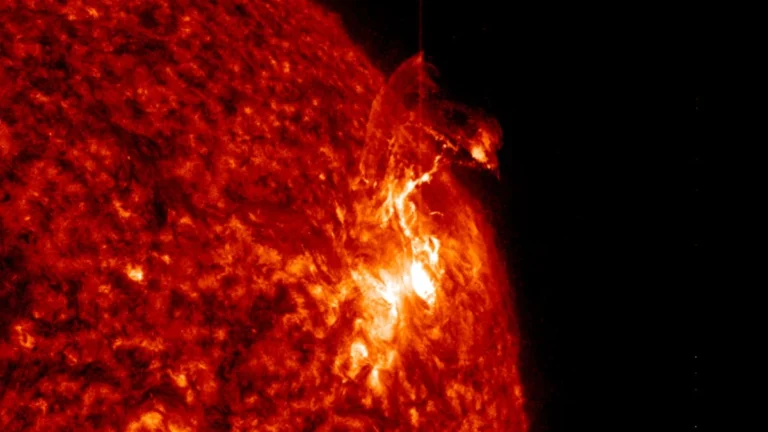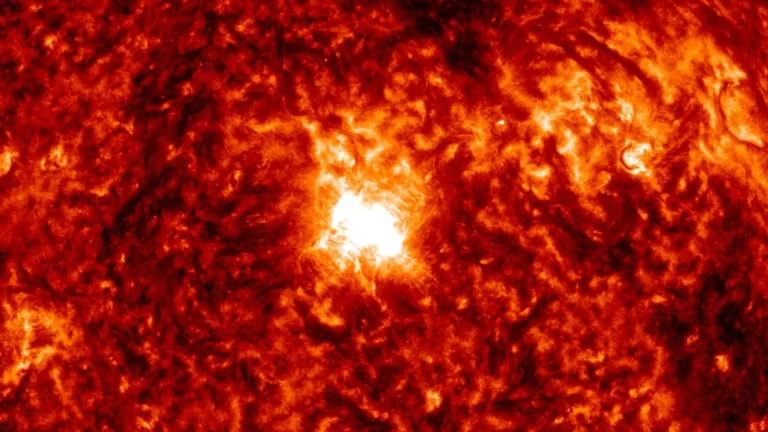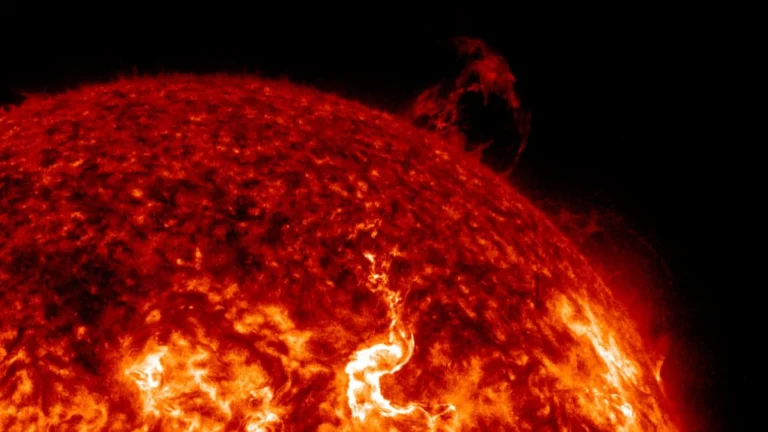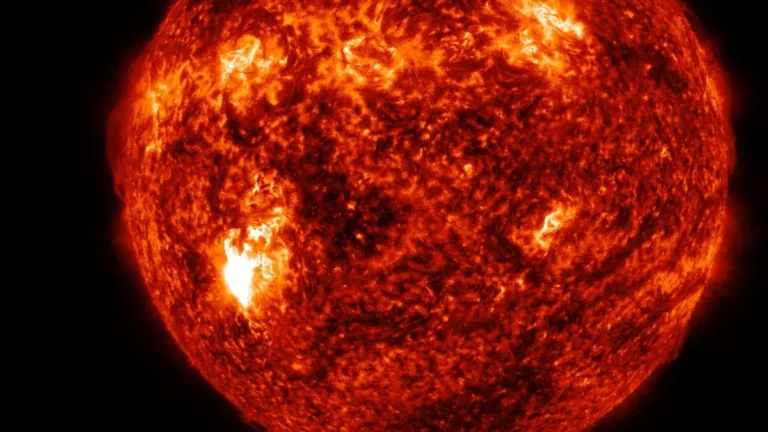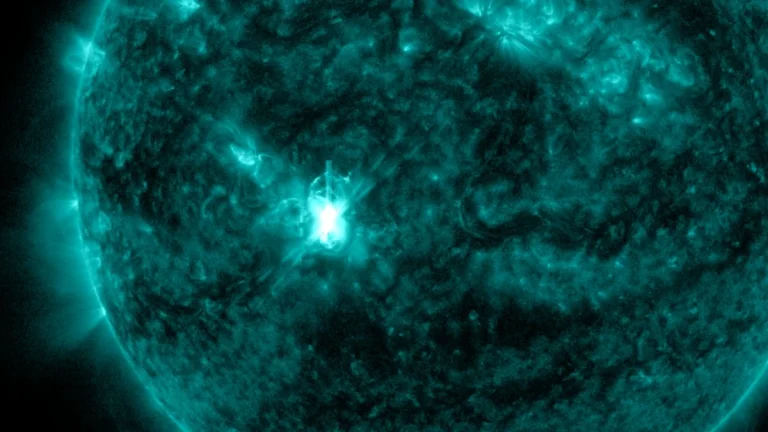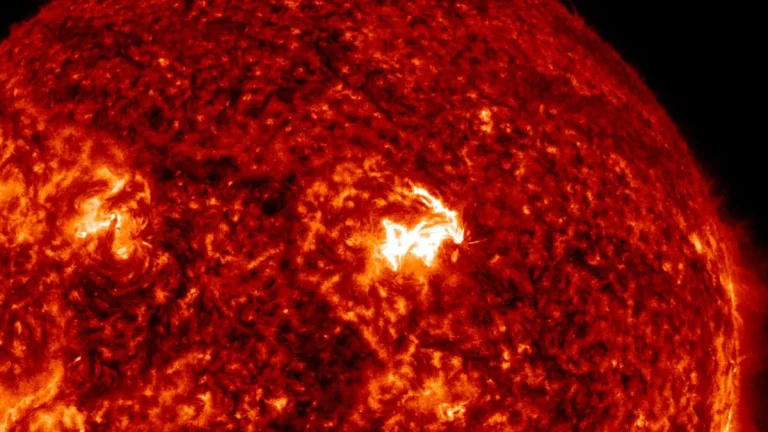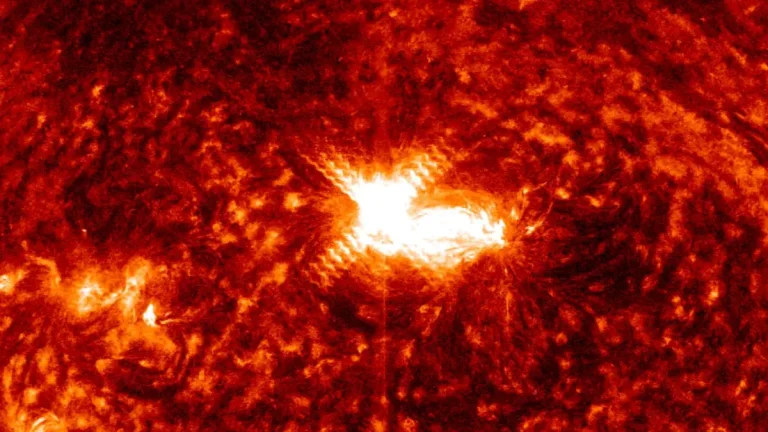
• Impulsive M7.5 solar flare erupts from Earth-facing Region 4409, geomagnetic conditions remain elevated

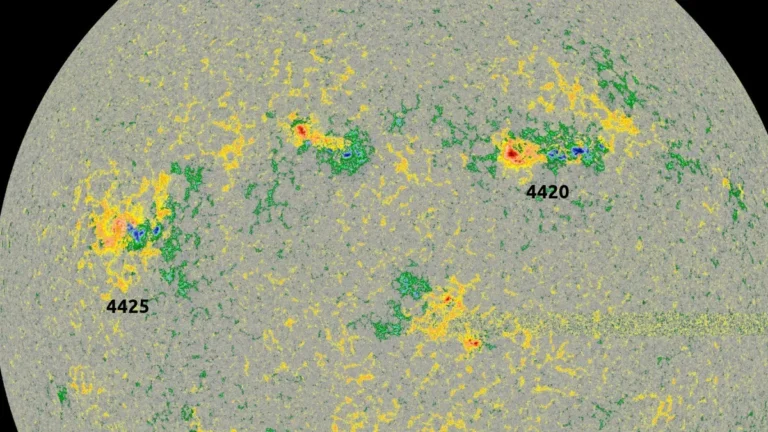
    A strong solar flare measuring M7.5 erupted from Active Region 4409 at 01:17 UTC on April 4, 2026. The event started at 01:07 and ended at 01:23 UTC. No radio signatures indicating a coronal mass ejection (CME) were detected, despite the region’s position near the center of the solar disk, where any CME produced would likely be Earth-directed. Forecast conditions indicate solar activity will likely remain at moderate levels through April 6, with a slight chance of X-class flares, while geomagnetic conditions are expected to reach G1 – Minor to G2 – Moderate storm levels on April 4 under the combined influence of the April 1 CME and a negative polarity coronal hole high-speed stream.

  • Asymmetric halo CME following April 1 filament eruption forecast to deliver a glancing blow on April 4

    A filament eruption associated with a C6.1 solar flare from Active Region 4403 at 23:28 UTC on April 1, 2026, produced an asymmetric halo coronal mass ejection. Initial modeling indicates the bulk of the ejecta is directed north of Earth’s orbit, with a possible glancing impact early on April 4 that could trigger minor to moderate geomagnetic storming. Current geomagnetic conditions remain influenced by a combined coronal hole high-speed stream and prior CME activity.

  • Geomagnetic storms possible this weekend as CME from M1.0 solar flare heads toward Earth

    An M1.0 solar flare erupted from Active Region 4373 at 08:58 UTC on February 13, 2026, launching a coronal mass ejection (CME) expected to glance Earth around February 15–16. SWPC forecasts G1 – Minor to isolated G2 – Moderate geomagnetic storm conditions as the CME interacts with a co-rotating interaction region and a positive-polarity coronal-hole high-speed stream.

  • Impulsive X4.2 solar flare erupts from geoeffective Active Region 4366

    An impulsive X4.2 solar flare erupted from geoeffective Active Region 4366 at 12:13 UTC on February 4, 2026. The flare originated from a magnetically complex beta-gamma-delta region that produced dozens of M- and 5 other X-class flares since February 1. Its location near the central solar disk raises the possibility of Earth-directed coronal mass ejections (CMEs) this week.

  • Major X8.1 solar flare erupts from AR 4366 following explosive growth

    A major X8.1 solar flare erupted from Active Region 4366 at 23:57 UTC on February 1, 2026, following rapid magnetic expansion and intense flaring throughout the day. The region also produced an X1.0 flare at 12:33 UTC on February 1 and an X2.8 event at 00:36 UTC and an X1.6 at 08:14 UTC on February 2, accompanied by more than 20 M-class flares since 02:00 UTC on February 1.

  • Major X1.0 flare erupts from Region 4366, Earth-directed CMEs possible in days ahead

    A major X1.0 solar flare erupted at 12:33 UTC on February 1, 2026, from Active Region 4366, following a sequence of strong M-class flares earlier in the day, including M6.6 and M6.7 flares within two hours. The event started at 11:52 and ended at 12:38 UTC. With the region now rotating toward the center of the solar disk and maintaining a complex beta-gamma-delta magnetic configuration, conditions are favorable for Earth-directed CMEs in the days ahead.