• Ozone thinning has influenced ocean circulation

    The hole in the Antarctic ozone layer has caused changes in the way that waters in those southern oceans mix, which has the potential to alter the amount of CO2 in the atmosphere and eventually could have an impact on global climate change, according to earth scientist
  • Underwater forest off the coast of Alabama

    In August 2005, Hurricane Katrina generated massive waves uncovering an underwater cypress forest. 10 miles off the coast of Alabama a fisherman having great success shortly after the storm requested his friend take his diving gear to the bottom and see what lay

  • NSF issues grant worth $12 million for research on Ocean acidification

    Ocean acidification is a major threat to our marine ecosystems. Provided carbon dioxide levels have considerably risen in the atmosphere, scientists suggest oceans are now acidifying at a rate faster than anytime during past 300 million years. In an attempt to

  • Planet Earth supports one-third less life than previously thought

    New study show that the living biomass on Earth is much lower than previously thought. Scientist estimate Earth’s total number of microbes and total living biomass to be, respectively, 50–78% and 10–45% lower than previous estimates. Biomass is the mass of

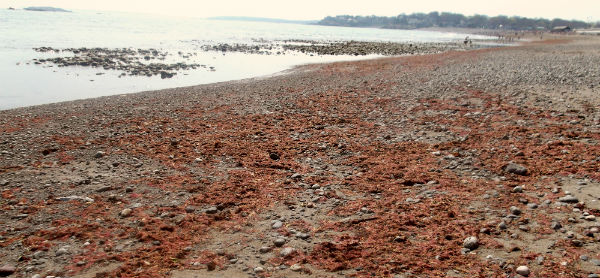
  • Stinky red seaweed invades New England beaches in US

    An awful odor of a foreign invasive red seaweed is smelling from Long Island Sound to the southern Gulf of Maine, US. A red seaweed originating from Japan is invading New England beaches. Scientists fear the seaweed could harm the coastal ecosystem by growing over

  • High levels of lead from gasoline found in Indian Ocean

    Despite the fact that leaded gasoline having been slowly phased out worldwide, researchers say they have discovered high concentrations of lead in the Indian Ocean. Since the 1970s, leaded gasoline has been slowly phased out worldwide, as studies have shown that lead