The Weekly Volcanic Activity Report: January 8-14, 2026
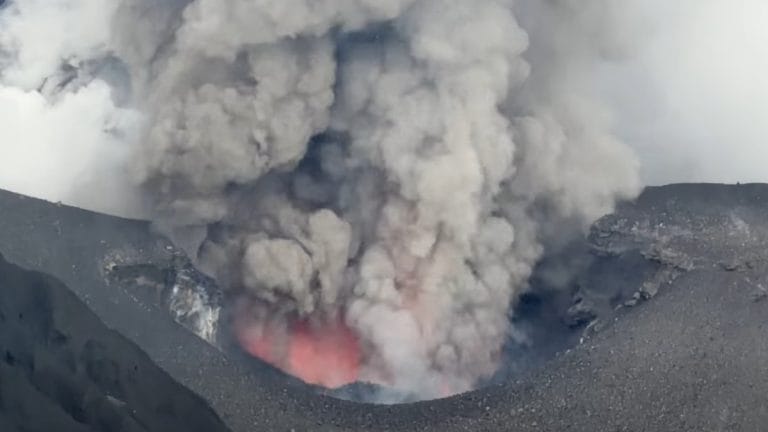
New activity/unrest was reported for 5 volcanoes from January 8 to 14, 2026. During the same period, ongoing activity was reported for 22 volcanoes.

New activity/unrest was reported for 5 volcanoes from January 8 to 14, 2026. During the same period, ongoing activity was reported for 22 volcanoes.

A strong and shallow earthquake registered by the USGS as M6.0 struck off the coast of Oregon, United States, at 03:25 UTC on January 16, 2026 (19:25 LT, January 15). The agency is reporting a depth of 10 km (6.2 miles). EMSC is reporting the same magnitude and depth.

A series of three small earthquake swarms occurred beneath Halemaʻumaʻu crater at the summit of Kīlauea Volcano, Hawaii, between January 13 and 14, 2026, marking the most notable shallow seismic unrest since the eruption’s onset in December 2024. The U.S. Geological Survey’s Hawaiian Volcano Observatory (HVO) reports all events were below magnitude 2 and located 1.5–4 km (0.9–2.5 miles) beneath the surface. The activity follows the high fountain eruption of episode 40 on January 12, which produced 5.5 million m³ (7.2 million yd³) of lava within less than 10 hours.

Widespread wildfires have been burning across central and southern Chile since early December 2025, affecting seven regions and destroying at least 3 839 ha (9 480 acres) of land. As of January 15, 2026, two people have died, 10 were injured, and more than 2 100 are displaced, according to the International Federation of Red Cross and Red Crescent Societies (IFRC).

Freeze warnings are in effect across the Florida Panhandle, northern and central counties, and parts of southeast Georgia from 23:00 EST Thursday, January 15, 2026, through 09:00 EST Friday, January 16. Temperatures are forecast to drop as low as −6°C (22°F) in inland areas, producing frost capable of damaging unprotected crops and causing water pipes to freeze and burst.

Heavy snow and low visibility conditions triggered a multi-vehicle pile-up involving 30 trucks along the eastbound I-80 near Elkhart County, Indiana on January 14, 2026. The crash involved at least 10 semi-trucks, leaving many injured and hospitalized.

Strong northwesterly winds and very low humidity will bring critical fire weather conditions across eastern Colorado and western Kansas on Thursday, January 15, 2026, prompting the National Weather Service in Goodland to issue a Red Flag Warning and Fire Weather Watch. At the same time, high wind watches have been issued across the northern and central Great Plains, with gusts up to 120 km/h (75 mph) expected Thursday through Friday, January 16.

A stratospheric warming event over the North Pole is expected to weaken the polar vortex and may lead to a core split around January 25, 2026. The disruption could cause another surge of Arctic air, bringing below-average temperatures and snow to large parts of the U.S. and Europe.

An F2 tornado struck Guatupê, São José dos Pinhais, in Brazil on January 10, 2026, damaging hundreds of homes and leaving 2 people with minor injuries.

A landslide killed at least 13 people and left 30 more missing in the Burutsi village, Kashebere area of Walikale Territory, DR Congo, on January 13, 2026.