I'm a dedicated researcher, journalist, and editor at The Watchers. With over 20 years of experience in the media industry, I specialize in hard science news, focusing on extreme weather, seismic and volcanic activity, space weather, and astronomy, including near-Earth objects and planetary defense strategies. You can reach me at teo /at/ watchers.news.

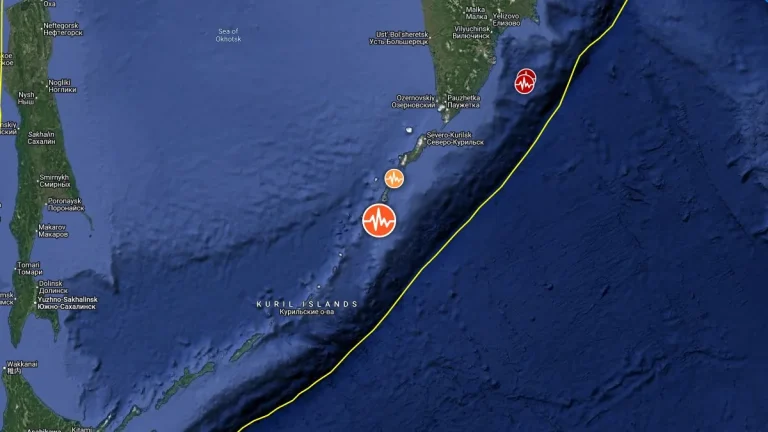
  • Strong M6.0 earthquake hits the Kuril Islands, Russia

    A strong earthquake registered by the USGS as M6.0 struck the Kuril Islands, Russia, at 15:58 UTC on February 15, 2026. The agency is reporting a depth of 55 km (34 miles). EMSC is reporting M6.0 at a depth of 50 km (31 miles).
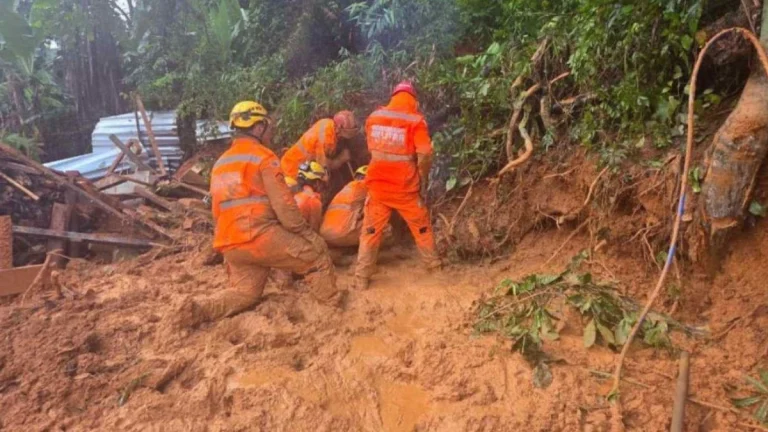
  • Widespread flooding and landslides affect 2 million people across northern Morocco

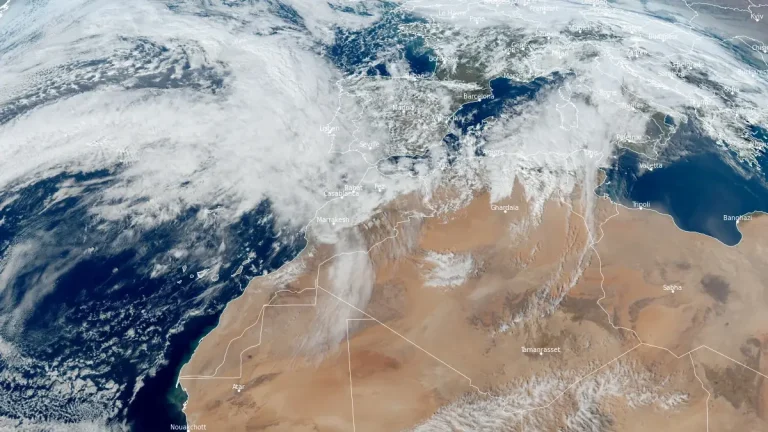
    Severe flooding and landslides triggered by a series of Atlantic storms since late January 2026 have killed 43 people and displaced around 300 000 across northern Morocco. The hardest-hit areas include Sahel al-Gharb, Fez-Meknes, and the Rabat-Salé-Kénitra corridor, where heavy rainfall and overflowing rivers inundated 110 000 ha (272 000 acres) of farmland and damaged infrastructure.

  • Long-term correlation found between Earth’s magnetic field strength and atmospheric oxygen

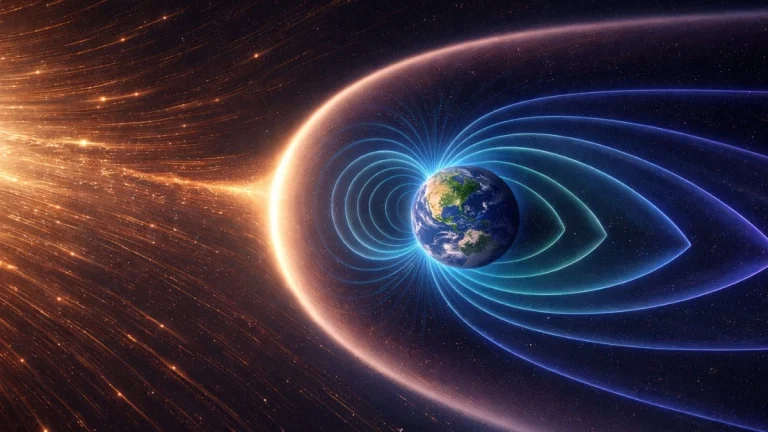
    An analysis of paleomagnetic and geochemical proxy records shows that Earth’s geomagnetic field strength and atmospheric oxygen levels followed closely correlated trends over the past 540 million years. The findings show that both variables increased through the Phanerozoic and peaked together during the late Paleozoic.

  • Red Warning issued for heavy rain across Manawatū, Rangitīkei and Ruapehu Districts, New Zealand

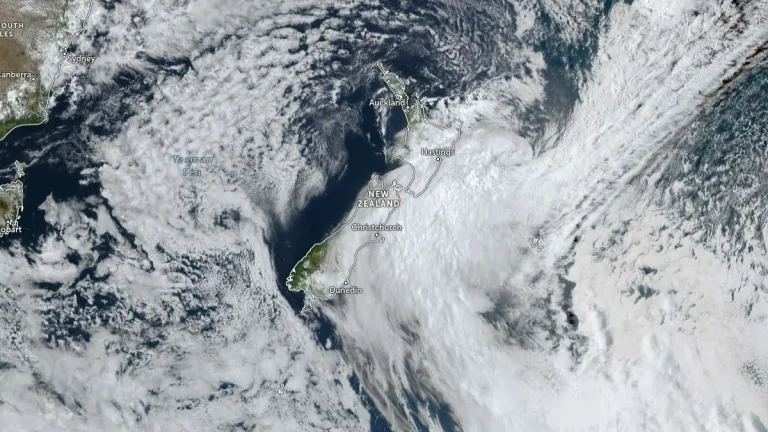
    New Zealand’s MetService issued a Red Warning for heavy rain covering the Manawatū, Rangitīkei, and Ruapehu Districts at 14:36 NZDT (01:36 UTC) on February 15, 2026. The highest-level alert was issued in consultation with Horizons Regional Council as a deep low-pressure system moved south along the eastern North Island, with life-threatening flooding, slips, and river surges expected overnight into February 16. A pre-emptive state of emergency has been declared for the entire Horizons Region.

  • Geomagnetic storms possible this weekend as CME from M1.0 solar flare heads toward Earth

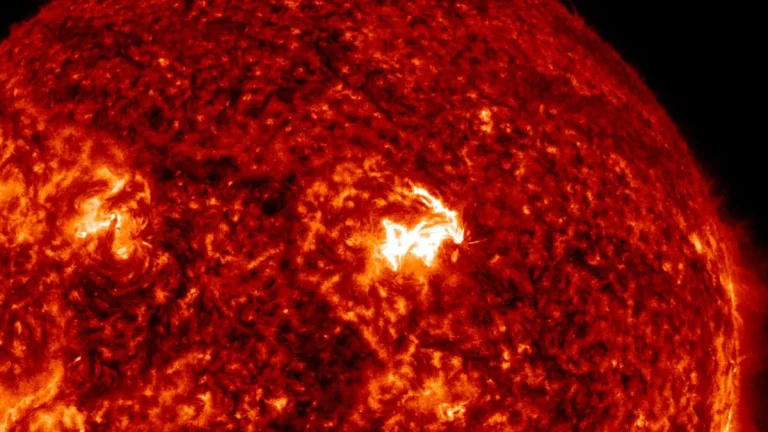
    An M1.0 solar flare erupted from Active Region 4373 at 08:58 UTC on February 13, 2026, launching a coronal mass ejection (CME) expected to glance Earth around February 15–16. SWPC forecasts G1 – Minor to isolated G2 – Moderate geomagnetic storm conditions as the CME interacts with a co-rotating interaction region and a positive-polarity coronal-hole high-speed stream.

  • Strong and shallow M6.4 earthquake hits near Port-Olry, Vanuatu

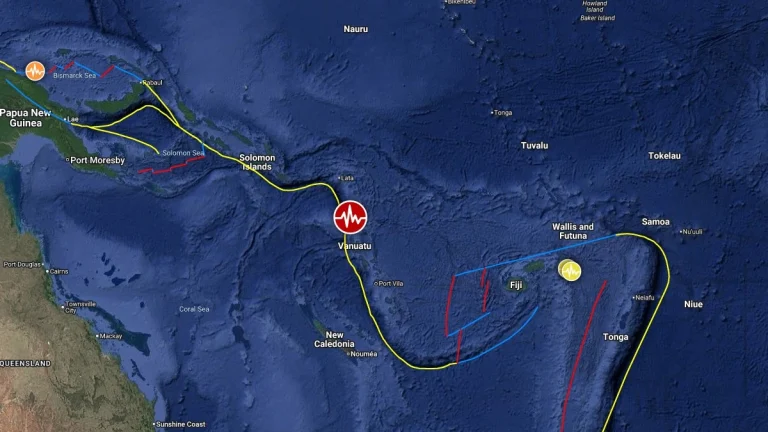
    A strong and shallow earthquake registered by the USGS as M6.4 struck near Port-Olry, Vanuatu at 02:27 UTC on February 14, 2026. The agency is reporting a depth of 10 km (6.2 miles). The EMSC is reporting M6.5 at the same depth. According to the Pacific Tsunami Warning Center (PTWC), there is no tsunami threat from this earthquake.

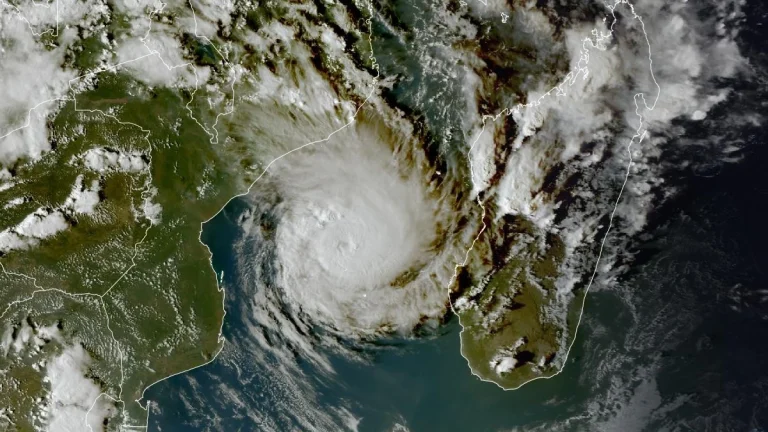
  • Gezani forecast to reach intense tropical cyclone strength near Mozambique coast, more than 1 million at risk

    Tropical Cyclone Gezani was located in the Mozambique Channel at 12:00 UTC on February 12, 2026, with maximum sustained winds of 120 km/h (75 mph) and is forecast to intensify to 165 km/h (105 mph) near the Mozambique coast by February 14. Gale- to hurricane-force winds, rainfall totals locally reaching 200 mm (8 inches), and high seas of 7–10 m (23–33 feet) are possible in Inhambane Province, while Sofala and Gaza provinces remain saturated from prolonged flooding that has already displaced hundreds of thousands.

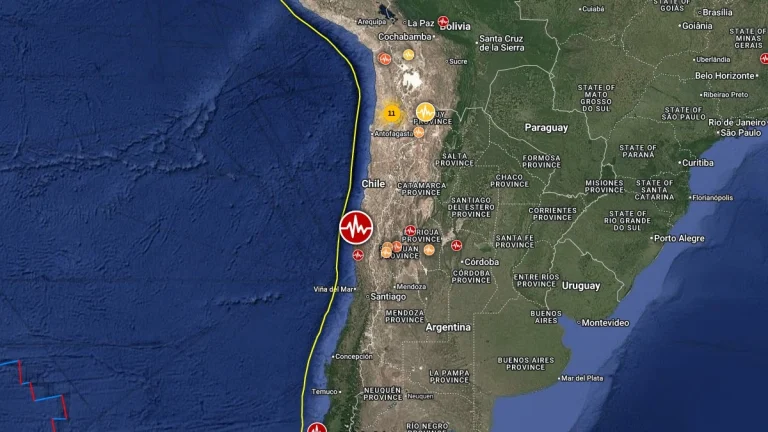
  • Strong M6.2 earthquake hits Coquimbo Region, Chile

    A strong earthquake registered by the USGS as M6.2 struck the Coquimbo Region, Chile, at 13:34 UTC (10:34 local time) on February 12, 2026. The agency is reporting a depth of 37 km (22.9 miles). EMSC is reporting the same magnitude and depth.