I'm a dedicated researcher, journalist, and editor at The Watchers. With over 20 years of experience in the media industry, I specialize in hard science news, focusing on extreme weather, seismic and volcanic activity, space weather, and astronomy, including near-Earth objects and planetary defense strategies. You can reach me at teo /at/ watchers.news.

  • Rare high-impact windstorm hits Zagreb, Croatia, in one of the city’s strongest wind episodes on record

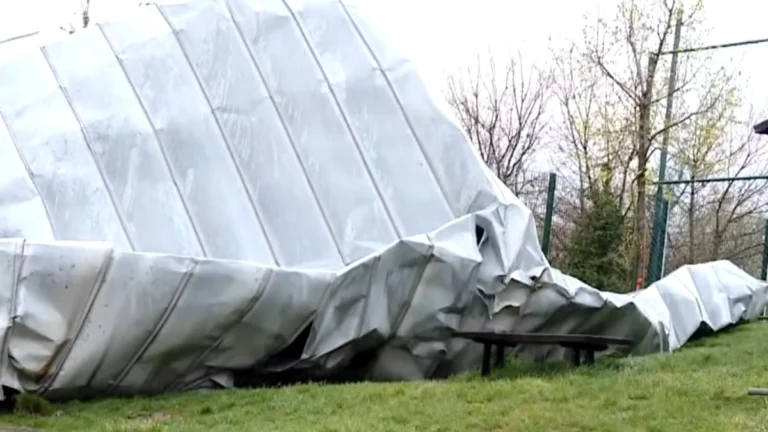
    One of the strongest wind episodes on record in Zagreb, and the most intense in the modern Zagreb-Maksimir measurement record, struck the Croatian capital on March 27, 2026, with gusts exceeding 120 km/h (75 mph), causing widespread damage, major transport disruption, and multiple injuries, including two serious cases reported by authorities.

  • Extreme isotopic signatures in 3I/ATLAS point to origin in the early Milky Way

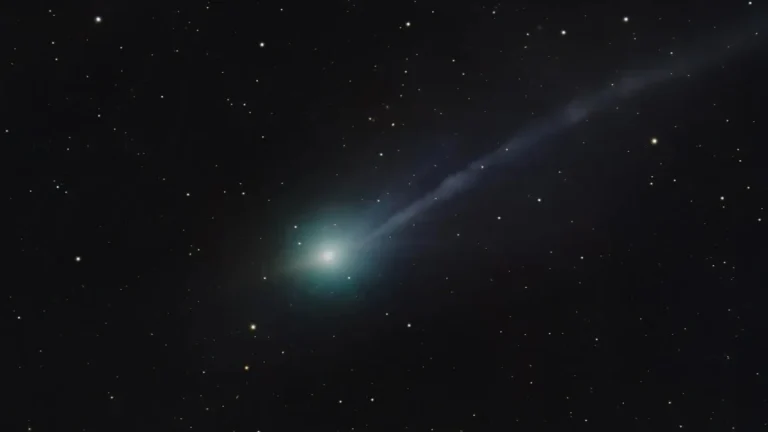
    Extreme deuterium enrichment measured in both water and methane in the interstellar object 3I/ATLAS suggests formation in a very cold environment (≲30 K) and possibly early in the history of the Milky Way, according to two preprint studies based on James Webb Space Telescope observations conducted on December 22 and 23, 2025. The isotopic compositions differ sharply from those measured in known Solar System comets and point to formation in an environment chemically distinct from that of the Solar System.

  • Asteroid 2026 FS5 passed within 0.1 lunar distance of Earth

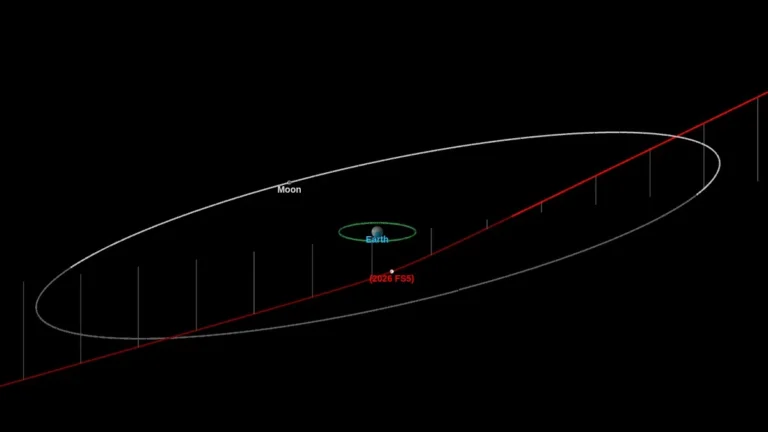
    Asteroid 2026 FS5 passed Earth at a distance of 0.120 LD (0.00031 AU / 46 133 km / 28 666 miles) from the center of our planet at 11:40 UTC on March 22, 2026, becoming the third closest known asteroid flyby within 1 lunar distance recorded so far this year. Its closest point was about 39 762 km (24 707 miles) above Earth’s surface.

  • Rare severe weather outbreak brings tornado risk to Gulf states

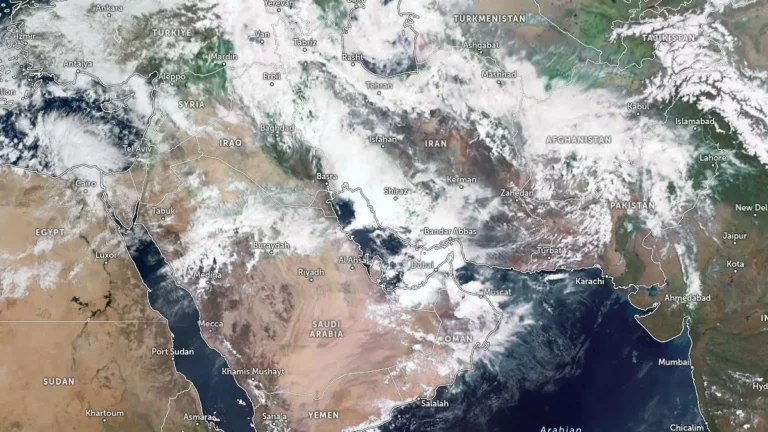
    A rare severe convective setup is forecast to develop across the Gulf region, including the United Arab Emirates, Qatar, and eastern Saudi Arabia, on March 26–27, 2026, as a deep low-pressure system and strong upper-level trough interact with high instability and wind shear. The environment may support organized thunderstorms capable of producing tornadoes, alongside heavy rainfall, hail, and damaging winds.