
Strong M6.0 earthquake hits Samar, Philippines
A strong earthquake registered by the USGS as M6.0 hit Samar, Philippines, at 06:09 UTC (14:09 LT) on May 4, 2026. The agency is reporting a depth of 73.3 km (45.5 miles). EMSC is reporting M6.0 at a depth of 56 km (34.8 miles).
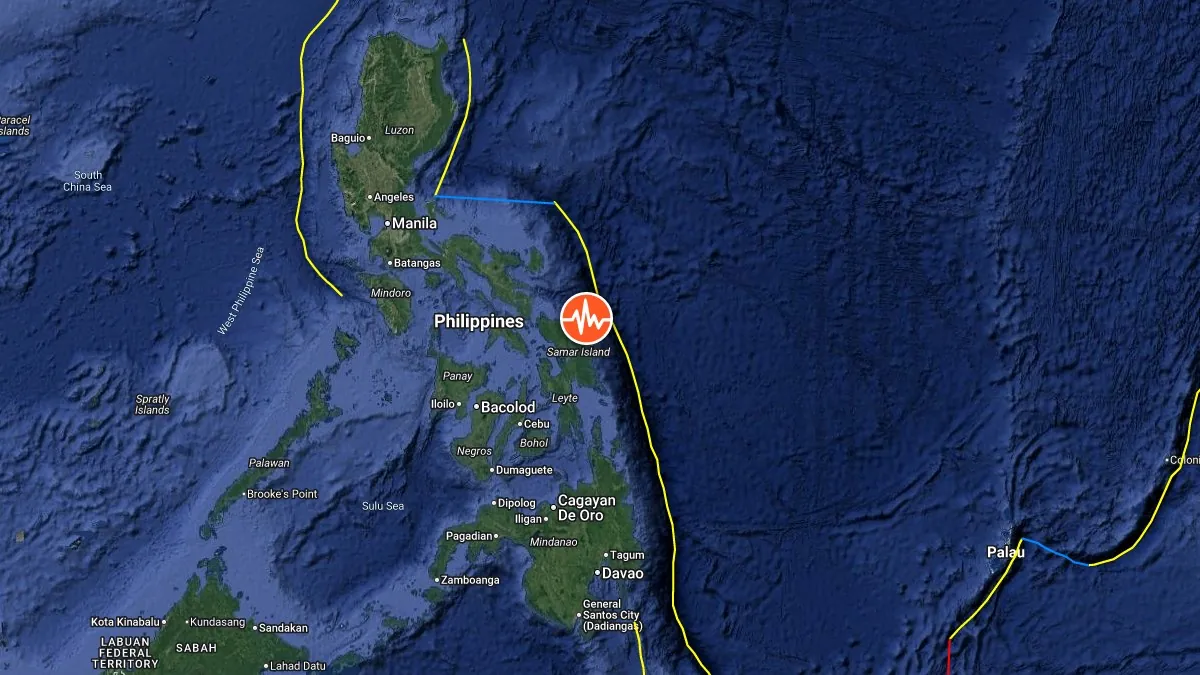
Epicenter of M6.0 earthquake in Samar, Philippines on May 4, 2026. Credit: TW/SAM, Google
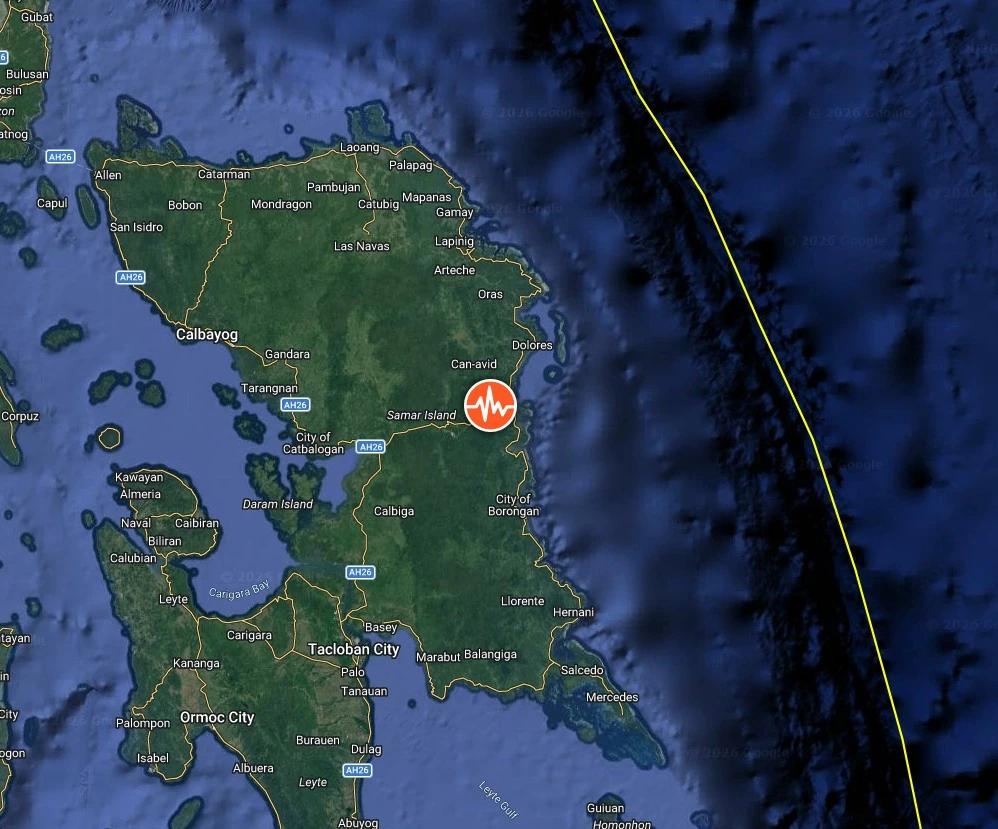
The epicenter was located 5.2 km (3.2 miles) WNW of Nena (population 2 276), 20 km (12.4 miles) SSE of Borongan (population 16 484), 53 km (33 miles) E of Catbalogan (population 68 081), 71 km (44 miles) NE of Panalanoy (population 189 090), and 230 km (142 miles) NE of Cebu City (population 964 169), Philippines.
There is no tsunami threat from this earthquake.
The Philippine Institute of Volcanology and Seismology (PHIVOLCS) reported the quake as M6.0 at a depth of 56 km (34.8 miles) and of tectonic origin.
The strongest reported intensity was V in the City of Tacloban. The agency said damage and aftershocks are expected.
Little or no landsliding and liquefaction is expected, but some could have occurred in highly susceptible areas, according to USGS estimates.
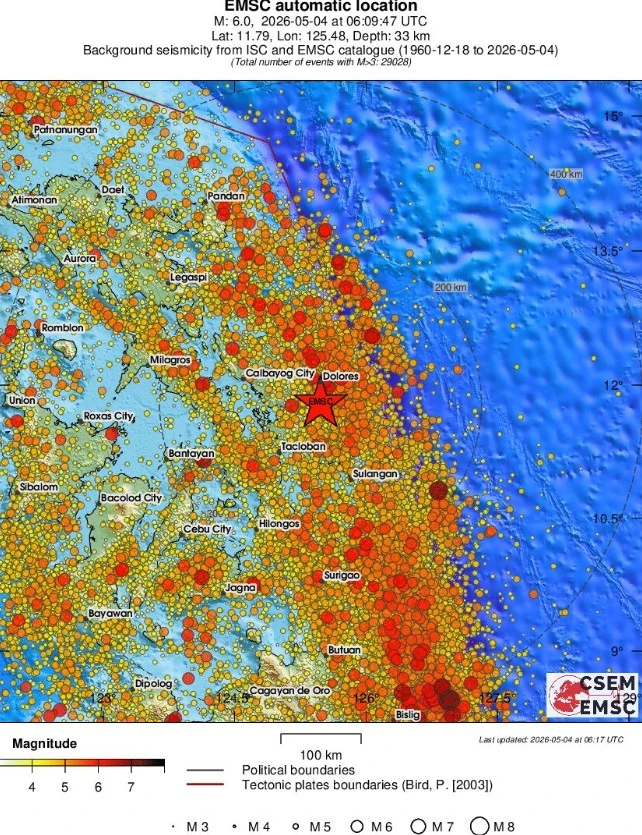
Regional seismicity
References:
1 M6.0 earthquake Samar, Philippines – USGS – May 4, 2026
2 M6.0 earthquake Samar, Philippines – EMSC – May 4, 2026
3 M6.0 earthquake Samar, Philippines – PHIVOLCS – May 4, 2026

Teo Blašković founded The Watchers in 2011 and edited it until 2026, covering seismic and volcanic activity, extreme weather, space weather and near-Earth objects. Articles on this page are his archive.
Published in the last 24 hours
- One dead, 15 injured and 152 homes left uninhabitable across five regions of Peru after the M6.7 Junín earthquake of 20 November, COEN-INDECI reports.
- Airline pilots reported red flashes shooting upward from thunderstorms for decades, until a camera being tested in Minnesota in 1989 caught one by accident above a distant storm Epicenter
- Luxor sits inside the 258 km wide path of the total solar eclipse of 2 August 2027, and totality will last up to 6 minutes 23 seconds near the city, with the Sun 82 degrees overhead at greatest eclipse. Epicenter
- On 13 April 2029 the 340 m asteroid Apophis will pass about 32,000 km above Earth's surface, inside the ring of geosynchronous satellites, and NASA says observers across the Eastern Hemisphere will see it without a telescope or binoculars. Epicenter
