
Two dead after embankment collapses at illegal gold mining site in western Kelantan, Malaysia
Two men were killed after a 2 m (6.6 feet) high river embankment collapsed near Jeli in western Kelantan at approximately 20:20 local time (LT) on May 20, 2026, burying a group believed to have been illegally mining for gold near the Jerimbong oil palm plantation.
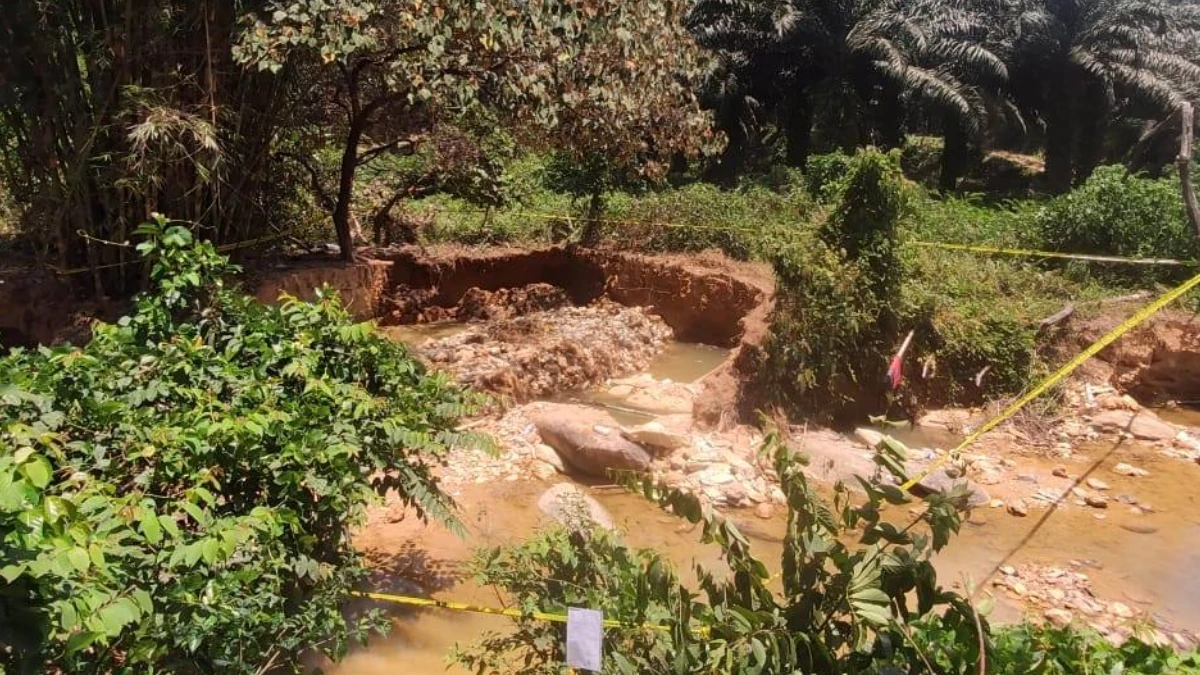
Collapsed River Embankment that claimed the lives of two illegal miners in Jeli, Malaysia, on May 20, 2026. Credit: Mohamed Fadzli Hassan
Two men were reported dead after a 2 m (6.6 feet) high river embankment collapsed near Jeli in western Kelantan on May 20. The area was reportedly sealed off by local police to prevent illegal gold panning a day before the incident happened.
The incident occurred at approximately 20:20 local time (LT) when the embankment collapsed and buried the victims. One other man survived the collapse.
The party of three, including the victims, males aged 32 and 38, were believed to have been illegally mining for gold near the Jerimbong oil palm plantation when the incident happened, according to Deputy Chief Minister Mohamed Fadzli Hassan.
The search operation began at 21:20 LT; the first body was recovered at around 21:25 LT, while the second was recovered at approximately 23:18 LT, according to Jeli Fire and Rescue Station chief Adni Ibrahim.
“This tragic event once again proves that illegal mining activities are not only against the law but also pose great risks to life, safety, and environmental sustainability,” said Hassan.
“Extraction activities without a license and legal approval can be subject to action in accordance with the provisions of the Kelantan State Minerals Enactment and related laws without any compromise,” he added.
References:
1 Two men died buried in the rubble of the river bank, believed to be gold mining – Sinar Harian – May 21, 2026

Rishav Kothari is Editor-in-Chief of The Watchers, where he runs the newsroom and covers earthquakes, volcanoes, severe weather and space weather.
Published in the last 24 hours
- In September 1859, a solar storm lit up the night sky so brightly that gold miners in the Rocky Mountains woke up after midnight and started cooking breakfast, convinced the aurora glowing over their camp was the sunrise Epicenter
- A patch of warm Pacific water that could become the strongest El Niño in more than 70 years sits thousands of miles from any American town, yet it is already the main reason NOAA expects a wetter winter across the South and a milder one across the North
