
Canada records lowest temperature in decades and record snowfall in winter 2025–26
Canada recorded its lowest temperature in decades during winter 2025–26, with −55.7°C (−68°F) measured at Braeburn, Yukon, on December 23. Seasonal snowfall reached 446 cm (176 inches) in Gander West, Newfoundland and Labrador, among the highest totals reported nationwide this winter, while Toronto registered its snowiest single day on record on January 25, when 46 cm (18 inches) fell at Toronto Pearson International Airport. The season, spanning December 1, 2025, through February 28, 2026, saw a 76.7°C (138°F) national temperature range, repeated Arctic air outbreaks, and major winter storms that disrupted transportation across central and eastern Canada.
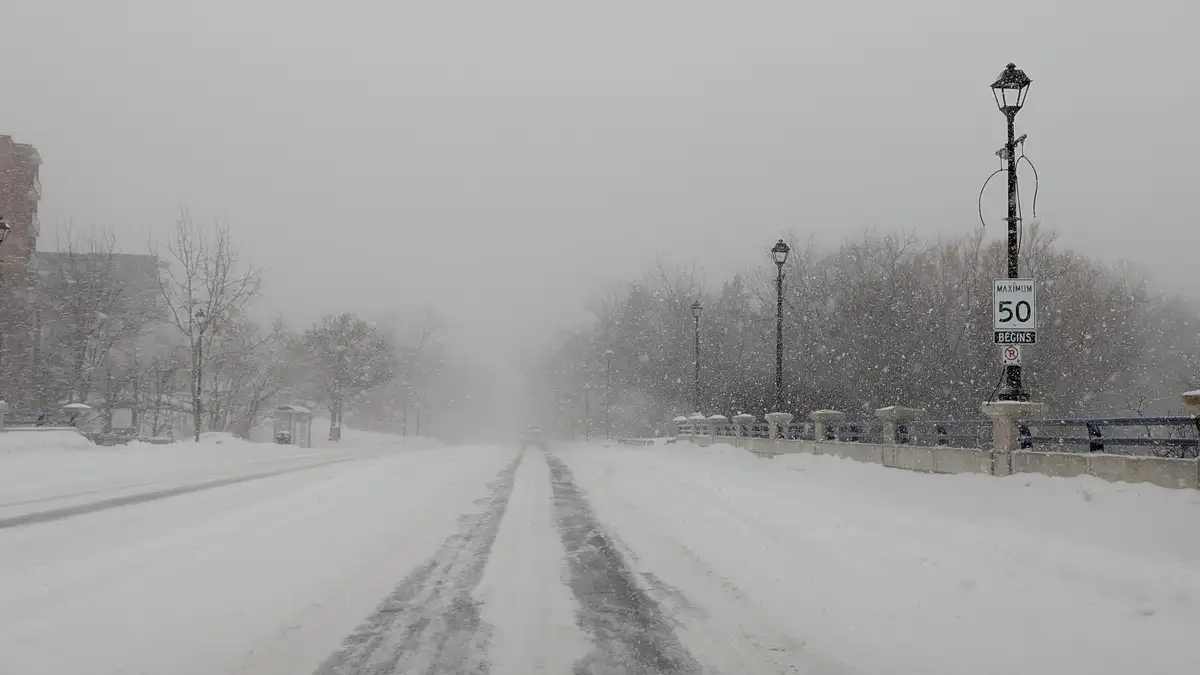
Image credit: Sikander Iqbal
A major winter storm struck southern Ontario on January 25 and set a new all-time daily snowfall record at Toronto Pearson International Airport. The station measured 46 cm (18 inches), surpassing the previous record of 39.9 cm (15.7 inches) set in February 1965.
Environment Canada reported 61 cm (24 inches) of accumulated snow in downtown Toronto, with approximately 50 cm (20 inches) reported in parts of the urban core by 17:30 LT.
The storm triggered widespread transportation disruption, with more than 560 flights cancelled at Toronto Pearson by 15:00 LT, and 33 flights cancelled at Billy Bishop Toronto City Airport.
Toronto declared a Major Snow Storm Condition at 16:00 LT. The Ontario Provincial Police responded to approximately 200 vehicle collisions across the Greater Toronto and Hamilton Area within 24 hours. In Waterloo, two crashes on a Highway 7 ramp on January 26 resulted in one fatality and one minor injury.
School boards across the Greater Toronto Area closed, along with the University of Toronto, York University, and Toronto Metropolitan University.
Seasonal snowfall reached 446 cm (176 inches) in Gander West, the highest confirmed accumulation reported nationwide. Flesherton, Ontario, recorded 439 cm (173 inches), while reports from Sault Ste. Marie mentioned over 400 cm (157 inches). St. John’s measured 178.2 cm (70 inches) in February alone, its snowiest February in more than a century.
Further east, Ottawa and Montreal each recorded 14 cm (5.5 inches) of snowfall. In Ottawa, 21 departing flights were cancelled by 06:00 LT on January 26, and police reported 154 traffic accidents between the morning and 15:00 LT. Via Rail reported cancellations and delays.
Approximately 3 500 Hydro-Québec customers, primarily on the Island of Montreal, lost power, while two women died in Montreal during a period of extreme cold coinciding with the outage.
The winter also produced Canada’s lowest temperature in decades. Braeburn, Yukon recorded −55.7°C (−68°F) on December 23, the lowest national reading since January 1999. Each month of the season recorded at least one temperature of −50°C (−58°F) or lower somewhere in the country.
The national temperature range reached 76.7°C (138°F) between the winter’s highest and lowest readings. While northern regions experienced prolonged Arctic air masses, Chinook conditions in southern Alberta raised temperatures to 21°C (70°F) in Barnwell during February, marking the warmest reading recorded nationwide this winter.
Kirkland Lake, Ontario, fell to −43.7°C (−47°F) on January 24, its lowest temperature in 42 years, and Edmundston, New Brunswick, reached −37.6°C (−36°F) on January 25. Prince Edward Island recorded a 37.6°C (68°F) seasonal temperature range, the narrowest among provinces and territories.
Snowfall distribution showed pronounced regional contrast. Vancouver International Airport recorded no measurable snowfall during the meteorological winter. Calgary accumulated approximately 80% of its seasonal snowfall average between December and February.
Repeated synoptic winter cyclones, lake-effect snow bands, and nor’easters maintained persistent snow cover across eastern Canada, while parts of western Canada remained comparatively dry. Winter 2025–26 was defined by record seasonal snowfall totals, Toronto’s highest daily snowfall on record, and one of the widest national temperature spreads observed in recent decades.
References:
1 446 cm: Canada’s winter saw extreme snows and bitter cold – The Weather Network – March 1, 2026.

I’m a science journalist and researcher at The Watchers, contributing to the Epicenter edition, where I cover peer-reviewed scientific research and emerging discoveries across Earth and space sciences. With a background in astronomy and a passion for environmental science, I’ve worked in shark and coral conservation in Fiji, conducting reef and shark-behavior research, contributing to mangrove restoration, and earning PADI Open Water and Coral Reef Certifications. I bring a blend of scientific rigor and storytelling to illuminate the discoveries shaping our planet and beyond.

Commenting rules and guidelines
We value the thoughts and opinions of our readers and welcome healthy discussions on our website. In order to maintain a respectful and positive community, we ask that all commenters follow these rules.