
Potentially historic winter storm forecast to impact more than 30 states across the U.S.
A potentially historic winter storm associated with the Polar Vortex is forecast to bring heavy snow, freezing rain, and dangerous cold across much of the United States from January 23 to 26, 2026. The system is expected to cause widespread travel disruptions, power outages, and hazardous conditions from Texas to the Northeast, with more than 200 million people under various National Weather Service warnings and watches.
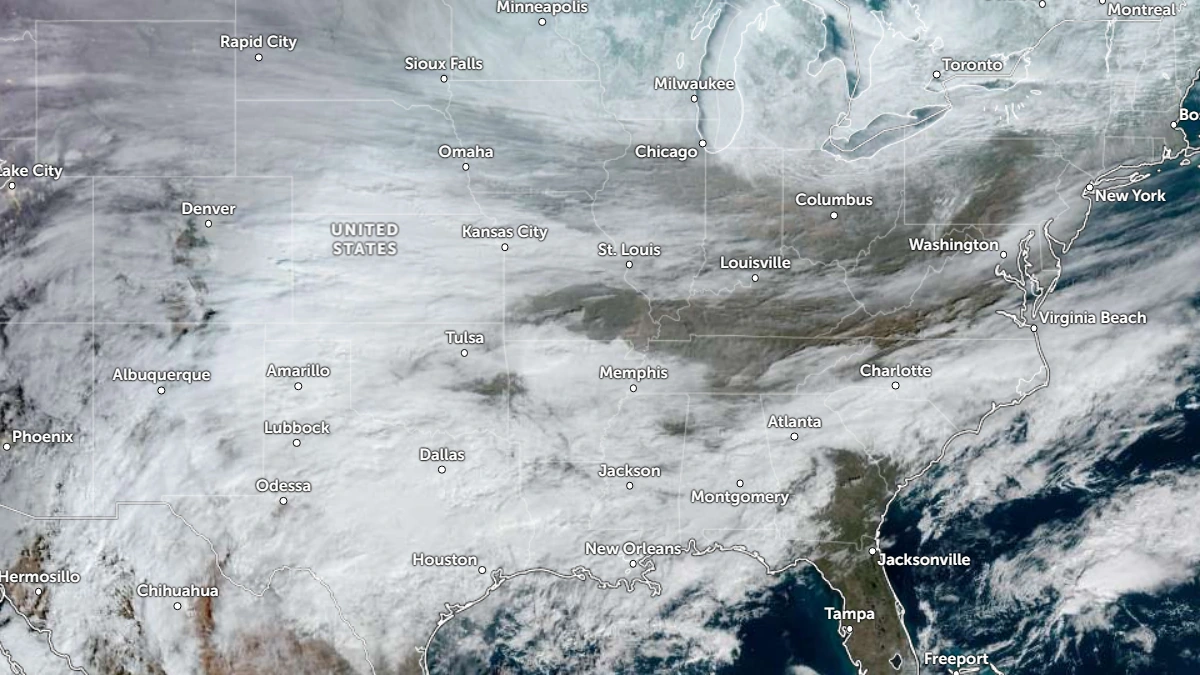
Satellite image of central and eastern USA at 15:40 UTC on January 23, 2026. Credit: NOAA/GOES-19. Zoom Earth, The Watchers
A large and powerful winter storm developing across the Southern and Central Plains is forecast to intensify through the weekend, bringing widespread snow, ice, and freezing rain across the United States. The winter storm will interact with an Arctic air mass driven by the polar vortex, bringing one of the broadest cold-weather events of the season.
Catastrophic ice accumulations of 0.6–1.2 cm (0.2–0.5 inches) are forecast across the Southern Plains into the Southeast, according to the National Weather Service (NWS). Over 200 million people are under some form of winter weather warning through January 25.
Winter storm warnings and ice storm warnings are in effect for much of Texas, Oklahoma, Arkansas, and Kansas, extending northward into Missouri and eastward toward the Ohio and Tennessee valleys into the Carolinas and the Northeast. Additional warnings and watches are expected to expand into the Mid-Atlantic and Northeast as the system advances.
Meanwhile, extreme cold warnings are in effect across the Midwest and Great Lakes Region and parts of the Northeast. Multiple other winter alerts surround these warning regions.
Forecast models show heavy snow spreading from eastern Kansas through Missouri and Illinois into the central Appalachians, with up to 300 mm (12 inches) in some areas. The NWS warns that travel conditions will deteriorate rapidly beginning late on January 23 and remain dangerous through early next week.
Major interstates across the Southern Plains and Midwest, including I-35, I-40, I-44, and I-70, are likely to see closures due to snow and ice accumulation.
Air travel is already being disrupted nationwide, with around 1 800 flights being canceled through January 24 ahead of the storm, reported Fox Weather. Delays and disruptions are likely to continue through early next week due to the storm’s lingering impacts.
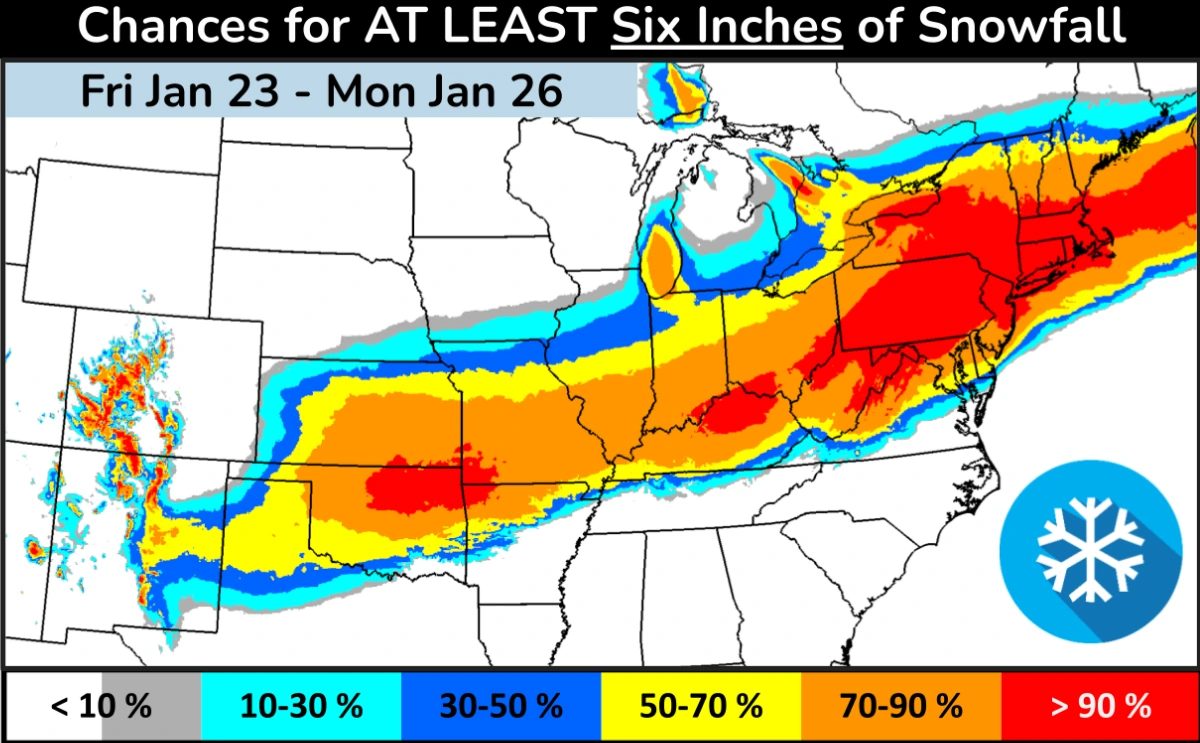
Energy providers across the South and Midwest have mobilized additional crews to mitigate expected power outages caused by ice accumulation. Grid operators, including the Electric Reliability Council of Texas (ERCOT), issued readiness advisories urging customers to conserve electricity as temperatures fall sharply.
The states of Texas, Arkansas, Missouri, Tennessee, Alabama, Mississippi, Virginia, North Carolina, Georgia, and New York have already declared states of emergency to enable rapid deployment of snow-removal equipment, power-restoration teams, and public-safety resources. These declarations are being updated as conditions evolve.
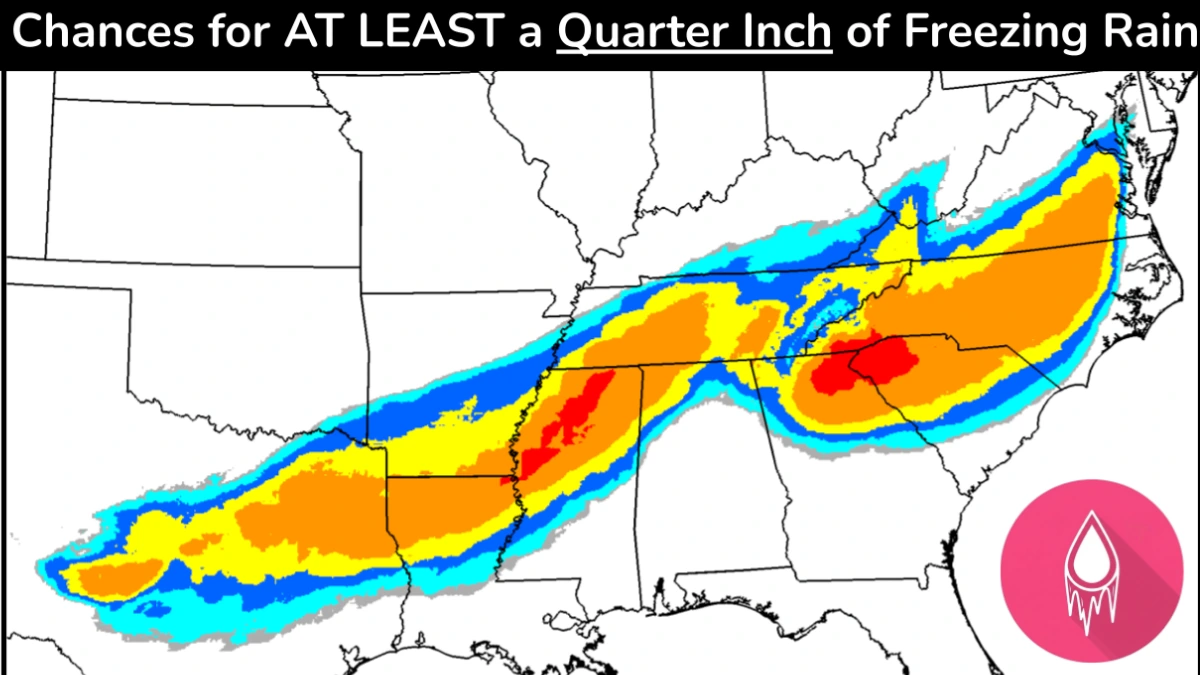
Temperatures behind the storm are forecast to plunge well below seasonal averages, with below freezing wind chills forecast across the northern and central U.S. The combination of cold air and high winds could lead to frostbite and hypothermia if exposure occurs without proper protection.
Widespread hazardous travel conditions, power disruptions, and cold-related health risks are likely through January 26. Residents within the affected regions are advised to avoid unnecessary travel, prepare for possible extended power outages, and follow official updates from the NWS and local emergency agencies.

I am an Assistant Editor and Severe Weather & Science Journalist at The Watchers, specializing in real-time severe weather coverage, geophysical event reporting, and research-driven scientific analysis. You can reach me at rishav(at)watchers(.)news.

Commenting rules and guidelines
We value the thoughts and opinions of our readers and welcome healthy discussions on our website. In order to maintain a respectful and positive community, we ask that all commenters follow these rules.