
Severe flash floods hit Afghanistan, leaving at least 22 people dead

Image credit: NASA/NOAA Suomi NPP/VIIRS, The Watchers
At least 22 people have died and 40 others have been injured after severe flash floods hit parts of Afghanistan over the past couple of days.
According to Hassibullah Shekhani, head of communications and information at Afghanistan’s National Disaster Management Authority, heavy rainfall caused floods and landslides in 12 provinces, leaving 22 people dead and 40 others injured.
Shekhani said 500 houses were destroyed, 2 000 damaged, 300 head of livestock killed, and some 1 200 ha (3 000 acres) of crops damaged.
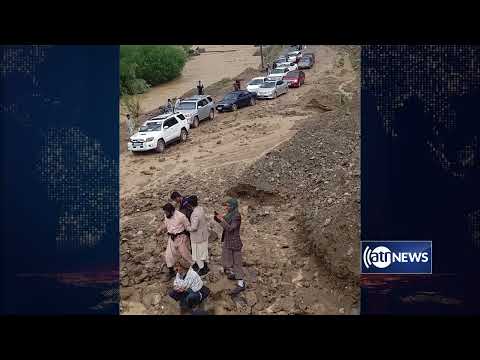
The affected provinces include Kandahar, Helmand, Herat, Badakhshan, Takhar, Parwan, Kunduz, Maidan Wardak, Baghlan, Faryab, and Jawzjan.
The worst affected are the western provinces of Badghis and Faryab and the northern province of Baghlan.
The prime minister of neighboring Pakistan asked the Organization of Islamic Cooperation (OIC) to step up its efforts through the Afghan Humanitarian Trust Forum to aid the Afghan people, warning that the number of fatalities will rise if prompt action is not taken.

References:
1 Pakistan to dispatch emergency relief goods for flood-hit Afghanistan – AFP/REUTERS – May 5, 2022

Teo Blašković founded The Watchers in 2011 and edited it until 2026, covering seismic and volcanic activity, extreme weather, space weather and near-Earth objects. Articles on this page are his archive.
Earlier reporting
Nothing on Watchers was published in the last 24 hours. These are older articles.
- Florida declares emergency after catastrophic flooding in southern Brevard County
- Record tides flood California coast as Huntington Beach declares emergency and warnings persist
- In 1920, a man out hunting on a farm in Namibia sat down on a strange black rock, scratched it with his knife and saw metal shine underneath. It was Hoba, a 60-ton meteorite, the largest ever found, and there is no crater around it Epicenter
- On December 26, 2004, a 10-year-old British girl on a Phuket beach recognized the frothing sea from a recent geography lesson, and her warning helped clear the beach before the tsunami struck Epicenter
