• Earthquake swarm under Mount Hood volcano, Oregon

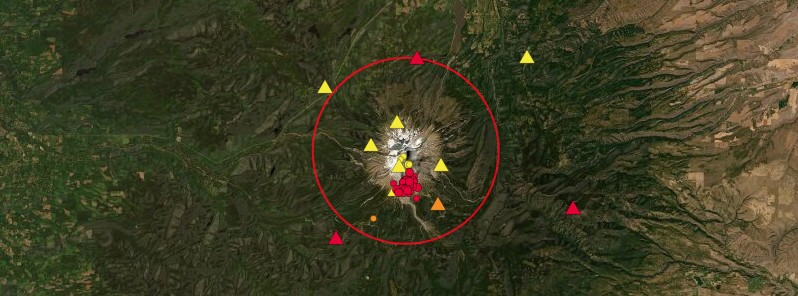
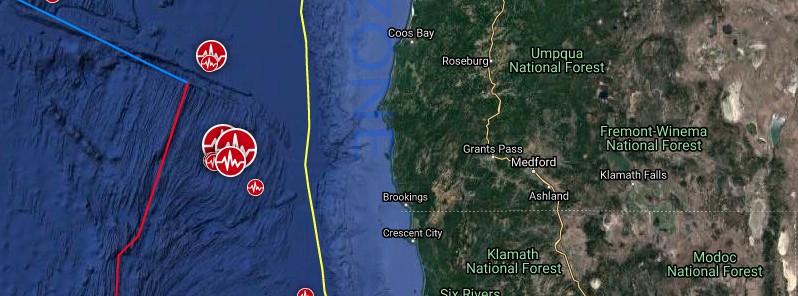
    The Cascades Volcano Observatory (CVO) has detected an earthquake swarm in the Mount Hood area, Oregon on June 5, 2021. The swarm continued into June 6 when the activity started to quiet down. The last known eruption of this volcano took place in 1865 and 1866 (VEI…

  • ‘Ring of Fire’ – Annular solar eclipse of June 10, 2021

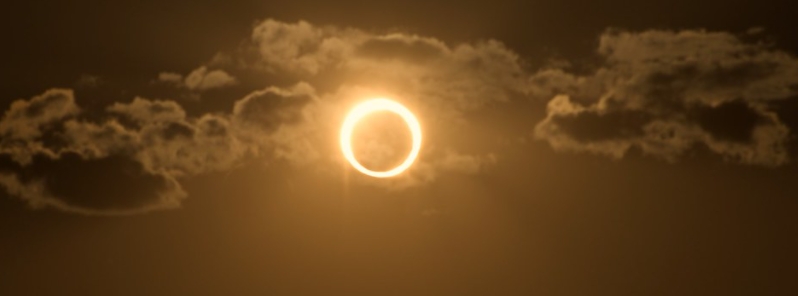
    An annular solar eclipse of June 10, 2021, will be visible from northern Canada, Greenland, and Russia, with a partial eclipse visible from northern North America, Europe, and Asia. During the event, a bright ring will surround the moon silhouette at the peak of the…

  • Intense earthquake swarm near Salton Sea, Southern California

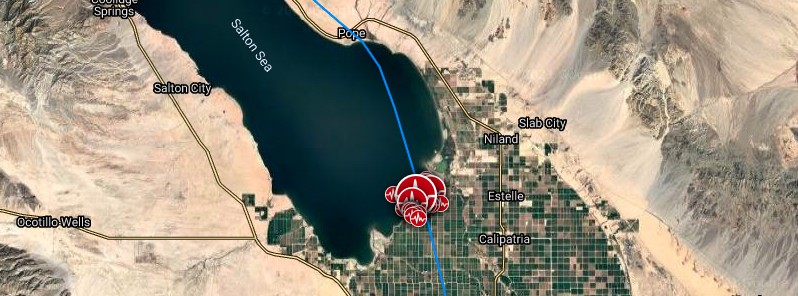
    An intense earthquake swarm is taking place near the Salton Sea in Southern California, U.S. on June 5, 2021, starting with M2.2 at 08:05 UTC (01:05 LT). The USGS has registered 285 earthquakes by 21:24 UTC. The swarm is still in progress and new earthquakes are…

  • New study solves mystery behind Earth’s deepest earthquakes

    The cause of the deepest earthquakes on Earth has been a mystery to scientists for more than a century. In a new study, a team of scientists may have solved the case by identifying water as the key factor that causes deep-focus quakes. Most earthquakes occur near…

  • NLC seasons getting longer, clouds moving farther south

    New data provided by NASA's AIM (Aeronomy of Ice in the Mesosphere) satellite mission shows that the first noctilucent clouds (NLCs) of summer have been trending earlier since 2007, when the spacecraft was launched. Each year, NLCs first appear in the Arctic and…

  • World’s longest recorded earthquake lasted for 32 years

    The devastating M8.5 earthquake that shook Sumatra, Indonesia, in 1861 was long believed to be a sudden rupture on a previously quiescent fault. However, new research showed that tectonic plates below the island had been slowly crashing against each other for 32…

  • Scientists identify new atmospheric circulation over the Arctic

    A team of scientists from Japan, South Korea, and the USA, has identified a new pattern of atmospheric circulation around the Arctic that could drive co-occurrences of heatwaves and large-scale wildfires over the region, particularly in Siberia and subpolar North…