
Unseasonal snow grips Istanbul following mostly dry winter, Turkey

Image credit: HABEROLA Online Media/YouTube
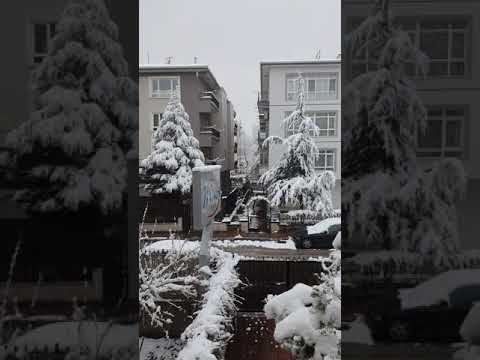
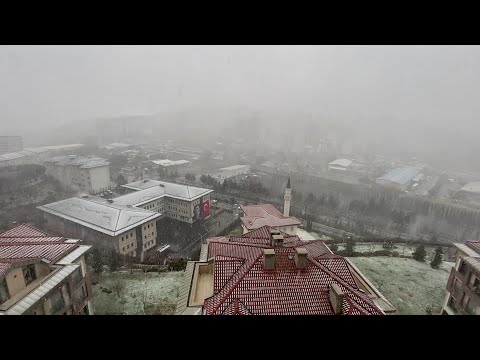
Heavy snowfall hit Istanbul, Turkey, on Wednesday, March 24, 2021, after a mostly dry winter season the country's third-warmest winter in the last five decades. The snow was also an unusual occurrence for this time of the year in the city, which experienced two brief but heavy snow spells in the last two months.
Heavy precipitation first gripped Istanbul's Asian side early Wednesday, before heading to the European side, bringing morning traffic to a standstill in some areas. A brief hailstorm was reported in some districts.
Stranded motorists had to wait for hours, especially on sections of the D-100 Highway. Meanwhile, a road accident occurred at a road connecting Arnavutkoy and Hadimkoy districts as a truck drifted on the icy road and overturned.
The sudden snow also delayed travel as bus stops and stations were crowded. An underwater rail service linking the city's European and Asian sides were also packed with passengers who avoided traffic on bridges over the Bosporus.

Water levels in dams went beyond 68 percent, exceeding the highest figures of 2020. Local media noted that it was a remarkable increase since January 9, when water levels were at their lowest, at around 19 percent. Last year, water levels were around 64 percent in March.
In Ankara, snowfall came late Tuesday, March 23, reaching about 30 cm (11.8 inches) on higher grounds. In Corum, roads to 97 villages were shut due to heavy snow.
Much of the village roads in the western province of BIlecik were closed as well due to traffic. In Mus, heavy downpours caused flooding that affected a wide swath of agricultural lands and farms.
The unseasonal snow in Turkey came after the country had its third warmest winter in the last five decades. The country's warmest winter was in 2010.


More reporting
- A fireball exploded over Murchison in Victoria on September 28, 1969, scattering meteorite fragments across about 35 km2, and 40 silicon carbide grains extracted from the meteorite include some older than 5.5 billion years, the Field Museum says
- Vesuvius, the volcano that buried Pompeii, wrecked dozens of American bombers parked at its foot when it last erupted in 1944
- The small Utah town of Milford has been rocked by more than 200 earthquakes in two weeks, the largest magnitude 3.1; seismologists now tie the swarm to geothermal work at the Utah FORGE field lab.
- Niagara Falls shrank to a trickle for more than a day in March 1848 when ice jammed the river, and people walked the dry riverbed picking up weapons from the War of 1812
