
Tropical Storm “Trami” forms west of Guam, expected to become another super typhoon
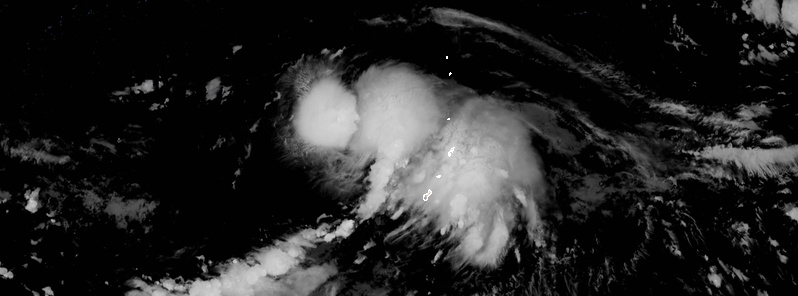
Featured image: Tropical Storm "Trami" at 17:20 UTC on September 21, 2018. Credit: JMA/Himawari-8, RAMMB, CIRA
Tropical Storm "Trami" formed September 21, 2018 west of Guam as a 24th named storm of the 2018 Pacific typhoon season. This storm is expected to become a super typhoon around September 25. Take a look at the GFS model below to see its potential track.
At 15:00 UTC on September 21, the center of Tropical Storm "Trami" was located approximately 333 km (207 miles) northwest of Guam and has tracked WNW at 18 mph (11 mph) over the past 6 hours. The storm had maximum sustained winds of 75 km/h (45 mph).
The environmental analysis shows the system continues to experience favorable vertical wind shear and continues to have excellent radial outflow. Sea surface temperatures also remain favorable for continued development.
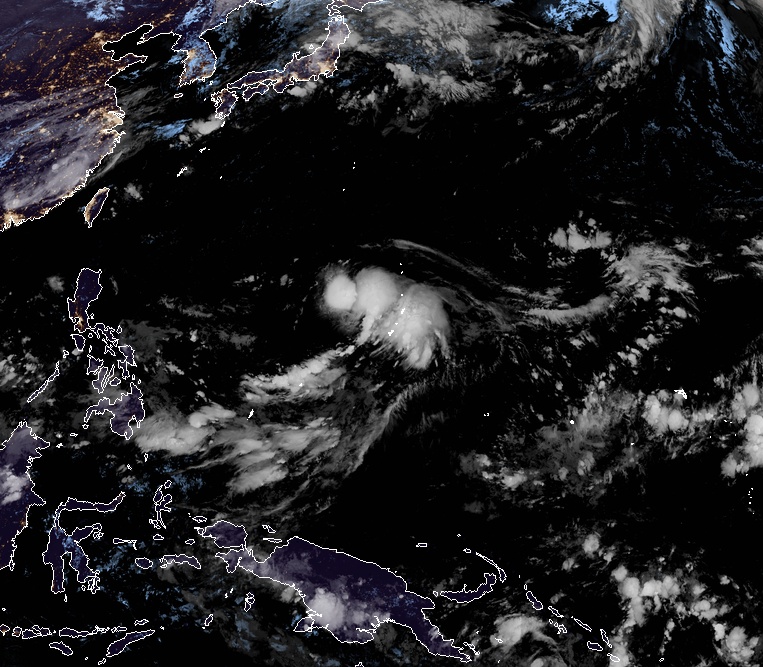
Tropical Storm "Trami" at 17:20 UTC on September 21, 2018. Credit: JMA/Himawari-8, RAMMB, CIRA
Rapid intensification is forecast and Trami is expected to quickly reach 157 km/h (98 mph) by 15:00 UTC, September 23 and 204 km/h (126 mph) by 15:00 UTC on September 24.
It's still too early to be sure, but Trami could become quasi-stationary after September 25.
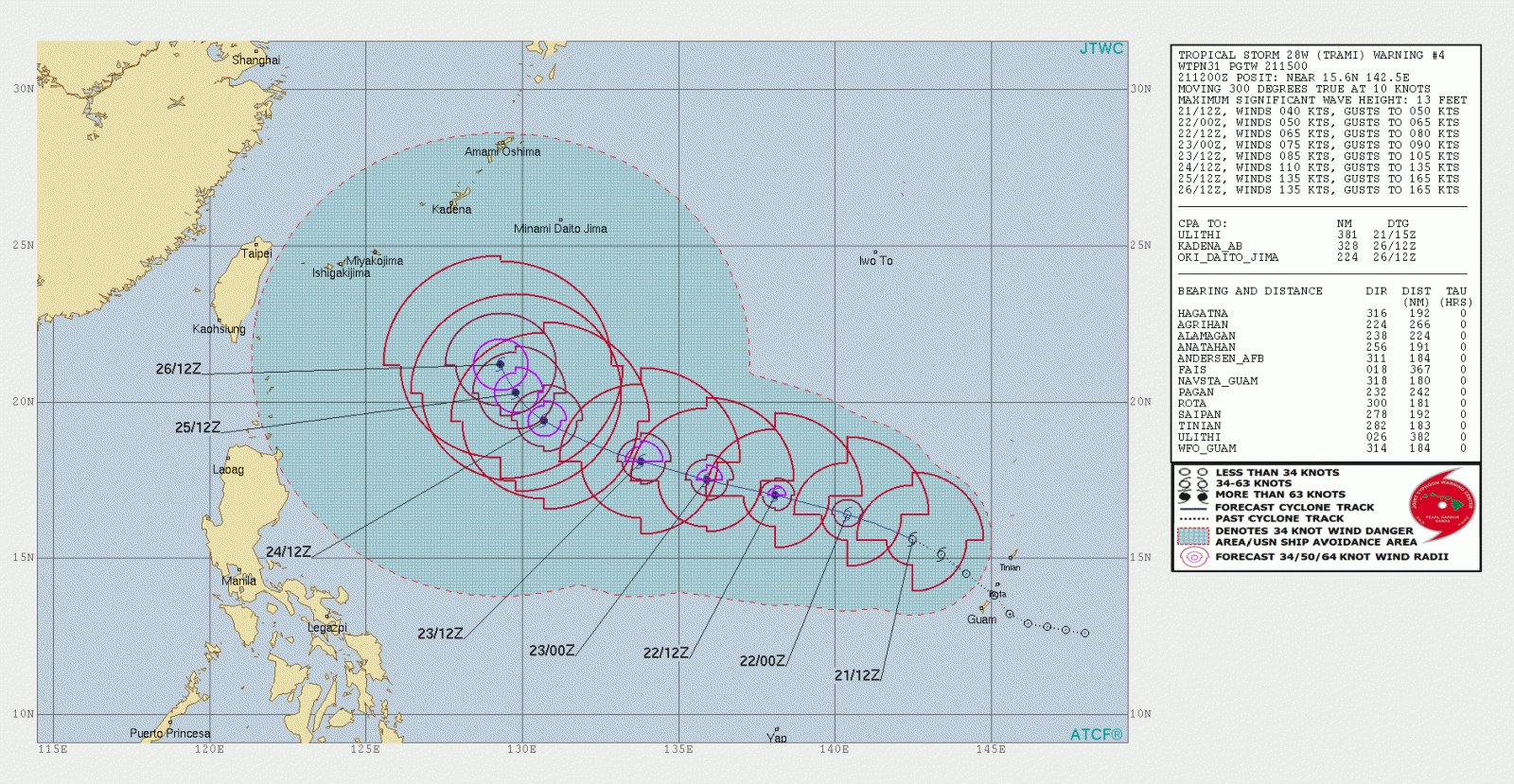
With favorable vertical wind shear and warm sea surface temperatures, Trami should reach an intensity of 250 km/h (155 mph) by 12:00 UTC on September 25 and up to 260 km/h (161 mph) between September 25 and 26.

Teo Blašković founded The Watchers in 2011 and edited it until 2026, covering seismic and volcanic activity, extreme weather, space weather and near-Earth objects. Articles on this page are his archive.
Published in the last 24 hours
- In April 2014, golden-winged warblers in the mountains of Tennessee, songbirds weighing about as much as four dimes, fled their breeding grounds a day or two before a tornado outbreak and flew hundreds of miles south, while the scientists tracking them sheltered in a Waffle House Epicenter
- After record Nordic heatwave, Swedish researchers to recreate indoor heat to study older adults Epicenter
- San Juan River cuts through 300-million-year-old rocks while retaining its winding course in Utah Epicenter
- Britain appointed a Minister for Drought in August 1976, and it rained so much afterward that by November MPs were calling him the Minister of Flood Epicenter
