
Cameroon’s economic capital, Douala, devastated by heavy flooding
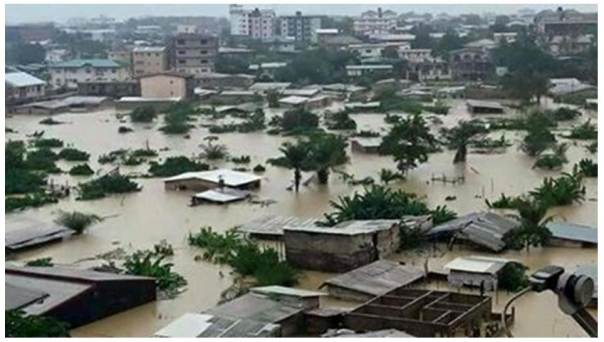
Featured image: Cameroon flood, June 30, 2015. Image credit:@AfricaAdapt
Severe flooding caused by tropical monsoon rains have devastated the Cameroon's economic capital, Douala. At least 4 people were killed, 2 000 displaced, and over 30 000 citizens were directly affected by July 1, 2015, after more than a week of heavy rainfall.
Much of the city is still without power, the car wrecks and motorcycles lie turned upside down in the muddy streets covered in trash and other debris. Many people have lost everything: crops, livestock, homes and businesses.
#Douala, Cameroon submerged after heavy downpours. Our thoughts are with the victims. #environment #Infrastructure pic.twitter.com/whFFuZVnWi
— Africally Speaking (@africallyspkn) June 20, 2015
Tropical monsoon flooding season becomes deadlier each year, causing more and more damage in southwestern Cameroon and in other countries within the shores on the Gulf of Guinea.
#Floods in #Douala & #Bonamoussadi, #Cameroon leave many families homeless #365disasters via @cameleadngo pic.twitter.com/BqLwHWHe8l
— GNDR (@globalnetworkdr) June 24, 2015
According to the National Department of Meteorology (DMN), between 1906 and 1965, the averaged annual rainfall was 3 000 mm (118.11 inches) per year, but it has since increased to 3200 mm (125.98 inches) in 1989 and 3800 mm (149.6 inches) in 2010.
The average annual precipitation value has declined to 3080 mm (121.2 inches), again, in 2014. The Centre for Research on the Epidemiology of Disaster's Emergency Events Database (EM-DAT) reports 4 200 people affected by the flooding, between 1998 and 2006.
In comparison to that, in 2007 only, over 10 000 people was affected and this number has increased to 25 000 in 2008 and to nearly 52 000 in 2012. If National climate simulations prove to be correct, the average annual rainfall might increase by 35% between 2010 and 2050 with temperatures rising by at least two degrees Celsius. (IRIN)
Urban #flooding plagues #Cameroon http://t.co/Ca25VgZjY2 @irinnews pic.twitter.com/pEma9Stxja
— lazuje01 (@lazuje01) July 1, 2015
Flooding is not unusual the this region, especially in the monsoon rain season, however the scale of the devastation caused by the latest flooding is unprecedented, said Fritz Ntone, the government delegate to the Douala city council.

The number of floods per year across Africa between 1961 and 2013. Image copyright: CLUVA
"This is one of the worst floods we have had in Douala, a clear sign that climate change is on our doorsteps," said Samuel Nguiffo, executive director of the Center for Environment and Development (CED).

Earlier reporting
Nothing on Watchers was published in the last 24 hours. These are older articles.
- Florida's east coast faces a moderate flash flood risk Wednesday through Friday, with 4 to 8 inches of rain forecast and the St. Johns River near Cocoa already in major flood at 17.13 feet
- The storms drenching California this week are fed by a river in the sky, a band of water vapor that can carry up to 15 times the flow of the Mississippi River, and this winter’s near-record El Niño could keep aiming more of them at the West Coast
- El Niño floods kill 2 in Guayaquil as 172.8 mm of rain swamps Milagro, Ecuador's toll rises to 14
- Southern Thailand braces for heavy rain, 15 provinces on flood and landslide alert for November 18-22
