
Earth Day 2012 Lyrid meteor shower
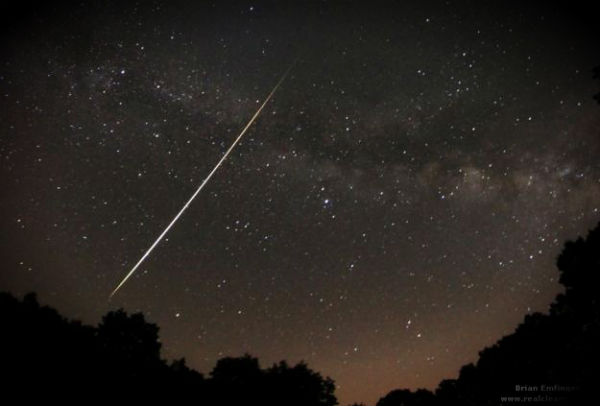
Featured image: Lyrids seen from Ozark, Arkansas, USA (Credit: Brian Emfinger)
Earth Day in 2012 coincided with the Lyrid maximum. Many observers were pleasantly surprised thanks in part to the lack of a bright moon.! According to the International Meteor Organization, the Lyrid meteor shower peaked on April 22nd around 0000 UTC with a maximum between 20 and 30 meteors per hour.

The Lyrid meteor shower has been observed by humans for more than 2,600 years and occurs each year in mid-April when the Earth passes through a stream of dust left behind by the comet Thatcher (C/1861 G1). The comet dust can reach speeds of up to 110,000 mph (177,027 kph) as it slams into Earth’s atmosphere, causing it to ignite as dazzling meteors.

A team of students from Union High School and Home Street Middle School in Bishop, Calif., launched the camera-equipped balloon late Saturday night (April 21). And up in space; the Lyrids were expected to be visible to astronauts on the International Space Station. NASA meteor expert Bill Cooke at the agency’s Marshall Space Flight Center in Alabama coordinated efforts to track meteors on the ground, by the student balloon and by station astronauts to create an unprecedented look at the Lyrid meteor shower. The Marshall center posted video and images of the student balloon launch online, along with camera views of Earth from the station, but whether Lyrid meteors were actually seen by astronauts remains to be seen. Cooke also led an NASA webchat and video stream on the agency’s website that provided live views from meteor cameras for observers plagued by bad weather. (Space.com)
In May, the Eta Aquarids — one of two annual meteor showers created by remnants of the famed Halley’s comet — will peak between May 5 and 6, according to a NASA guide.

Earlier reporting
Nothing on Watchers was published in the last 24 hours. These are older articles.
- Asteroid 2026 WA passed Earth at 126,400 km, about a third of the Moon's distance, at 07:59 UTC on November 17
- On October 22, 2017, a single flash of lightning stretched 515 miles from eastern Texas to near Kansas City, a distance that takes eight hours to drive, and nobody realized how far it had gone until scientists went back through the satellite data years later Epicenter
- CPC posts a slight risk of heavy rain from the Gulf Coast to the Northeast urban corridor November 25-29, and a moderate risk of West Coast wind and Sierra snow on November 25
- Florida's east coast faces a moderate flash flood risk Wednesday through Friday, with 4 to 8 inches of rain forecast and the St. Johns River near Cocoa already in major flood at 17.13 feet
