• Impressive new map of the southern hemisphere view on Milky Way

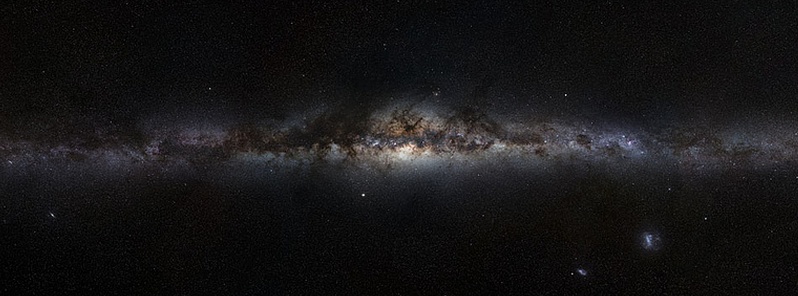
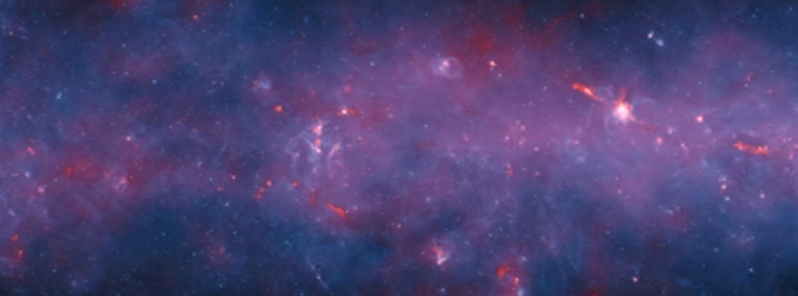
    The Apex Telescope Large Area Survey of the Galaxy (ATLASGAL) has been completed, ESO announced on February 24, 2016. The survey resulted in an impressive new image of the Milky Way, showing the full area of the Galactic Plane visible from the southern hemisphere at…

  • The first age map of the Milky Way’s halo produced

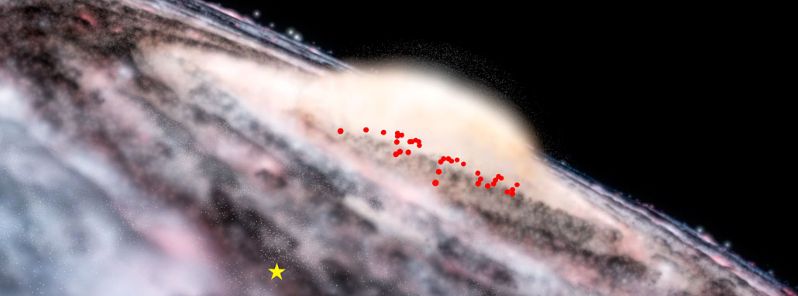
    An international team of scientists, lead by Galactic Archaeology group of the University of Notre Dame, France, has managed to produce the first chronographic age map of the Milky Way's halo using a sample of stars from the Sloan Digital Sky Survey. Scientists…

  • A treat for astronomers: Largest collage map of Milky Way now online

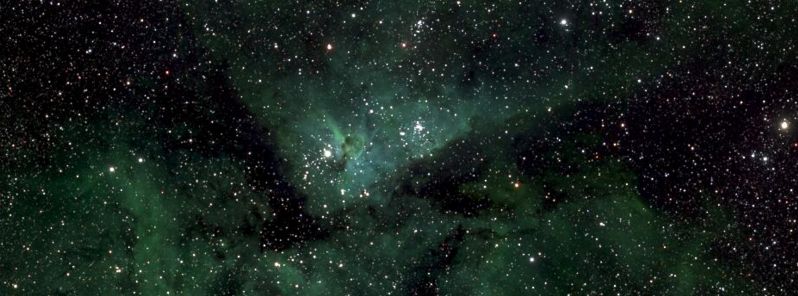
    A team of astronomers from Germany have compiled the largest astronomical image of the Milky Way galaxy so far, the Ruhr-Universität Bochum (RUB) announced on October 21, 2015. ​Small region of Milky Way showing the Eta Carinae star. Image credit: Lehrstuhl…

  • Astronomers find newborn stars at the edge of the Milky Way galaxy

    A team of Brazilian astronomers led by Denilso Camargo of the Federal University of Rio Grande do Sul have made a remarkable discovery, a cluster of stars forming on the very edge of the Milky Way galaxy. This is the first time astronomers have found stars being…

  • Chandra detects record-breaking outburst from the center of our galaxy

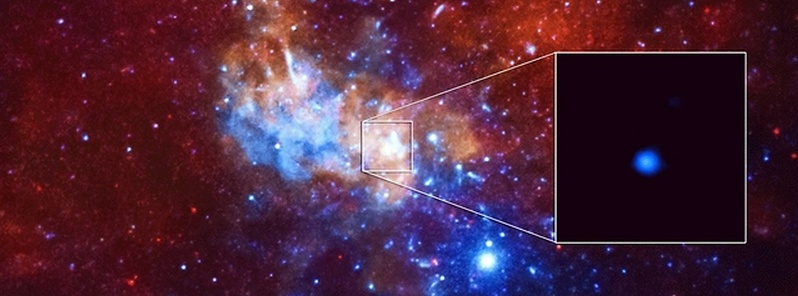
    Astronomers using NASA's Chandra X-ray Observatory have caught the largest X-ray flare ever detected from what is believed to be a supermassive black hole at the center the Milky Way, also known as Sagittarius A* (Sgr A*).The event was 400 times brighter than the us

  • Zooming in on star formation regions in the southern Milky Way

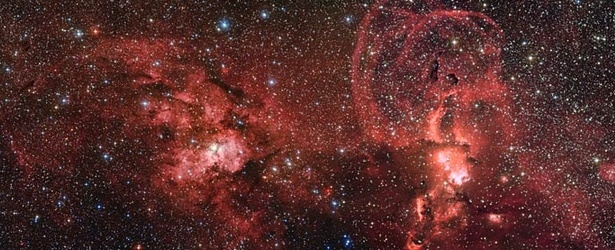
    The latest image released by ESO shows two dramatic star formation regions in the southern Milky Way. The first is of these, on the left, is dominated by the star cluster NGC 3603, located 20 000 light-years away, in the Carina–Sagittarius spiral arm of the…

  • What is lurking near the center of our galaxy?

    According to a recent press release, a “magnetized neutron star”, otherwise known as a “magnetar” is spinning at an amazing speed near the Sagittarius A* (Sgr A*) region of the Milky Way. Sagittarius A* is said to be a supermassive black

  • Spitzer brings 360-degree zoomable view of our galaxy

    Touring the Milky Way now is as easy as clicking a button with new zoomable, 360-degree mosaic. The star-studded panorama of our galaxy is constructed from more than 2 million infrared snapshots taken over the past 10 years by NASA's Spitzer Space