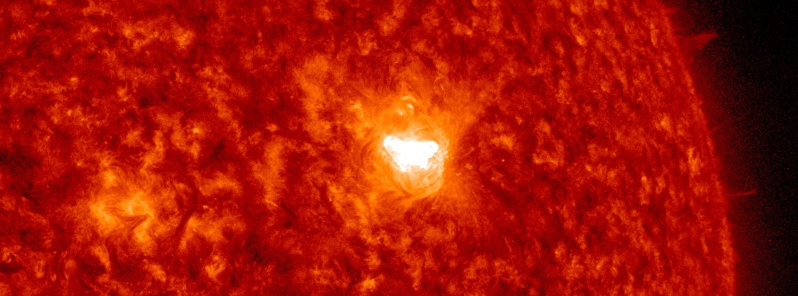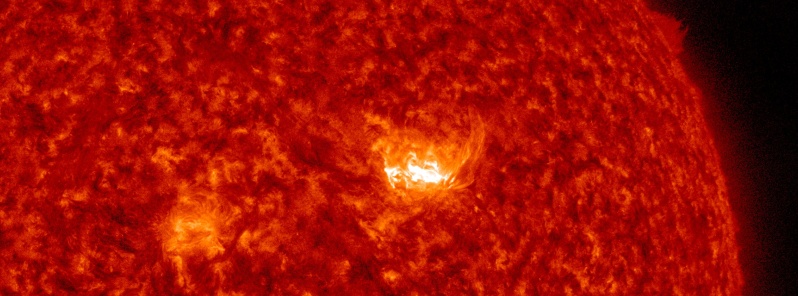
• C4.8 solar flare erupts from AR 2736, full-halo CME produced

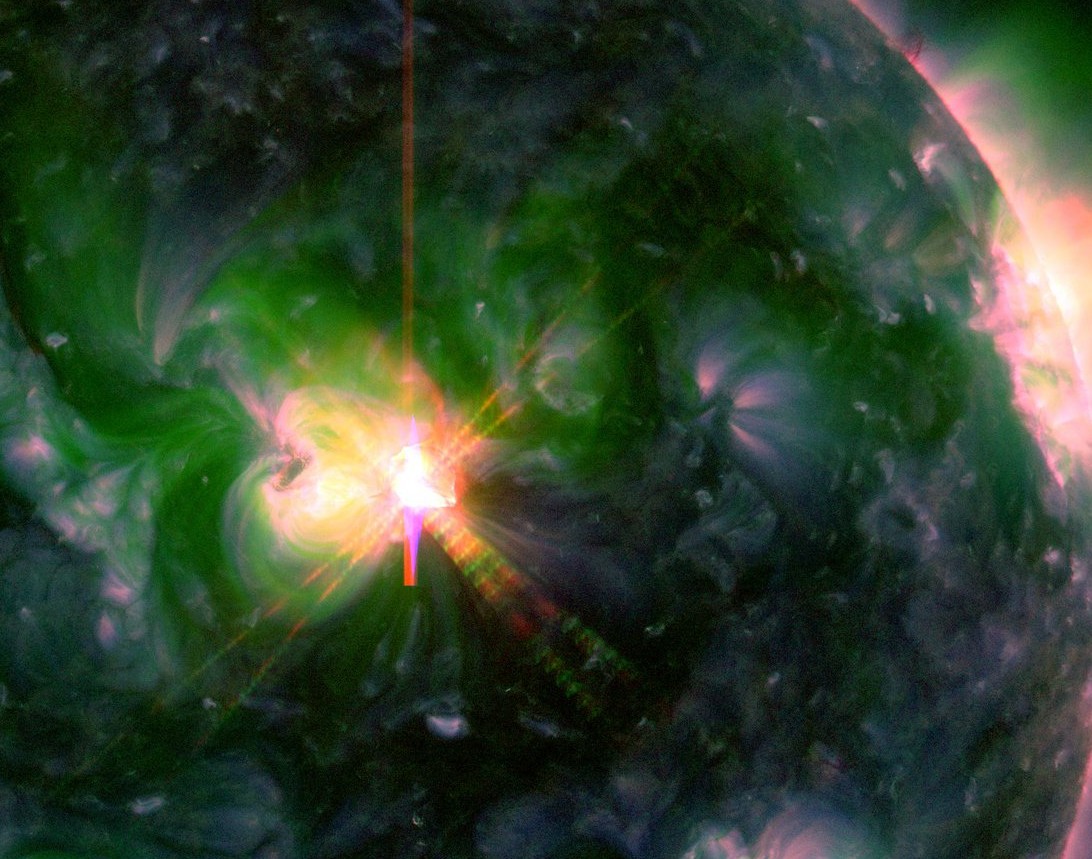
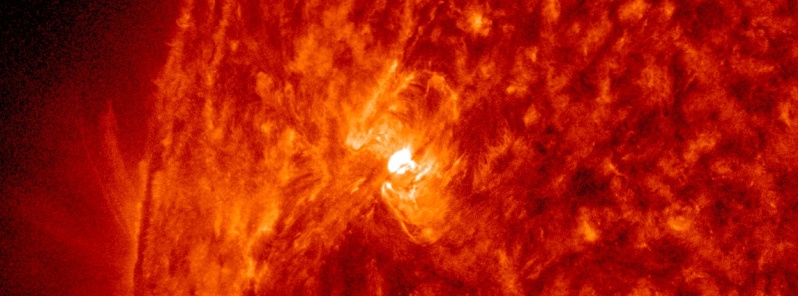
    A solar flare measuring C4.8 at its peak erupted from newly-emerged AR 2736 on March 20, 2019. The eruption started at 10:35, peaked at 11:18 and ended at 11:34 UTC. The region was also responsible for several B-class flares over the past 7 hours. The flare was…

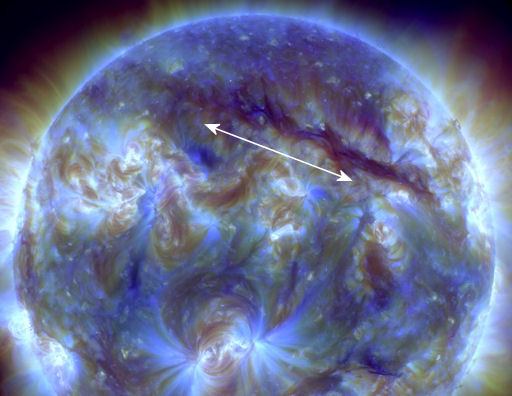
  • Dark filament of magnetism visible on the Sun

    It’s one of the biggest things in the entire solar system. A dark filament of magnetism measuring more than 800,000 km from end to end is sprawled diagonally across the face of the sun. NASA’s Solar Dynamics Observatory took this ultraviolet picture of the structure

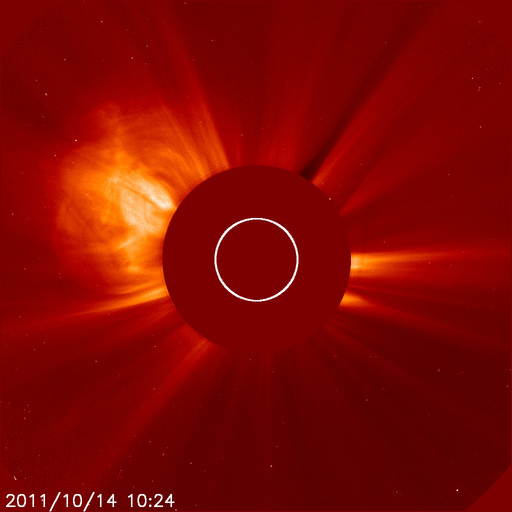
  • Farside CME hurled toward Mercury and Venus

    An active region on the far side of the sun erupted on October 14 and hurled a significant coronal mass ejection toward Mercury and Venus. Analysts at the Goddard Space Flight Center expect the cloud to hit the innermost planet on October 15 around 08:30 UTC….

  • Earth-directed M5.3 solar flare took place

    This morning at 0150 UT, sunspot 1283 produced an M5.3-class solar flare. A movie from NASA’s Solar Dynamics Observatory shows the flash of extreme UV radiation. Because of the sunspot’s central location on the solar disk, the eruption was Earth-directed and a CME

  • Several sunspots have popped up around the visible solar disk

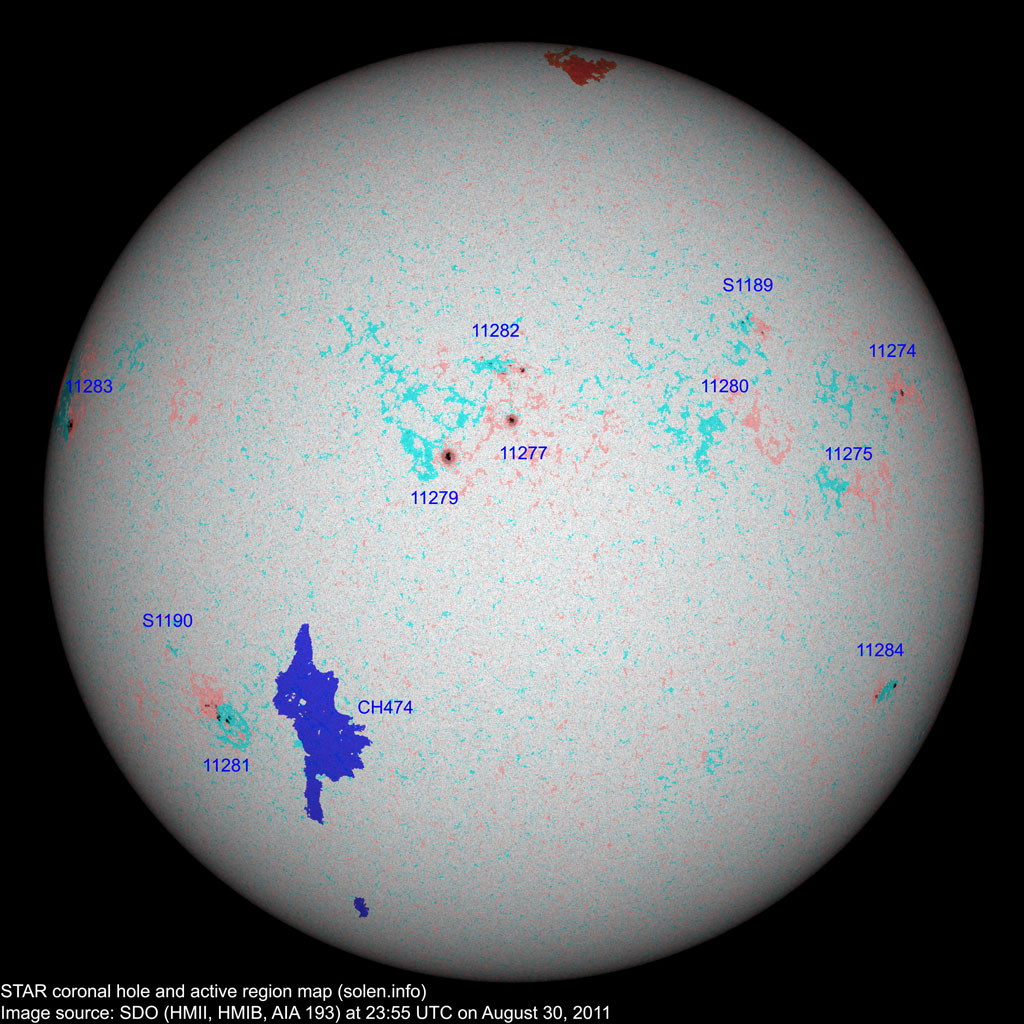
    Sunspots are emerging at several locations around the solar disk, peppering the Earth-side of the sun with active regions. Of particular interest is fast-growing sunspot 1282, shown here in an August 31st snapshot from NASA’s Solar Dynamics Observatory:AR1282 has

  • Double coronal hole spewing high speed stream toward Earth

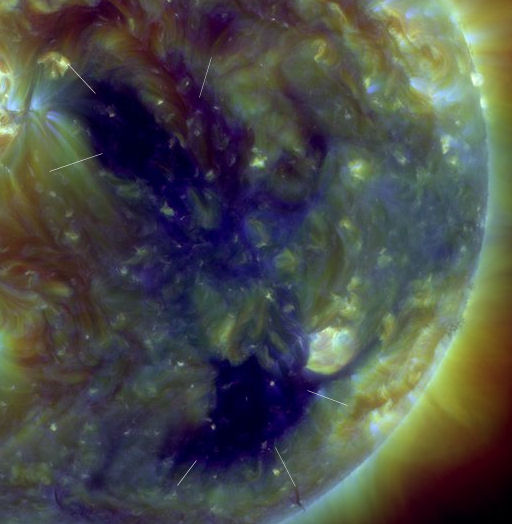
    A double-barreled hole has opened up in the sun’s atmosphere and it is spewing a split-stream of solar wind toward Earth. NASA’s Solar Dynamics Observatory captured this composite UV image of the double coronal hole on August 20th:Sky watchers should be alert for

  • New sunspots forming, Venus-directed CME

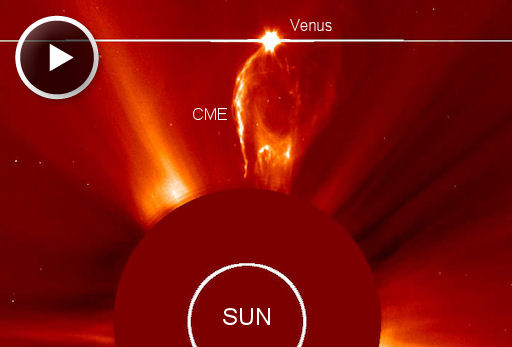
    Yesterday, the Solar and Heliospheric Observatory witnessed a spectacular explosion on the sun that seemed to pass perilously close to Venus.As the movie shows, the CME passed harmlessly. There was no collision, and it wasn’t even close. Although Venus seems to be

  • A sharp gust of solar wind hit Earth’s magnetic field

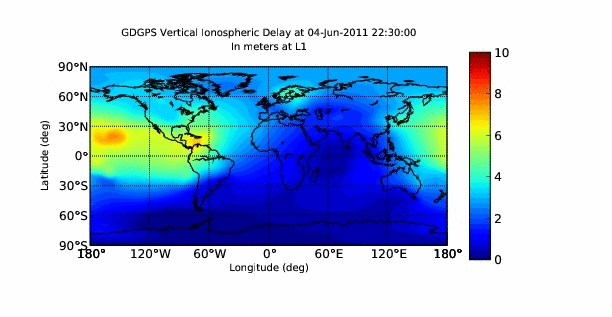
    A sharp gust of solar wind hit Earth's magnetic field at approximately 20:30 UTC on June 4, 2011. High-latitude sky watchers in both hemispheres should be alert for auroras. Solar windspeed: 495.9 km/secdensity: 2.6 protons/cm3 Planetary K-indexNow: Kp= 5…