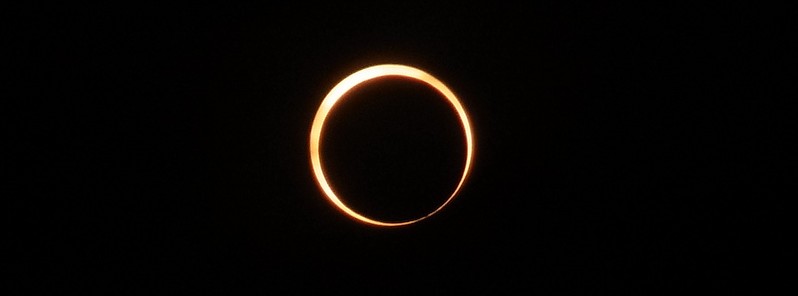
• Annular solar eclipse crosses Antarctica on February 17, 2026

    An annular solar eclipse will cross Antarctica on February 17, 2026, with the “ring of fire” phase confined to the continent and adjacent Southern Ocean waters. The event reaches its greatest eclipse at 12:11:54 UTC, when the Moon will cover 96.3% of the Sun’s diameter along the central path. A partial eclipse will be visible from southern South America, southern Africa, Madagascar, Réunion, Mauritius, and Antarctic coastal regions.

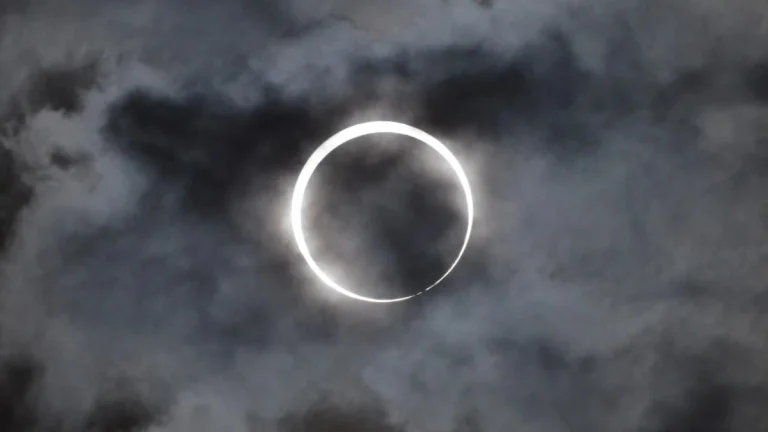
  • ‘Ring of Fire’ – Annular solar eclipse of June 10, 2021

    An annular solar eclipse of June 10, 2021, will be visible from northern Canada, Greenland, and Russia, with a partial eclipse visible from northern North America, Europe, and Asia. During the event, a bright ring will surround the moon silhouette at the peak of the…

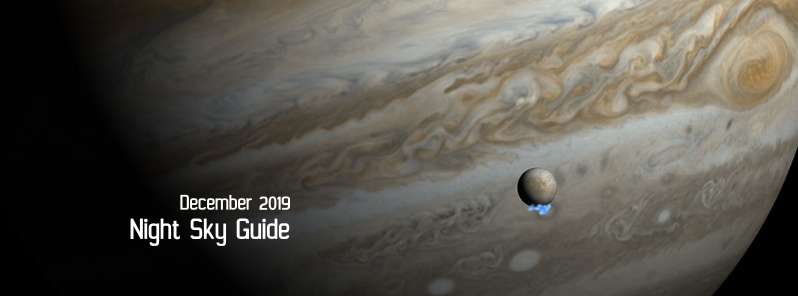
  • Night Sky Guide for December 2019

    December 2 – Pheonicid meteor shower. The Pheonicid meteor shower is active from November 28 to December 9, producing its peak rate of meteors around December 2. Over this period, there will be a chance of seeing Pheonicid meteors from anywhere where the…

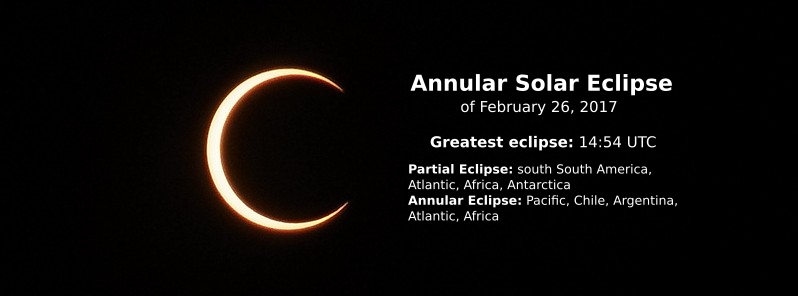
  • Annular solar eclipse of February 26, 2017

    An annular solar eclipse will take place on February 26, 2017, creating a ring of light around the darkened Moon as the Moon will be too far away from the Earth to completely cover the Sun. This is the first of two eclipses in 2017 and comes just 7 months before the…

  • Annular solar eclipse of September 1, 2016

    A large annular eclipse will cover 97% of the Sun on Thursday, September 1, 2016. The whole event will last from 06:13 – 12:00 UTC and will be visible across central Africa southwards to Madagascar and into the Indian Ocean. The partial eclipse will be visible…