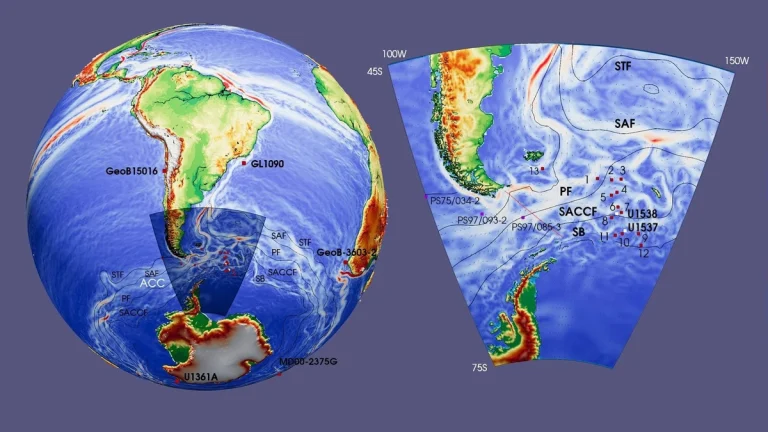
• Earth’s largest ocean current may be shifting north again

    A study published in Nature Communications on October 6, 2025, by an international team of 36 scientists from five countries led by Prof. Xufeng Zheng of Hainan University reveals that the Antarctic Circumpolar Current once flowed hundreds of kilometers further south and may now be slowly shifting north under natural orbital cycles.
  • Forecasting tornado risk three weeks ahead is becoming possible

    Early results from SWERVE show that forecasts in weeks two and three can sometimes detect meaningful signals of heightened severe weather activity. The signals, produced through consensus forecasts that blend multiple models, perform better than climatology alone. Instead of simply repeating seasonal averages, they highlight specific windows when the atmosphere appears more favorable than normal…

  • Research explains link between X-rays, gamma rays, and lightning initiation

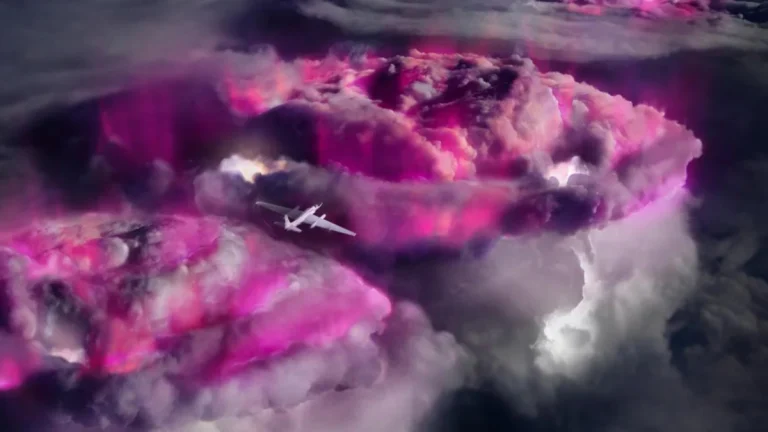
    A study published in the Journal of Geophysical Research finds that strong electric fields in thunderclouds can accelerate electrons, creating runaway avalanches that emit X-rays and gamma rays, a process connected to the conditions that lead to lightning initiation.

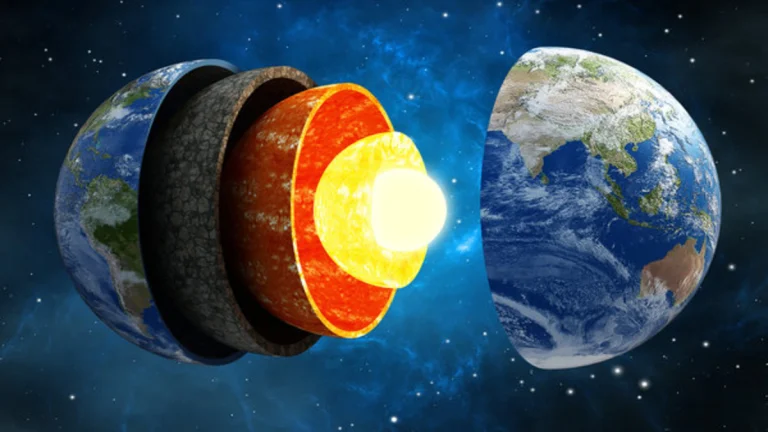
  • Earth’s 6-year day-length oscillation briefly faltered in 2010

    A study published in Geophysical Journal International on August 28, 2025 finds that a normally persistent 6-year oscillation in Earth’s length-of-day broke down between 2010 and 2014, with a short-lived 4.7-year interval, and that the event is contemporaneous with changes in geomagnetic field behaviour and core-flow models.