• Sundiving comet and coronal mass ejection

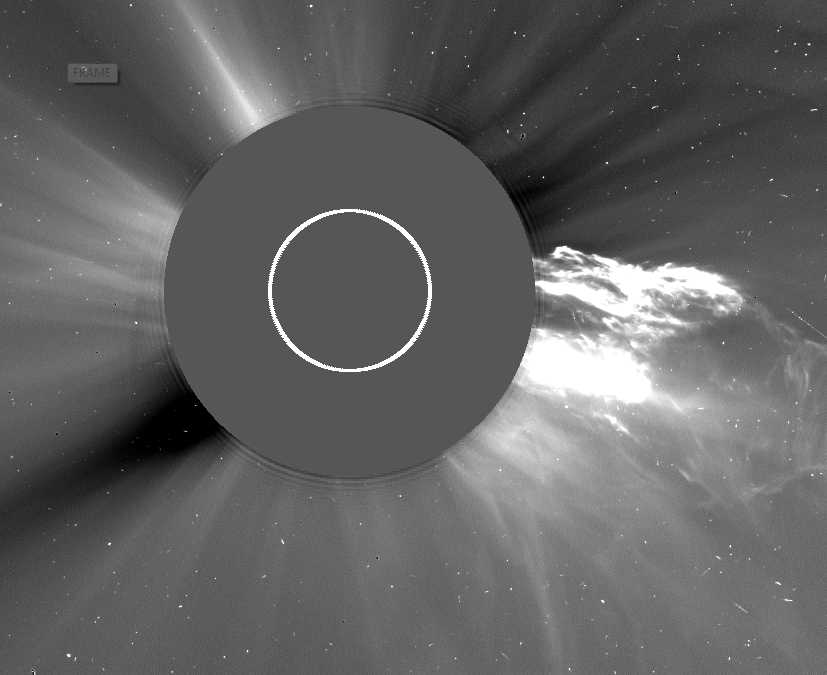
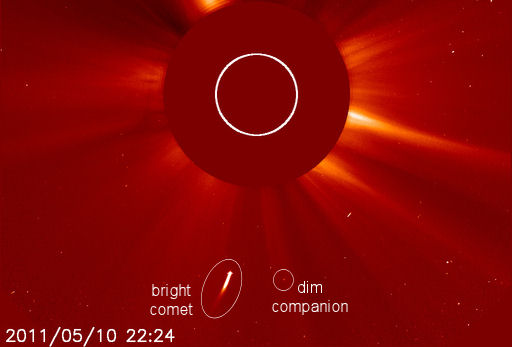
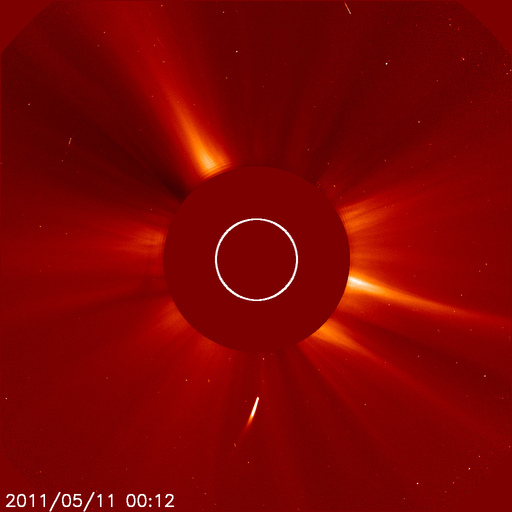
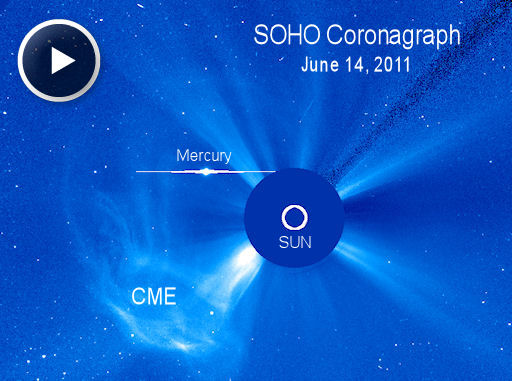
    A comet dove into the sun on May 11th and seemed to trigger a massive eruption. Watch the movie, then scroll down for further discussion.

    A comet goes in; a CME comes out. Coincidence? Probably, yes, the sequence was coincidental. The comet disintegrated

  • Comet hit the Sun?

    A comet just discovered by amateur astronomer Sergey Shurpakov is diving past the sun today, and it will probably not survive. Click here to view a movie of the death plunge recorded by the Solar and Heliospheric Observatory–and check back for updates in the hours

  • Spectacular CME, active region approaching Earth

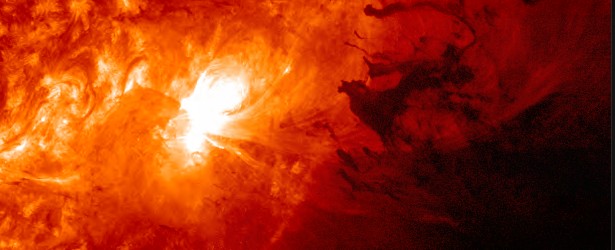
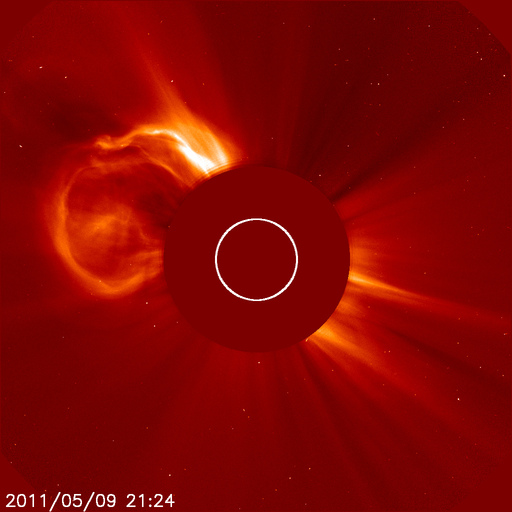
    A sunspot located just behind the sun’s eastern limb erupted during the waning hours of May 9th, hurling a spectacular coronal mass ejection into space: movie. NASA’s Solar Dynamics Observatory photographed hot magnetic loops towering over the edge of the sun in the

  • Solar winds blowing earthward from Sun’s new coronal hole

    NASA’s Solar Dynamics Observatory is monitoring a hole in the sun’s atmosphere – a “coronal hole.” It is the dark region circled in this extreme ultraviolet image taken during the early hours of April 28th: Coronal holes are places where the sun’s magnetic field

  • Fast growing sunspot 1199

    New sunspot 1199 is growing rapidly in the sun’s northern hemisphere, ballooning in area by more than a factor of five during the last 24 hours. If the expansion continues apace, this active region could soon pose a threat for flares. Stay tuned. (SpaceWeather)

  • Big sunspot 1195 harbors energy for M-class solar flares

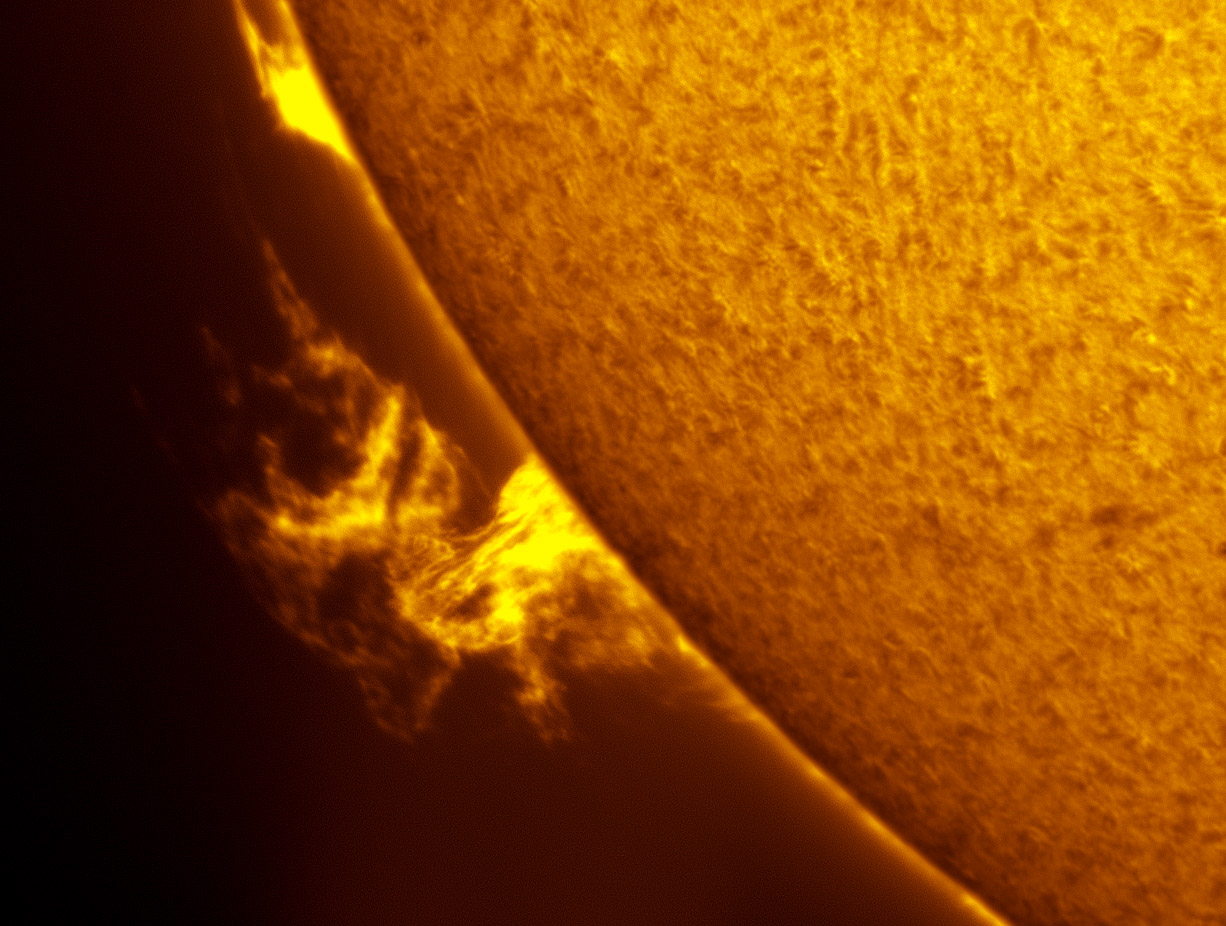
    This detailed image of sunspot 1195 looks like it was taken by one of NASA’s most advanced space telescopes. In fact, it comes from someone’s backyard in the Netherlands. Scroll down for the full story, and carefully examine the starscape as you

  • Amazing B-class solar flare

    B-class eruptions are weak and generally not considered spectacular, but the one recorded by NASA's Solar Dynamics Observatory (SDO) on April 23rd was quite different:The blast hurled hundreds of thousands of tons of plasma above the stellar surface with a powe

  • February solar flare was sparked by five spinning sunspots

    The giant solar flare unleashed in February was caused by five rotating sunspots working in concert, the UK’s National Astronomy Meeting has heard.Images released from the Solar Dynamics Observatory (SDO) clearly show the sunspots, which are centres of magnetic

  • Heating up of solar storms season

    Sun woke up after three years of sleep. Several powerful solar flares occurred in recent months, with a February 14 blast as the strongest and  the most powerful outburst in more than four years. Considering surface of Sun dotted with sunspots and recent activity,