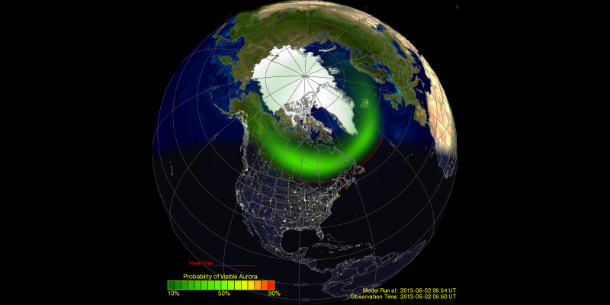
• Geomagnetic storm still in progress (June 2, 2013)

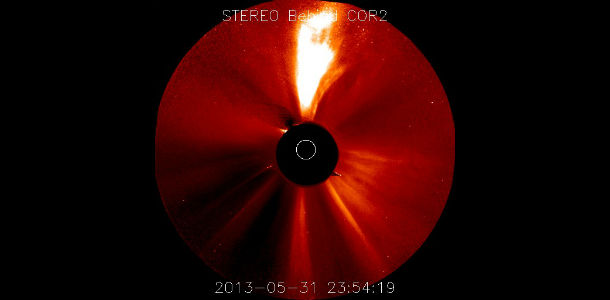
    The arrival of an interplanetary shock wave on May 31, 2013 caused geomagnetic storming that reached G2 (Moderate) geomagnetic storm levels on NOAA/SWPC storm scale during June 1, 2013. The solar wind speed remains elevated above 650 km/s. Currently, geomagnetic

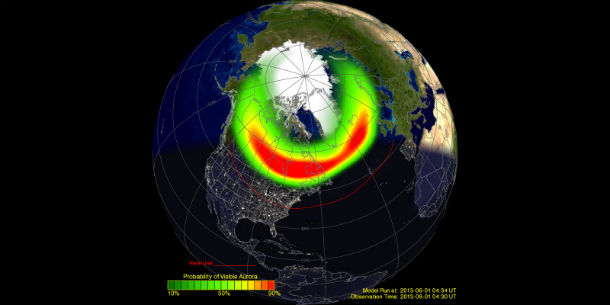
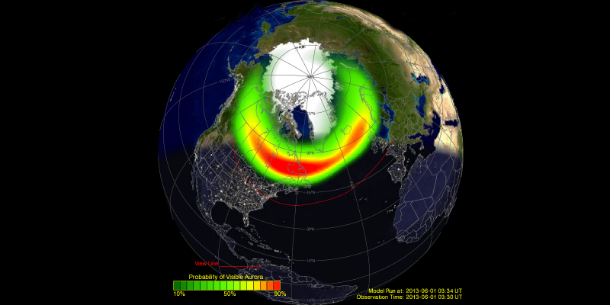
  • Moderate G2 geomagnetic storm in progress (June 1, 2013)

    G2 (Moderate) geomagnetic storming has been observed as Earth remains under the influence of a slow-moving Coronal Mass Ejection (CME). This event was not associated with a significant M1.0 solar flare from May 31, 2013 and is likely the result of a disappearing

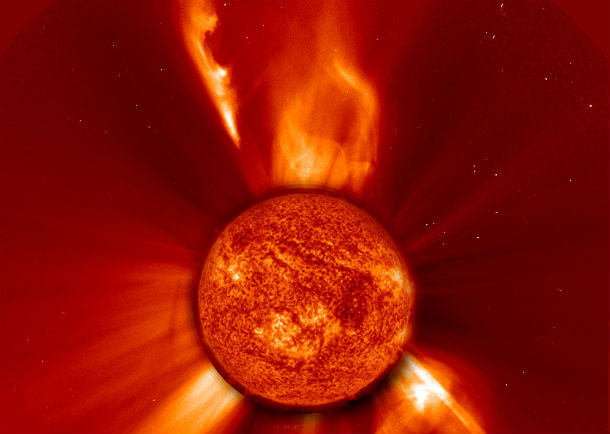
  • M1.0 solar flare erupted from AR 1760

    Impressive M1.0 solar flare erupted at 20:00 UTC on May 31, 2013. Event started at 19:52 UTC and ended at 20:06 UTC. The source of eruption was Active Region 1760. This region is small but appears to have a large amount of shear in the central spot.

    M1.0 solar

  • Subsiding geomagnetic storm (May 25/26, 2013)

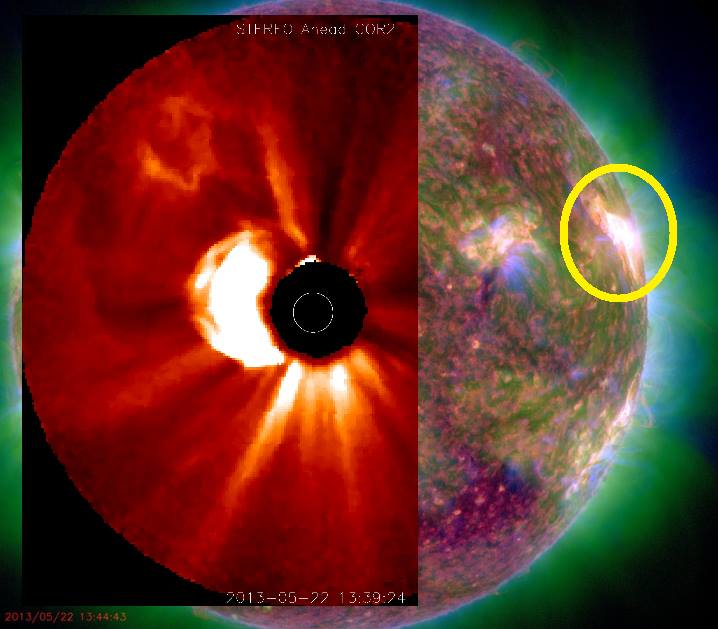
    Geomagnetic storming, caused by May 22th M-class solar flare and its Coronal Mass Ejection (CME), is slowly subsiding. Plasma cloud reached our geomagnetic field on May 24, 2013. In the past 24 hours, Earth's magnetic field experienced three episodes of

  • Strong (S3) solar radiation storm in progress (May 23, 2013)

    Solar radiation storm reached S3 (Strong) levels at approximately 03:00 UTC on May 23, 2013. Strong solar radiation storm is still in progress due an M5.0 solar flare originating in departing Sunspot 1745 on the Sun's western limb. The M-class

  • Old Sunspot 1731 erupted with M1.7 solar flare – May 20, 2013

    A moderate solar flare peaking at M1.7 was observed off the east limb around >Returning Sunspot 1731 located off the east limb produced moderate M1.7 solar flare at 05:25 UTC on May 20, 2013. Sunspot 1731 will begin to rotate back into view within the next 24