• Sun’s fastest CME since 2005.

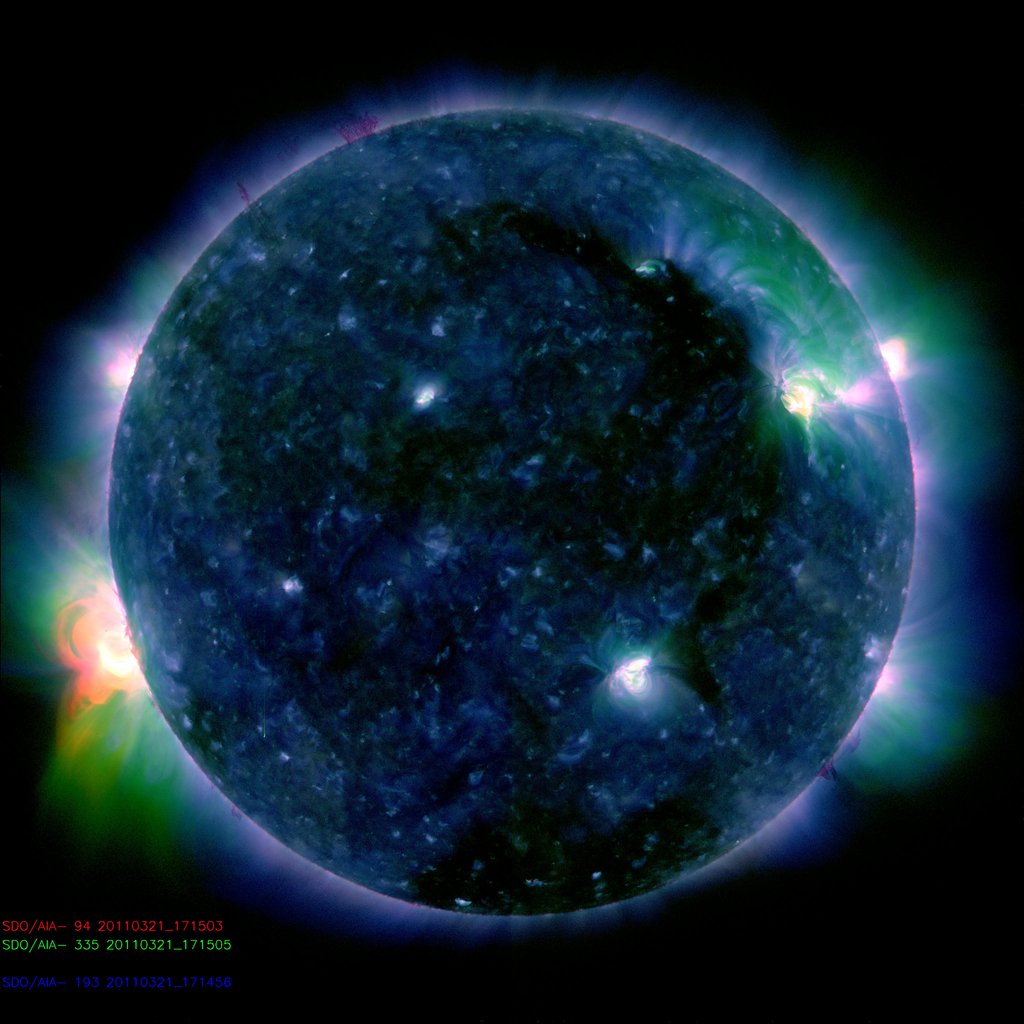
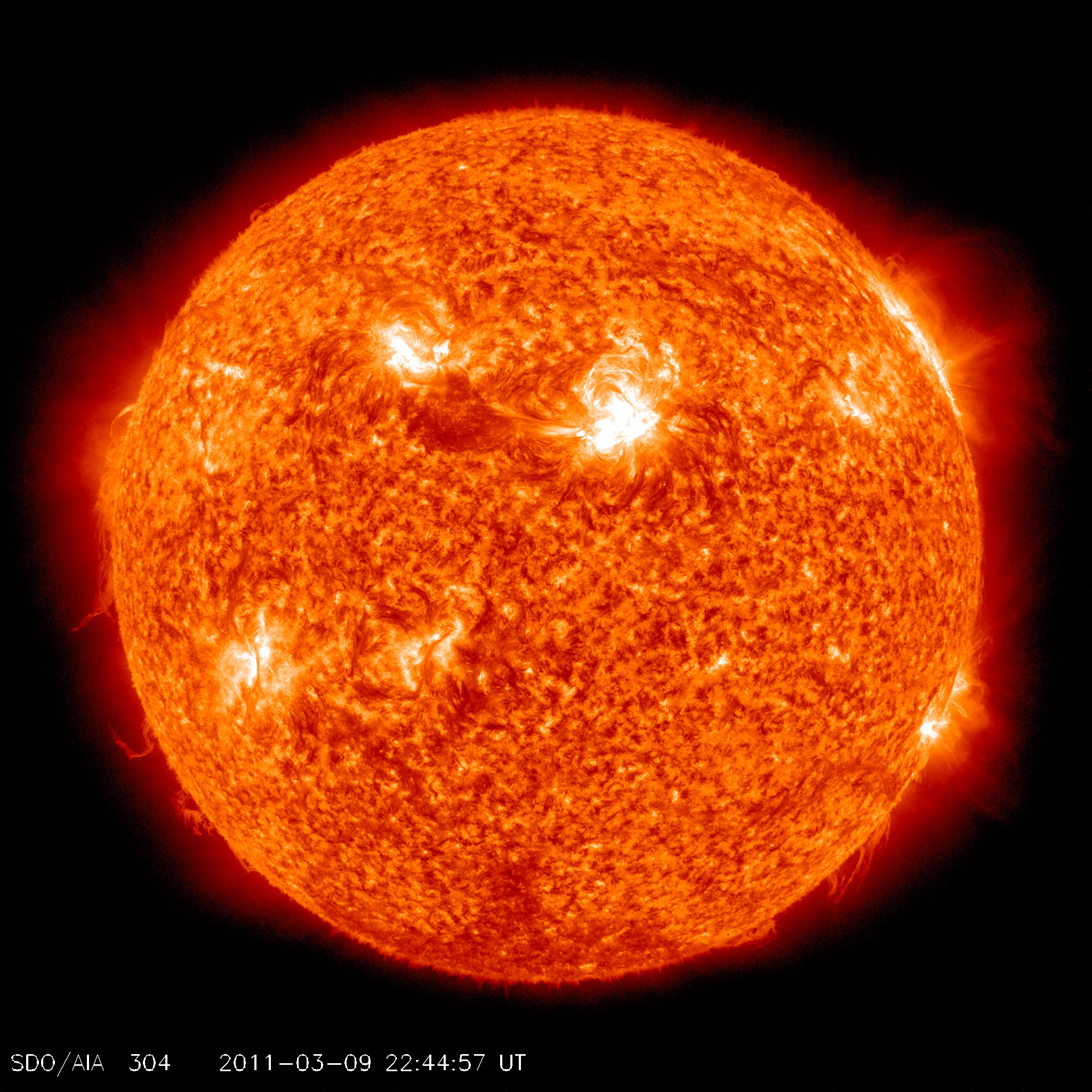
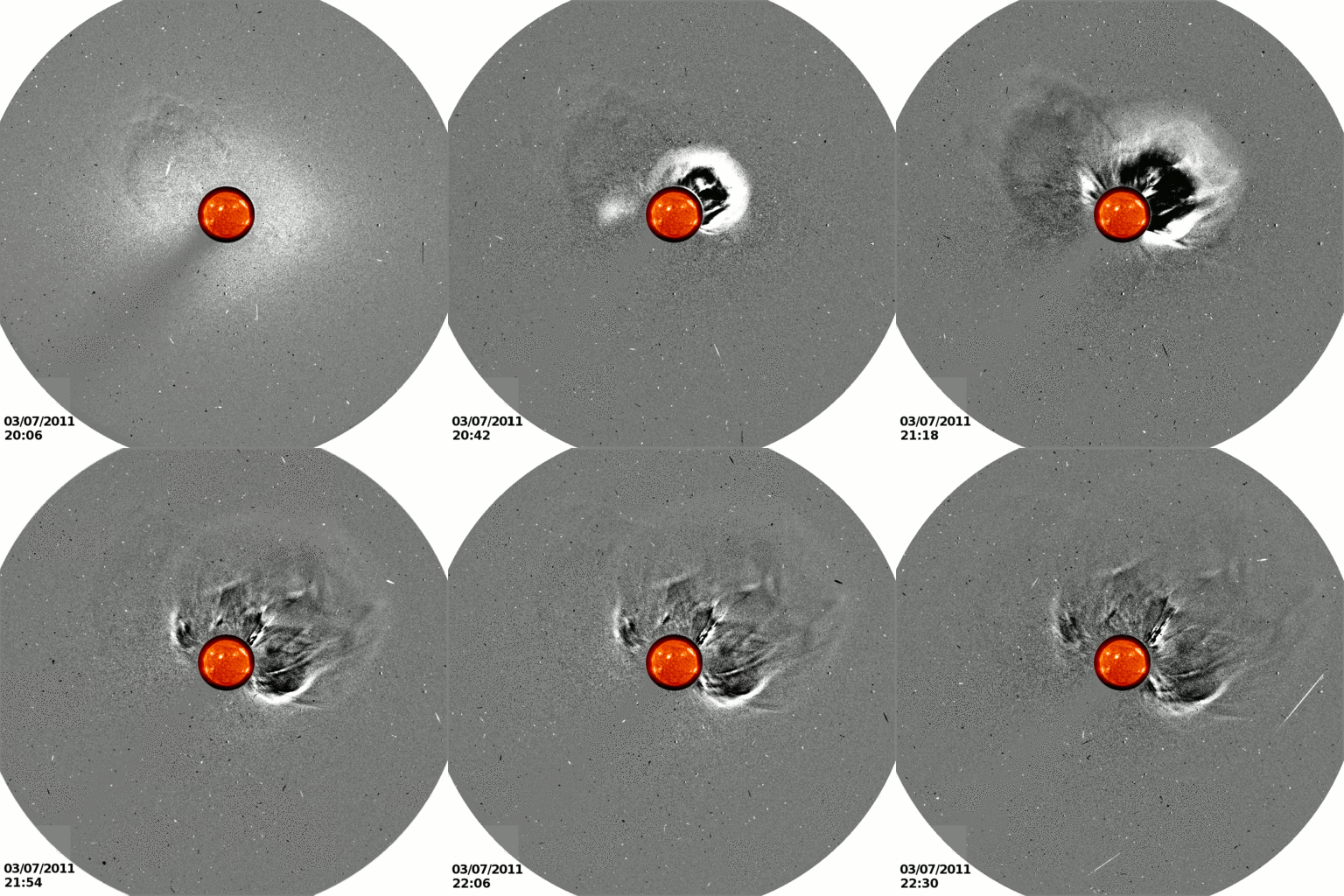
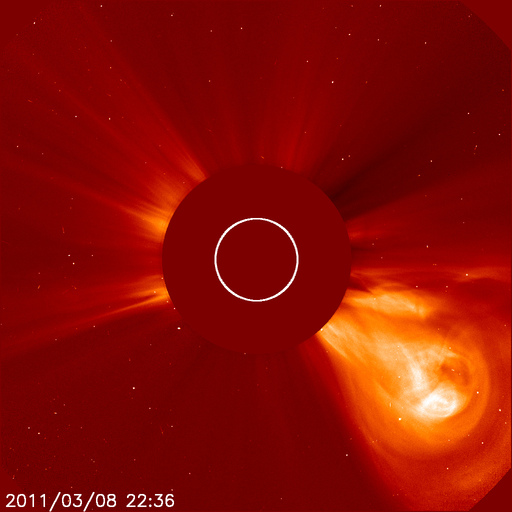
    A coronal mass ejection (CME) exploded from the vicinity of sunspot 1164 during the late hours of March 7th. It lept away from the sun traveling some 2200 km/s, making it the fastest CME since Sept. 2005. A movie of the cloud prepared by Karl Battams of the Naval

  • Seven M-class flares today

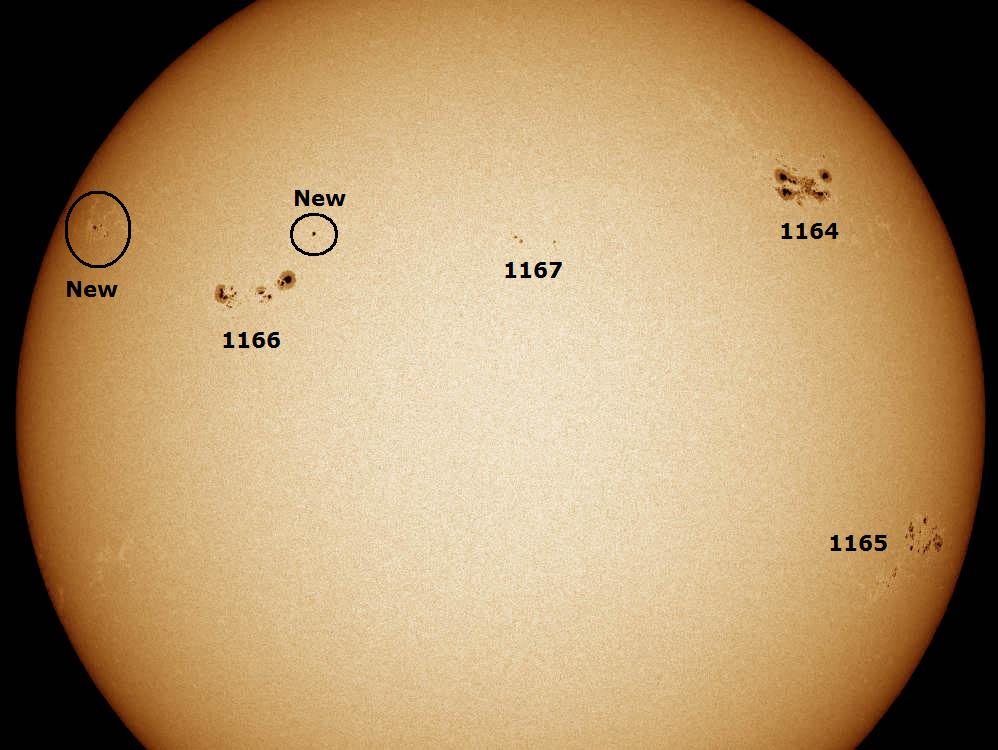
    Several M-Class flares (7) took place during the day on Monday. Sunspot 1165 which is located in the southern hemisphere is in the process of rotating onto the western limb and will soon be out of direct earth view. Sunspot 1164 which is in the northern hemisphere

  • Several low level M-class solar flares occurred today

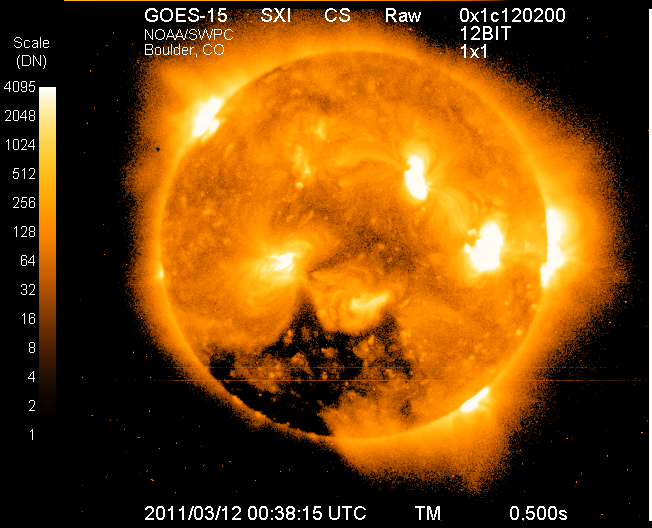
    Several low level M-Class flares have taken place around each of the big three regions 1164, 1165 and 1166 during the early parts of Monday. The largest one of these thus far was an M1.8 around Sunspot 1165. Sunspot 1165 will begin to rotate onto the western limb over

  • Missing sunspots gathered NASA’s scientist for briefing

    NASA said it has rescheduled a media teleconference to Wednesday 2 pm EST to discuss the first computer model that explains the recent period of decreased solar activity during the sun’s 11-year cycle.The recent solar minimum, a period characterized by a lower

  • The beautiness of solar flare

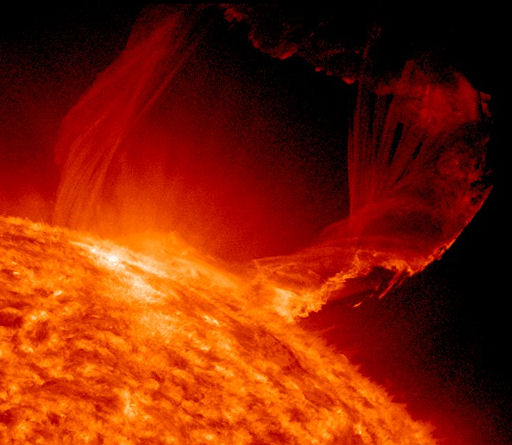
    M3.6 solar flare occurred on February 24 near the solar esatern limb and blew out a gorgeous CME plasma waves that swirled and twisted over a 90-minute period. Some of the material blew out into space and other portions fell back to the surface. This event was

  • After M3 flare, active sunspots turned to Earth-side

    New sunspot 1163 doesn't look very impressive, but the M3-class flare it unleashed yesterday was absolutely spectacular. Click Eastern Blast to download a movie recorded by NASA's Solar Dynamics Observatory. When the eruption occurred, sunspot 1163 was…

  • Approaching active sunspot region aiming Earth

    A significant active region is set to emerge over the sun's northeastern limb. The underlying sunspots are not yet visible from Earth, but the region's towering magnetic canopy is already in view. NASA's Solar Dynamics Observatory (SDO) took this picture…

  • Space weather could wreak havoc in gadget-driven world

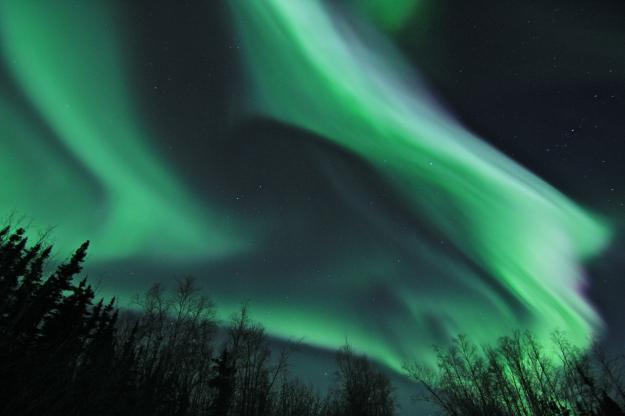
    Advances in modern life have exposed humans to new weaknesses to space weather, which could disrupt communications, crash stock markets and cause months-long power outages, experts warned Saturday.Worst-case scenarios including scorched commercial satellites, GPS

  • Coronal holes on the farside of the Sun

    For the past week, all eyes have been on the Earth-side of the sun, where sunspots 1158 and 1161-1162 have unleashed some of the strongest flares in years. Meanwhile, the farside of the Sun has been busy, too. Here is the movie from NASA's STEREO-B probe…