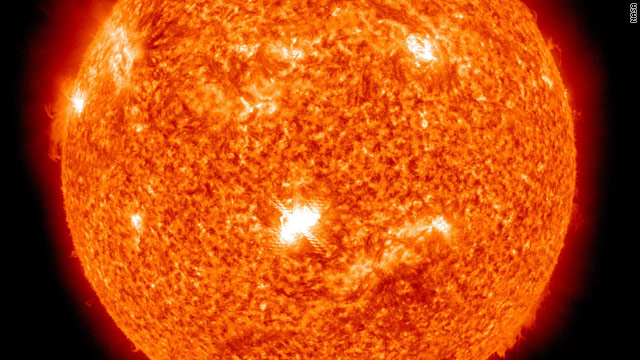
• Eruption of magnetic canopy of sunspot 1190

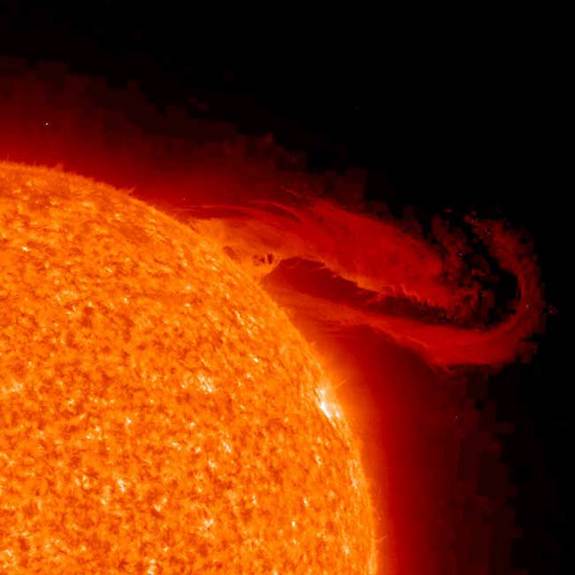
    The magnetic canopy of sunspot 1190 erupted on April 15th, producing an M-class solar flare (SDO movie). The brief blast did not, however, hurl a cloud of plasma toward Earth. NOAA forecasters estimate a 55% chance of more M-flares during the next 24 hours.

  • Subsiding geomagnetic storm (April 13,2011)

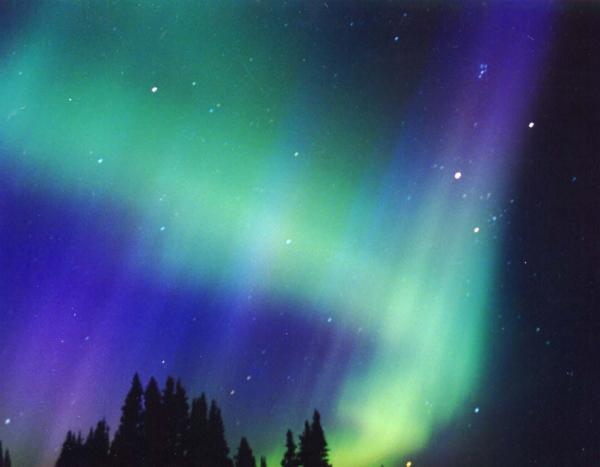
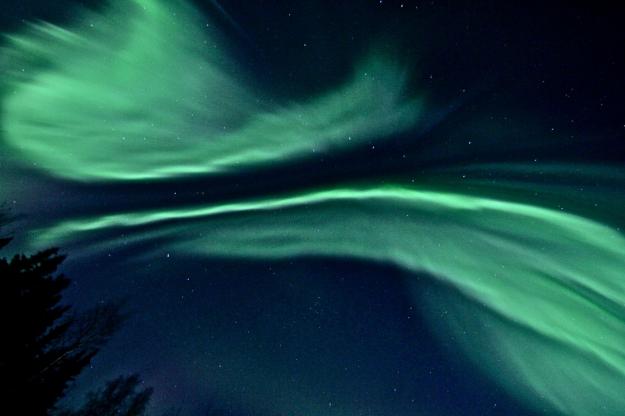
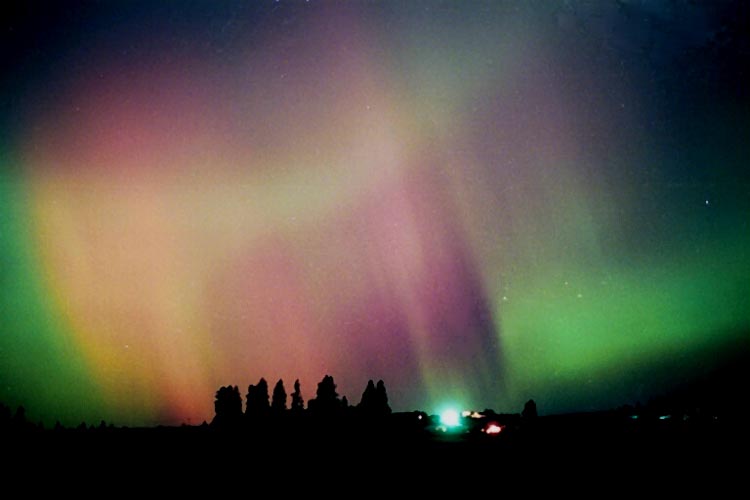
    A geomagnetic storm that sparked auroras around the Arctic Circle and sent Northern Lights spilling over the Canadian border into the United States on April 12th is subsiding. At the height of the display, Shawn Malone took this picture from the shores of Lake

  • Geomagnetic storm in progress (April 12, 2011)

      K-indices of 5 or greater indicate storm-level geomagnetic activity around earth.Geomagnetic Storms: Probabilities for significant disturbances in Earth’s magnetic field are given for three activity levels: active, minor storm, severe storm. The

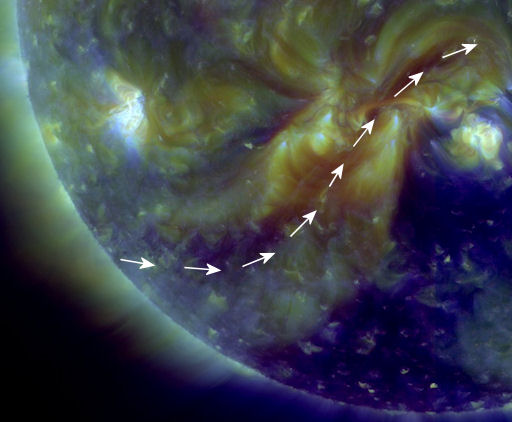
  • Filament of magnetism is curling around the sun’s southeastern quadrant

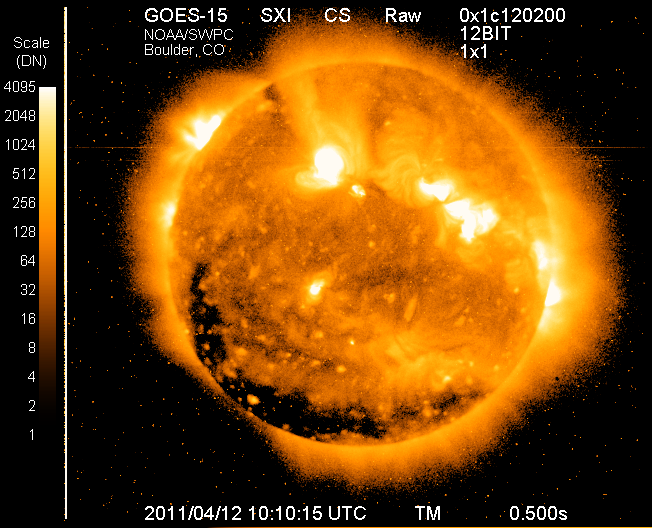
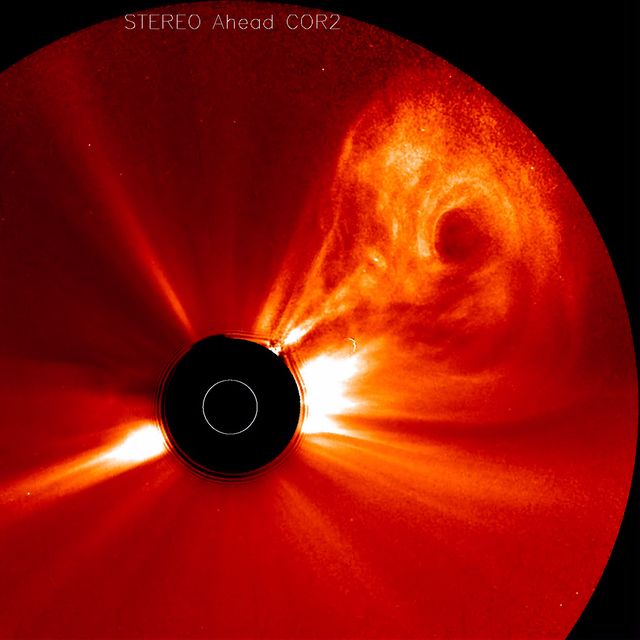
    Newly-arriving data from NASA’s STEREO probes suggest that a coronal mass ejection (CME) might be heading toward Earth. The source of the cloud appears to be sunspot complex 1185-1186, which experienced an episode of magnetic instability during the early hours of April

  • Strong activity on the far side of the sun

    NASA’s STEREO probes are monitoring strong activity on the far side of the sun. A spectacular CME erupted during the early hours of April 8th apparently from old sunspot AR1176. This is the second day in a row that the active region has hurled massive clouds into

  • Geomagnetic storm in progress (April 6, 2011)

    The solar wind is blowing past earth at elevated levels today and combined with a south tilting Bz, is stirring up geomagnetic storming at high latitudes. C-Class flare activity is now taking place towards the new sunspot regions just to the east of Sunspot 1185. Keep

  • Massive solar disturbance & CME on Far-side of Sun

    NASA twin STEREO spacecraft observed a spectacular coronal mass ejection launched from the vicinity of decaying sunspot 1176 on April 3rd around 0500 UT. The blast was not Earth directed. Nevertheless, there is a chance that the expanding cloud will deliver a glancing

  • Earth is entering a stream of solar wind

    Earth is entering a stream of solar wind blowing ~500 km/s, and the encounter is stirring up geomagnetic activity around the Arctic Circle. The solar wind data (velocity and proton density) presented on spaceweather.com are updated every 10 minutes. They are derived

  • Coming of big troubled sunspot region

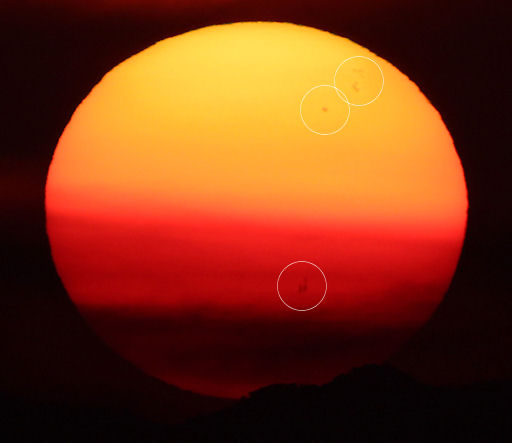
    A big sunspot is emerging over the sun’s southeastern limb, and it is crackling with activity. NASA’s Solar Dynamics Observatory recorded a surge of extreme ultraviolet radiation from the sunspot’s magnetic canopy on March 21st:This appears to be the return of old