• Fast growing sunspot 1199

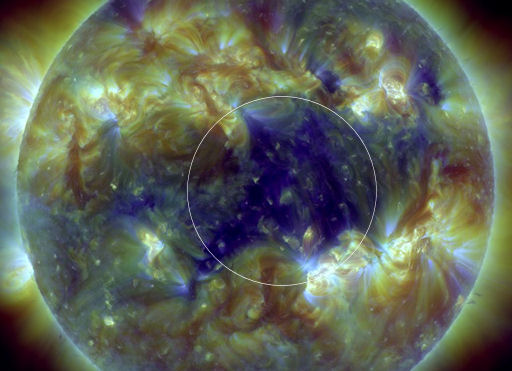
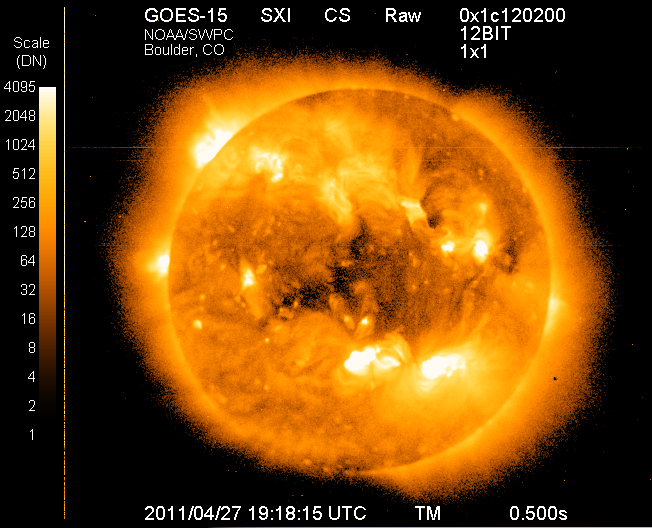
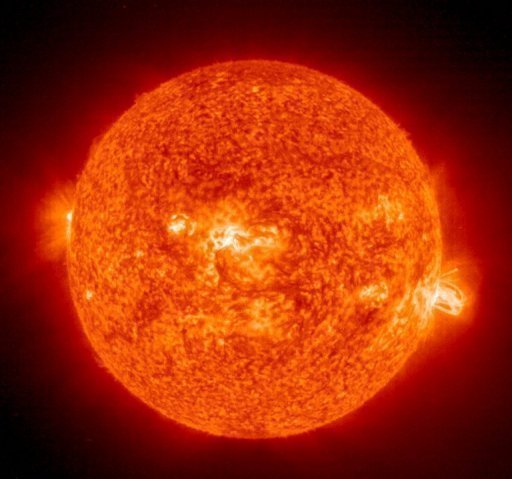
    New sunspot 1199 is growing rapidly in the sun’s northern hemisphere, ballooning in area by more than a factor of five during the last 24 hours. If the expansion continues apace, this active region could soon pose a threat for flares. Stay tuned. (SpaceWeather)

  • Big sunspot 1195 harbors energy for M-class solar flares

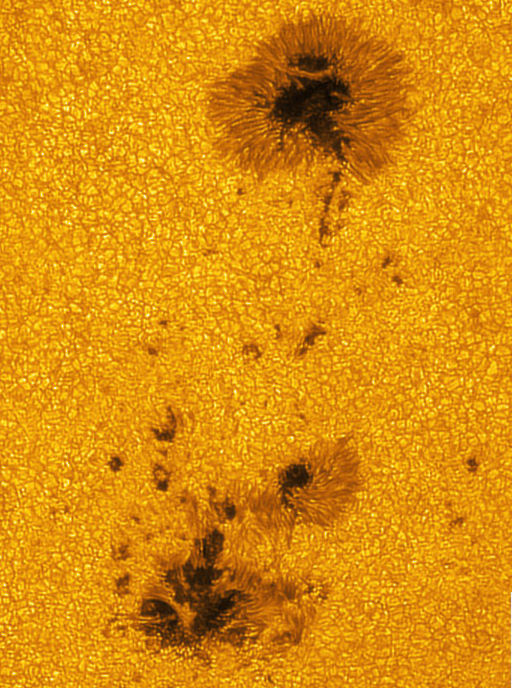
    This detailed image of sunspot 1195 looks like it was taken by one of NASA’s most advanced space telescopes. In fact, it comes from someone’s backyard in the Netherlands. Scroll down for the full story, and carefully examine the starscape as you

  • Amazing B-class solar flare

    B-class eruptions are weak and generally not considered spectacular, but the one recorded by NASA's Solar Dynamics Observatory (SDO) on April 23rd was quite different:The blast hurled hundreds of thousands of tons of plasma above the stellar surface with a powe

  • February solar flare was sparked by five spinning sunspots

    The giant solar flare unleashed in February was caused by five rotating sunspots working in concert, the UK’s National Astronomy Meeting has heard.Images released from the Solar Dynamics Observatory (SDO) clearly show the sunspots, which are centres of magnetic

  • Geomagnetic storm in progress (April 20, 2011)

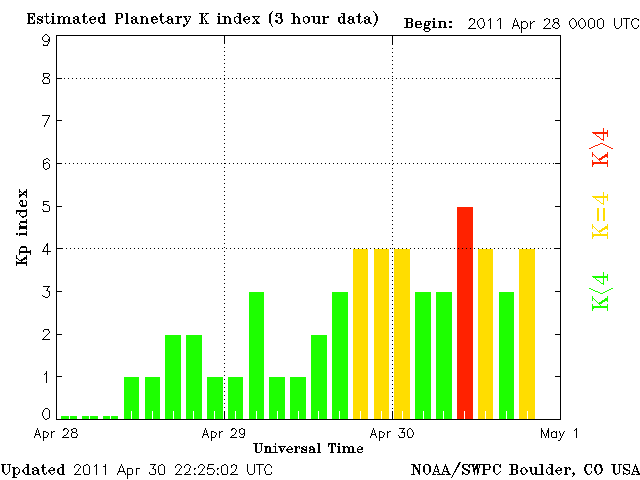
    Geomagnetic storm is in progress. K index showing level 5. Solar windspeed: 548.7 km/secdensity: 1.9 protons/cm3Planetary K-indexNow: Kp= 5 storm24-hr max: Kp= 5 stormThe K-index is a code that is related to the maximum fluctuations of horizontal

  • Heating up of solar storms season

    Sun woke up after three years of sleep. Several powerful solar flares occurred in recent months, with a February 14 blast as the strongest and  the most powerful outburst in more than four years. Considering surface of Sun dotted with sunspots and recent activity,

  • Eruption of magnetic canopy of sunspot 1190

    The magnetic canopy of sunspot 1190 erupted on April 15th, producing an M-class solar flare (SDO movie). The brief blast did not, however, hurl a cloud of plasma toward Earth. NOAA forecasters estimate a 55% chance of more M-flares during the next 24 hours.

  • Subsiding geomagnetic storm (April 13,2011)

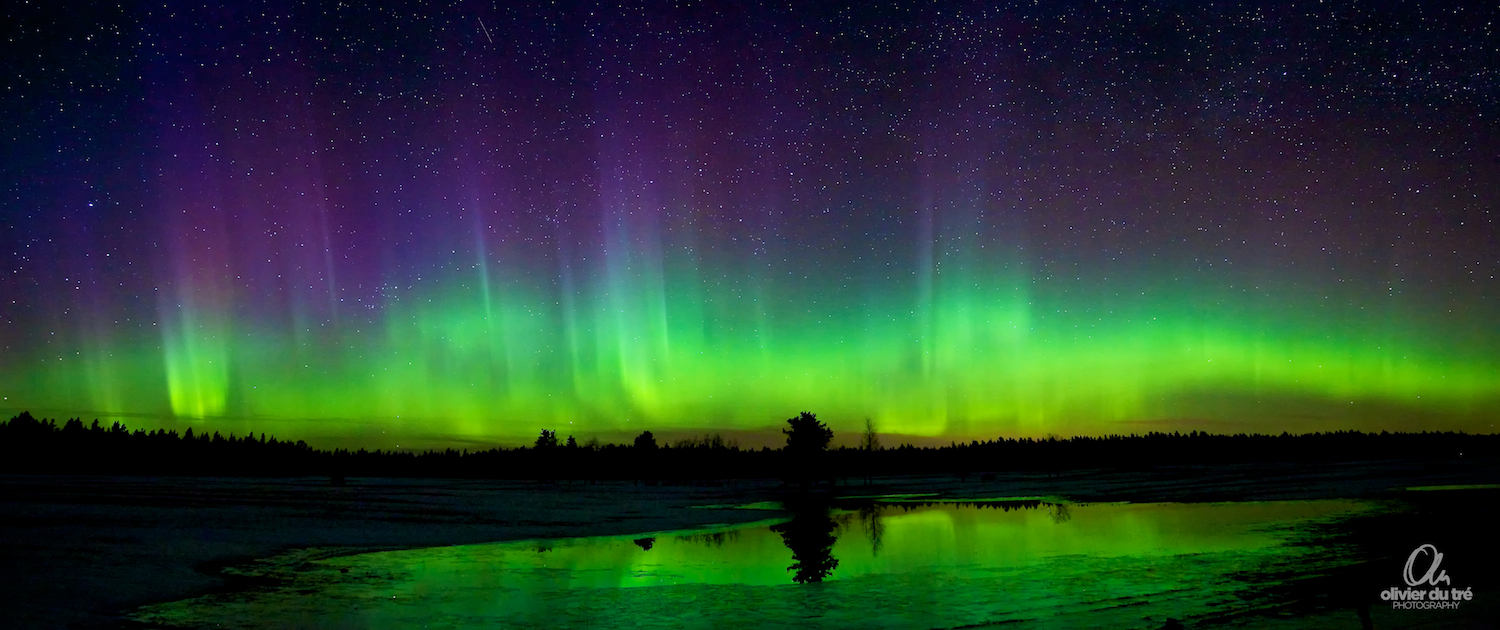
    A geomagnetic storm that sparked auroras around the Arctic Circle and sent Northern Lights spilling over the Canadian border into the United States on April 12th is subsiding. At the height of the display, Shawn Malone took this picture from the shores of Lake

  • Geomagnetic storm in progress (April 12, 2011)

      K-indices of 5 or greater indicate storm-level geomagnetic activity around earth.Geomagnetic Storms: Probabilities for significant disturbances in Earth’s magnetic field are given for three activity levels: active, minor storm, severe storm. The

  • Filament of magnetism is curling around the sun’s southeastern quadrant

    Newly-arriving data from NASA’s STEREO probes suggest that a coronal mass ejection (CME) might be heading toward Earth. The source of the cloud appears to be sunspot complex 1185-1186, which experienced an episode of magnetic instability during the early hours of April