• How solar storms affect railway signals

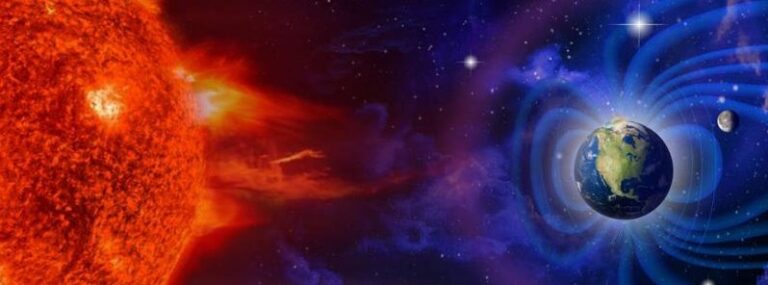
    A project investigating the effect of solar storms on railway signals, presented this week at the National Astronomy Meeting (NAM 2022) by Cameron Patterson, a PhD student at Lancaster University, shows how fluctuations in space weather are disrupting train signals and causing significant delays.

  • Magmatic degassing in Campi Flegrei in recent bradyseismic crises, Italy

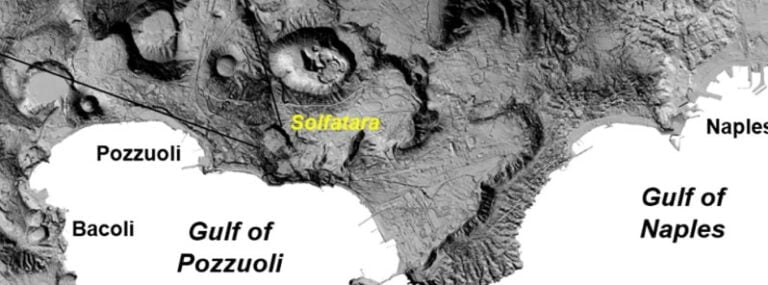
    A new study published in AGU’s JGR Solid Earth combined the petrological and geochemical data collected in recent decades at Campi Flegrei with numerical simulations, and placed new constraints on the source(s) of the current dynamics of the volcano. The study helps in defining the best monitoring strategies and forecasting a future eruption.

  • Swarm mission discovers interannual waves in Earth’s core

    Using information from ESA’s Swarm satellite mission, scientists have discovered a completely new type of magnetic wave that sweeps across the outermost part of Earth’s outer core every seven years. The discovery offers a way to probe the cylindrical radial component of the magnetic field inside Earth’s core.

  • Hunga Tonga-Hunga Ha’apai eruption caused a major space weather event

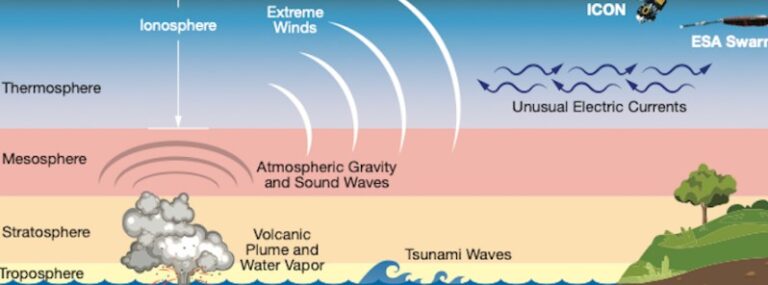
    When the Hunga Tonga-Hunga Ha‘apai volcano in Tonga erupted on January 15, 2022, it sent atmospheric shock waves, sonic booms, and tsunami waves around the world. Now, new research published in Geophysical Research Letters shows the effects of the eruption also reached space, causing a major space weather event.

  • Large surface rupture identified after M5.1 earthquake hits North Carolina, the largest in nearly 100 years

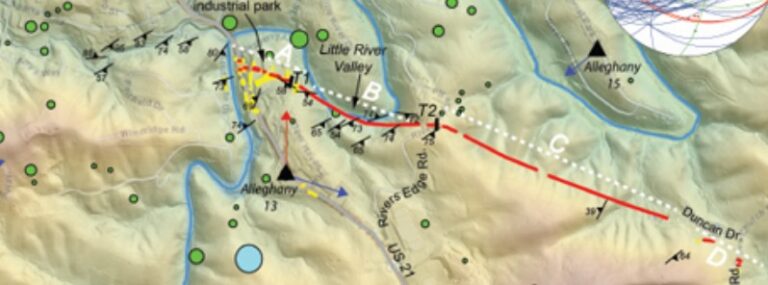
    A co-seismic surface rupture was identified along a 2 km (1.2 miles) long traceable zone after M5.1 earthquake hit North Carolina in 2020 – the largest to hit the state in nearly 100 years. The rupture exposed a previously unknown fault in the earth, representing the first documented surface rupture earthquake in the eastern United States.