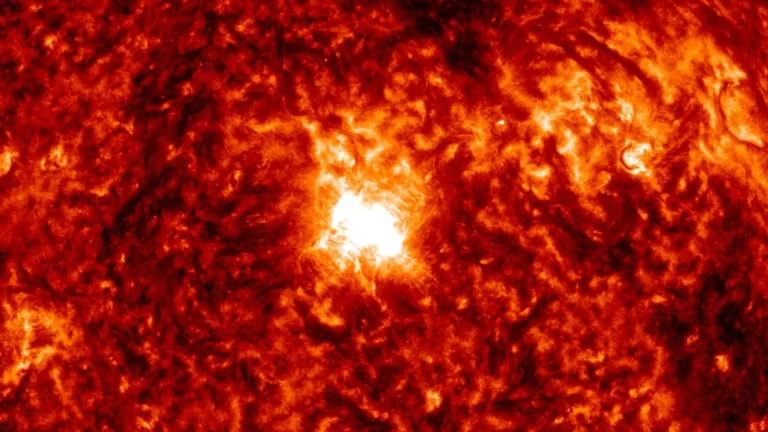
M2.7 solar flare erupts from Region 4392, Earth-directed CME produced
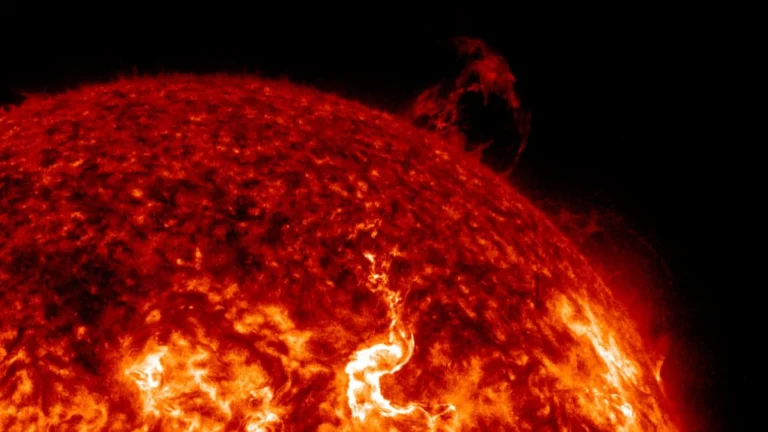
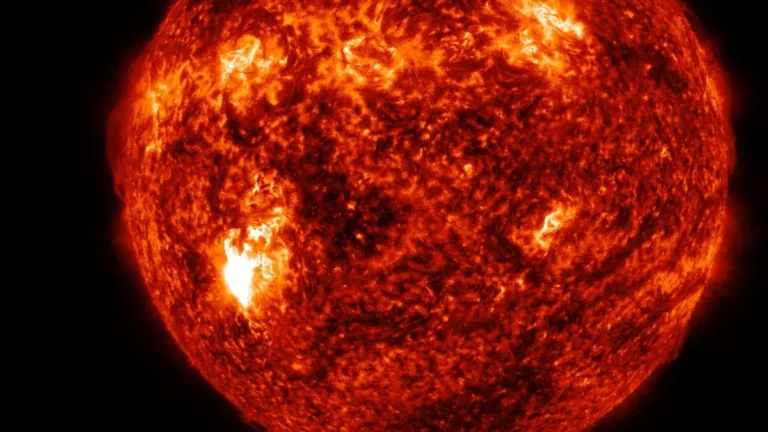
A moderately strong solar flare measuring M2.7 erupted from Active Region 4392 at 12:15 UTC on March 16, 2026. The event lasted 24 minutes.
I'm a dedicated researcher, journalist, and editor at The Watchers. With over 20 years of experience in the media industry, I specialize in hard science news, focusing on extreme weather, seismic and volcanic activity, space weather, and astronomy, including near-Earth objects and planetary defense strategies. You can reach me at teo /at/ watchers.news.

A moderately strong solar flare measuring M2.7 erupted from Active Region 4392 at 12:15 UTC on March 16, 2026. The event lasted 24 minutes.

Lava from an ongoing eruption at Piton de la Fournaise entered the Indian Ocean along the southeastern coast of Réunion Island at about 00:20 local time on March 16, 2026, after advancing downslope through the Grand Brûlé lava field and crossing the RN2 coastal road several days earlier, producing steam plumes and localized hazards where molten rock met seawater.

An explosive eruption occurred at Kanlaon volcano on Negros Island, central Philippines, at 18:07 LT (10:07 UTC) on March 15, 2026, producing an ash plume rising more than 5 km (3.1 miles) above the summit and depositing ashfall across at least 54 barangays in 11 local government units. Monitoring data associated with the event recorded nine volcanic earthquakes and sulfur-dioxide emissions of about 1 085 tonnes per day. Authorities also reported vegetation fires on the volcano’s slopes and suspended classes in several municipalities on March 16 as a precaution.

A burst of seismic activity detected late March 14, 2026, local time at the Atka volcanic complex in Alaska’s central Aleutian Islands has increased the likelihood of explosive volcanic activity, most likely at Korovin volcano. The Volcano Alert Level was raised to Advisory and the Aviation Color Code to Yellow.

A potential failure of Wahiawā Dam on Oʻahu, Hawaiʻi, triggered an evacuation warning at 18:55 LT on March 13, 2026, for downstream communities, including Haleʻiwa and Waialua. Authorities said conditions existed that could lead to dam failure capable of causing catastrophic flooding, prompting residents to prepare for possible evacuation.

A large-scale sandstorm affected southern Xinjiang, China, on March 13, 2026, as strong winds associated with a regional cold wave mobilized desert dust across the southern edge of the Taklamakan Desert.

Lava from an ongoing eruption at Piton de la Fournaise crossed the RN2 coastal road in the Grand Brûlé sector of Réunion Island early March 13, 2026, cutting a key transport link between the island’s southern and eastern regions.

A strong and shallow earthquake registered by the USGS as M6.3 struck offshore Atacama, Chile, at 13:39 UTC (10:39 LT) on March 13, 2026. The agency is reporting a depth of 10 km (6.2 miles). EMSC is reporting the same magnitude and depth.

A team of researchers has confirmed that the Silverpit structure beneath the southern North Sea is an ancient asteroid impact crater formed approximately 43–46 million years ago. The finding resolves a long-standing geological debate and identifies one of the best-preserved marine impact structures known on Earth.

Two tourists were found dead inside a submerged vehicle near Kilkivan in the Wide Bay–Burnett region of southeast Queensland, Australia, on March 12, 2026, after intense rainfall between March 9 and March 10 triggered flash flooding across parts of the region.